Early second-quarter results are offering an encouraging start to earnings season as Wall Street assesses whether recent gains can continue. Corporate performance remains constructive, although risks could quickly disrupt sentiment.
BNN Bloomberg spoke with Jonathan Corpina, senior managing partner at Meridian Equity Partners, about the earnings environment and the forces influencing equity perform
Key Takeaways
- Financial institutions are benefiting from stronger trading activity, renewed mergers and acquisitions and a recovering IPO pipeline.
- Rising client asset values are generating additional fees and revenue for wealth-management businesses.
- Stronger economic data and changing interest-rate expectations could create headwinds for equities.
- Escalating conflict involving Iran could pressure stocks if it drives oil prices significantly higher.
- Corpina expects equities to maintain a longer-term upward trajectory despite periodic pullbacks and negative headlines.
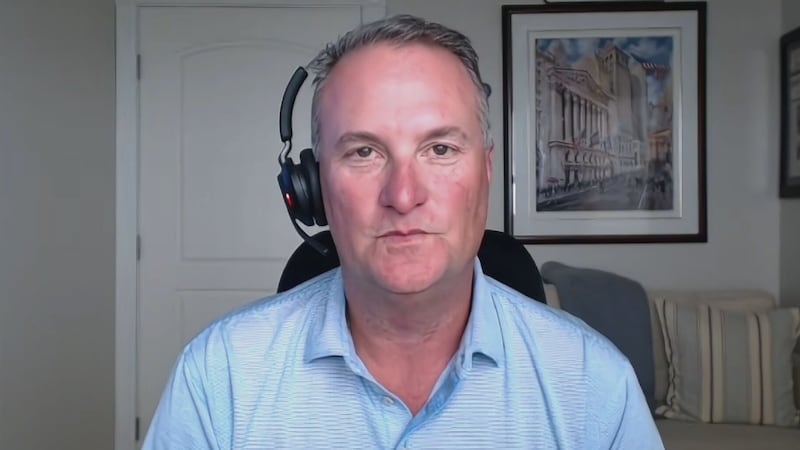
Read the full transcript below:
ROGER: BlackRock, Morgan Stanley and Johnson & Johnson all posting their second-quarter earnings today, joining the list of major U.S. banks that reported yesterday. More still to come, of course. For more, I’m joined by Jonathan Corpina, senior managing partner at Meridian Equity Partners. Jonathan, thanks very much for joining us today.
JONATHAN: Good morning. Thanks for having me.
ROGER: Okay, I know they’re very disparate to a degree. How does, overall, when you see those earnings reports, what does that tell you about how it looks when it comes to earnings season?
JONATHAN: You know, historically, we wait for the beginning of earnings season to come. That’ll hopefully give us some sort of guide, some sort of insight into what’s ahead of us. Historically, earnings season has helped buoy the market, give a little bit more confidence. Obviously, we’re getting a little bit more insight as to what happened last quarter and what the outlook is for moving to the next quarter ahead of us.
And what we’re seeing now is, in the beginning of earnings season now, is we’re getting some of the financials and then some other names, big names that are out there. Earnings season so far has been an upward surprise. The numbers that have come in have clearly helped our markets, have helped sentiment, and it shouldn’t be that surprising. Like, I think there is an issue with mismanagement here as far as the expectations. Maybe the bar isn’t set too high or high enough at this point right now, but as we’re beginning earnings season, we’re getting blowout numbers from some of the financials here.
But that is in line with what we’ve seen in prior quarters, and it’s what’s in line with what we’ve seen last quarter. Right, when you talk about the financials specifically, trading activity has increased over time. We continue to hear that headline coming out of these earnings reports. M&A activity, which was sidelined for quite some time, has now come back into the market. We’ve picked up a lot of steam with that, and that’s going to continue.
Right, the M&A activity, the syndicate, the IPO markets are going to continue for quarters ahead. So that’s a little bit of insight into how the financials are going to do moving forward as we talk about these large IPOs coming to market, and also from the wealth-management side, right? BlackRock would fall into that category there. Some of the bigger names, the Wells Fargos, Citis, wealth management has performed very well because customers’, clients’ assets have continued to increase as our economy has gotten better, our markets have gotten better. Their assets have continued to increase, which generates more fees and more revenue. So that’s just a natural progression there.
So I think overall, you know, as we’re getting into the beginning stages of earnings season here, the sentiment is set high.
ROGER: Yeah, I mean, BlackRock. What are they at now? $15.3 trillion in assets. Incredible.
JONATHAN: Absolutely, and they’ve, you know, increased and announced their stock repurchase, which is always a positive sentiment. BlackRock is one of the gorillas in the room that’s out there. You know, they continue to produce record revenue, right? You know, their mantra is a little bit different than the institutional banks. They’re out there, you know, using private equity to buy companies and spin them off and sell them off. We’re going to continue to see that.
I’ll go back to what I said before. There’s been this, this kind of lull in the IPO and the syndicate market, waiting for, quote-unquote, the right time for these companies to come public. They’ve waited quite some time. Some have tested the waters. We’ve seen SpaceX. We’ve seen a few others. We’re going to continue to see that down the road. That’s going to be very beneficial for companies, for the larger banks and institutions, and companies like BlackRock.
ROGER: Now, any worry that then the train will run out of steam after that?
JONATHAN: It’s run out of steam. So, like, you know, where does this all go from here? Right, we’ve got these geopolitical risks that are in front of us that seem to have not been able to derail the markets. We continue to move higher and higher, even over the past 48-hour news cycle. It seems like things are escalating there, yet the market continues to shrug that off.
Our economy, our economic data that we’re getting is showing that things are getting stronger. Inflation is coming down. We’ve got, we’ve got consumers who feel a little bit more comfortable where interest rates are as far as, as far as real estate is concerned. So we do have, you know, positive sentiment that’s there. We’re going to continue to talk about the Fed and what they’re going to do with interest rates coming into 2026. We were talking about multiple cuts. Now we’re talking about multiple hikes.
So, yes, there are headwinds that are here. The train can, quote-unquote, get derailed, but I think we’re at a point where we’re two steps forward, one step back. The market continues to move higher. We’re going to get some negative headlines, some negative sentiment. The market might pull back a bit. You might lose, you know, one, two, three per cent over a short period of time, and then it’ll find a bottom, regain back up again. And we continue to see this pattern over and over.
So I think from a trading point of view, you got to be careful because the market will turn, and when it does turn, it will turn quickly. From an investing point of view, long, long road ahead of you, slow and steady. Yes, there’s going to be ups and downs, but there’s going to be more of an upward trajectory than a downward trajectory.
ROGER: And with oil, and with what’s unfolding in Iran right now, the markets seem to be ignoring it. The five days of attacks. When, what would be a point where they can’t ignore it? Would it be oil at 100 or it escalating in the Middle East?
JONATHAN: Yeah, I think the markets are somewhat ignoring the positive news that can potentially come out of there. Right, the Strait is open, the ceasefire is on, right? We’ve kind of, we’ve kind of played that game over and over again, and we’re kind of ignoring that. I think if we continue to see this escalation, which we’re seeing now, I think that’s the one that’s really going to get some serious attention.
This was supposed to be a couple of weeks. We’ve turned into 100 and-plus days at this point right now. It’s clearly in an inning of escalation as opposed to de-escalation. If we continue to see that, I think that’s what’s going to start to shake our markets a little more.
Oil, again, if, you know, oil trended below 70 for — I’m sorry — 80 for a very short period of time, we’re heading back up above those levels there. Yes, if this continues in that upward trajectory, I think that’s when we’re going to see some pressure on the market.
We used to have this inverse relation: when the VIX went lower, the market went higher, and conversely. We’ve moved the VIX out of there. We’ve inserted oil. We’re watching oil, and whatever oil does, the market does in an inverse relation. So I’ll continue to keep an eye on that.
ROGER: Okay, we have to wrap it up there, Jonathan. But thanks very much for joining us.
JONATHAN: Have a great day. Thank you.
ROGER: Cheers, you too. Jonathan Corpina, senior managing partner at Meridian Equity Partners.
---
This BNN Bloomberg summary and transcript of the July 15, 2026 interview with Jonathan Corpina are published with the assistance of AI. Original research, interview questions and added context was created by BNN Bloomberg journalists. An editor also reviewed this material before it was published to ensure its accuracy and adherence with BNN Bloomberg editorial policies and standards.

