The latest U.S. retail sales report provides a fresh reading on consumer activity as households navigate shifting prices and an uncertain economic environment.
BNN Bloomberg spoke with Veronica Clark, economist at Citi, about the durability of consumption and the factors that could shape the U.S. economy through the summer.
Key Takeaways
- U.S. retail sales rose 0.2 per cent in June, matching expectations, while sales excluding autos declined 0.2 per cent.
- Falling average gasoline prices weighed on nominal sales figures and masked firmer demand in other spending categories.
- Low savings and the fading benefit of larger tax refunds could leave households more exposed to elevated gasoline prices.
- Layoffs remain limited, but weak hiring could push unemployment higher and eventually restrain consumer spending.
- Cooler core inflation and a higher unemployment rate could prompt the U.S. Federal Reserve to consider interest-rate cuts.
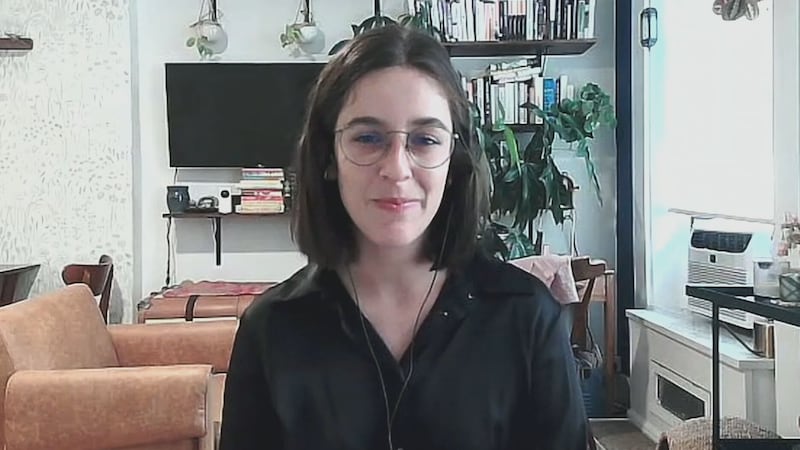
Read the full transcript below:
ROGER: All right, we are getting the latest U.S. retail sales numbers. They just dropped on the Bloomberg terminal for us right now, and retail sales advanced month over month 0.2 per cent, in line with survey. Excluding auto, it was down 0.2 per cent. Survey was down 0.1. Excluding auto and gas, survey was 0.4, and it came in at 0.4, and the sales control group was a half-point up, half-point, same as what the analysts were saying. So, let’s bring in Veronica Clark, economist at Citi, to talk more about this. Veronica, thank you very much for joining us.
VERONICA: Hi, good morning.
ROGER: All right, everything pretty much in line. The only minor — retail sales excluding auto, month over month, was down 0.2 rather than down 0.1. Your thoughts on these first numbers?
VERONICA: Yeah, very in line, you know, as expected, a reading for June retail sales. I think one thing to note, of course, in the month of June, you know, these sales are reported in nominal terms, and we did have average gas prices that were coming down. So, that’s probably why you see those retail sales ex-autos, that will still include gas sales, a bit softer. Again, these are nominal, in nominal terms, but yeah, very in-line reading. Still seems like the consumer in the U.S. is holding up pretty resiliently.
ROGER: Greg, you want to join in?
GREG: Well, I was just wondering, like, the consumer has done quite well with the higher spike of prices, gas, services. But how long can they last? Like, if we do have gasoline prices stay at this level for the next six months, does that start to cause more concern, or is there a timeline that you’re starting to worry about?
VERONICA: Yeah, you would probably get increasingly concerned that high gas prices could start to subtract spending elsewhere. You know, the increase in gas prices that we had really starting, you know, March or so, that happened at the same time that consumers in the U.S. were getting some larger tax refunds. You know, we had tax changes last year with the One Big Beautiful Bill, and those tax refunds were larger than recent years. So, maybe that helped to buffer spending for a couple months. You didn’t really feel the effect of higher gas prices, but of course, after a couple months, you’ll use up that tax refund, and gas might still be a headwind to spending.
ROGER: And are people living on credit in the U.S. right now, and that’s what’s keeping them going?
VERONICA: Yeah, we do see signs that, yeah, there’s, you know, some stress in this resilient consumption. You certainly see the savings rate that has also gotten very low. I think the most important, you know, determinant, though, of, you know, how durable consumption can be is if the labour market is holding in, if people have jobs, and that’s where, yeah, job growth has slowed. But we really don’t see those cracks of, you know, layoffs forming or whatnot.
ROGER: And just — I’m going to just stay with this for a second. Just looking, the initial jobless claims also came out today. Survey was 217; 208 was the actual number. Does that kind of play in with that?
VERONICA: Yeah, jobless claims are still very low. Of course, that’s going to tell us about the state of layoffs. These are people filing, you know, for unemployment insurance if they’ve lost their job. The level is still certainly very low. So, layoffs do seem that they are still low. We don’t see signs of increase there. I actually, though, would look for, you know, maybe some increase in continuing jobless claims. You know, we tend to see that over the summer. Even in these initial jobless readings, we tend to see them a bit higher in the summer months than the rest of the year, and that’s just maybe telling us that hiring is still very low also.
ROGER: Yeah, Greg, I’m just going to continuing claims. Just looking at the numbers, a little less than the survey, 1,800 and 511, 1.8 million, I guess, and 1.1, 18, 105K, so 1.805 million. Greg, go for it, man.
GREG: Really have an impact on the job market, and those figures seem to fade away in the last little bit. But do you see any signs that that is actually happening and something that people should be worried about and maybe could be causing back some holding back of spending?
VERONICA: Yeah, yeah, I do. You know, I, I do think this is a really — it’s a stable labour market, but it’s not a very comfortable one. We’ve seen this very low-hiring, low-firing environment for a while. You know, we did have some months where it looked like maybe job growth was picking up, but then we got those revisions lower in the June data. June was a bit softer itself, and I actually do think we’ll see more of that as we go through the summer. You know, we do tend to see this low-hiring environment create this upward pressure on the unemployment rate really late in the summer. Maybe that’s, you know, new students who are not finding work, and yeah, you would be concerned that, you know, if you’re worried about your job prospects, the unemployment rate is, you know, gradually ticking up. That would be a headwind for spending at some point, but it certainly hasn’t been yet the last few years.
ROGER: And where does this fit in for the Fed and its decision-making process?
VERONICA: Yeah, the Fed’s focus for now, of course, is on the inflation side of their mandate, the inflation risks, and we definitely got some more favourable data for them this week. You know, very soft inflation for June. Core CPI, that was flat on the month. So, I think they’re hopefully feeling a bit better about the near-term inflation risk, but that’s absolutely still the focus. But as we get through the summer, yeah, I think we’ll see more favourable inflation reading. You’re getting less concerned about, you know, the pass-through maybe of higher energy prices into core inflation. I think core inflation can look, you know, much softer. And then, if we do start to see the unemployment rate tick higher, as we have the last couple summers, then maybe you’re getting more concerned on the labour market again. And yeah, maybe you’re certainly not thinking about rate hikes at that point.
ROGER: Would we see rate cuts?
VERONICA: Yeah, I think we could. You know, if it looks like core inflation, at least by CPI, is trending lower, we’re going to get some revisions to core PCE inflation that the Fed targets. I do think that could mean core PCE is actually even lower. Those come out in September, and then, yeah, if we see the unemployment rate tick above maybe 4.5 per cent or so, and that’s kind of what these patterns the last few years would suggest as possible, I think they could be thinking about cuts again. At that point, you do then again see rates as restrictive, and maybe they don’t need to be. They could be closer to neutral.
ROGER: Greg?
GREG: The U.S. midterm elections can have an impact on this. I know that’s going to start dominating the headlines in the next few weeks. Is this going to have an impact on consumer spending, or just people starting to be a little more cautious or pull back?
VERONICA: Yeah, I don’t really expect it to. You know, people will spend, of course, out of their, you know, perceptions of their, you know, how they’re feeling about their job and labour income and everything. So, I don’t think it will really impact spending too much. You know, one possibility is that, you know, as we get closer to the elections, is there more pressure, you know, to have some kind of resolution in the Middle East conflict, get oil prices lower, get gas prices lower? But it doesn’t seem like we’re quite at that point yet.
ROGER: Okay, Veronica, we’ve got to wrap it up there. But thank you very much for joining us.
VERONICA: Yeah, thank you.
ROGER: Veronica Clark, economist at Citi.
---
This BNN Bloomberg summary and transcript of the July 16, 2026 interview with Veronica Clark are published with the assistance of AI. Original research, interview questions and added context was created by BNN Bloomberg journalists. An editor also reviewed this material before it was published to ensure its accuracy and adherence with BNN Bloomberg editorial policies and standards.

