Resilient consumer spending and strong equity gains are raising questions about which investments can continue delivering growth over the long term.
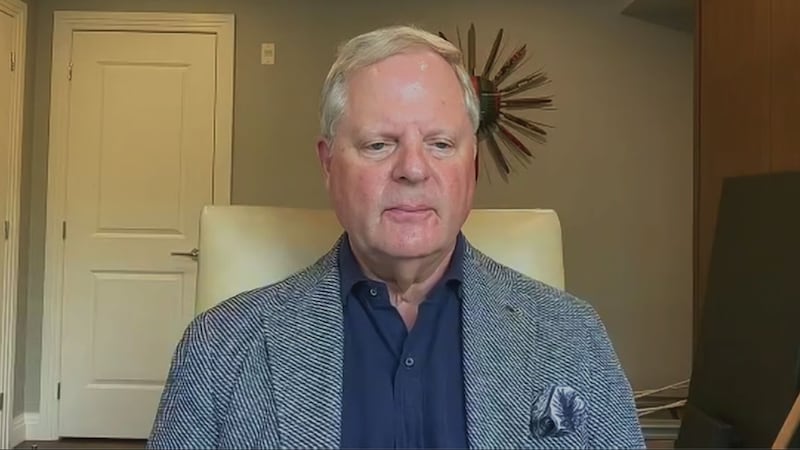
BNN Bloomberg spoke with Norman Levine, portfolio manager at Brook Wagman Private Wealth Management, Raymond James Investment Counsel, about opportunities in retail, financial services and air conditioning.
Key Takeaways
- Ralph Lauren’s fiscal first-quarter revenue increased 14 per cent on a reported basis and 13 per cent in constant currency.
- Growth in Ralph Lauren’s direct-to-consumer business allows the company to exercise greater control over pricing and margins.
- Levine says Ralph Lauren occupies an attractive position between ultra-luxury labels and more accessible fashion brands.
- Existing Canadian bank shareholders should consider ignoring short-term pullbacks and continuing to collect dividends, Levine says.
- Daikin Industries could benefit as extreme heat drives greater demand for air conditioning in underserved European markets.
Read the full transcript below:
ROGER: Well, Canadian retail sales came in stronger than expected in June, with gains in clothing and general merchandise helping drive growth. But questions remain about consumer spending. For more, let’s go to Norman Levine, portfolio manager at Brook Wagman Private Wealth Management, Raymond James Investment Counsel. And thank you, as always, Norman, for joining us. Hello to you, sir. How are you?
NORMAN: I’m great. How are you?
ROGER: Good. Just your thoughts a little bit on the, on the consumer spending, then the numbers we saw, the retail sales.
NORMAN: Well, the consumer is more resilient than what economists have been projecting. Although, built into those retail sales are gasoline prices, so as they pay more for gasoline, that’s increased sales. And I own a number of retailing-type stocks dependent on the consumer, things in Canada like Couche-Tard and Empire Company. And in the U.S., one stock I own that I’ve been very favourable — and has been very good to me, and I think is going to continue — is Ralph Lauren, which is a retailer, designer, manufacturer, retailer of higher-end, not luxury stocks, but I’ll call affordable luxury stocks. And it’s been a big beneficiary of the K-shaped economy. One thing they’ve been able to do is they’ve been growing sales quarter over quarter, year over year, 10 per cent for the last, quite, last couple of years. Most recent quarter, 13 per cent sales growth. A lot of it out of North America, but they’ve been a big beneficiary of increasing sales in, in Asia and even in Europe. They, they’ve been big gainers. They don’t go after high fashion. They go over what I call people like. You go into their stores. They, they’re busy. People aspire to own their stuff. People like what they put out, and it’s benefited the stock price quite a bit. I think it’s going to continue to do so.
ROGER: Any concerns about — you mentioned the K economy and the people, it sounds like, that shop for Ralph Lauren are kind of maybe in the middle of that upper part of the K. Could they not be consumed if the economy takes a turn and they take a hit?
NORMAN: One thing that’s happened, Roger, is that sales in their direct-to-consumer have gone up quite a bit. So that would be online and in their own stores, especially in their outlet stores. So their channels of distribution would be online, through their stores and through what’s called wholesale, where you go into other stores, department stores, which still exist outside of Canada, and you buy their products there. More and more has gone direct, and that way they, A, can control the prices, and B, they get 100 per cent of the margin as opposed to only a partial margin. So a lot of consumers have been going to their outlet stores, where you can buy current products, but also yesterday’s products. It’s significant discounts, but at those discounts, Ralph Lauren’s still able to make a lot of money because they’re getting all of the margin.
ROGER: Any worries about competition or that there’s not a huge diversity for the brand?
NORMAN: Well, there’s always competition, but they are in a niche. They’re below the Guccis and that, and they’re above the Tommy Hilfigers and the Calvin Kleins and that. They’ve got a good niche for themselves in there.
ROGER: All right, let’s take a look at the banks. You’re liking the Canadian banks still.
NORMAN: So my comment on the Canadian banks has to do with historical ownership of it and current ownership. So the bank stocks are up quite a bit in the last two years. The Royal Bank, for example, is up 100 per cent in the, in the last two years. But I think that if you look back, say, 40 years on the Royal Bank, it’s up 10 times and through — and I’m just using it as an example of that. But if you look there, the stocks are up 10 times in the last 40 years. If you go back further, even more. And yes, you’ve had periods where they’ve gone down for a bit or sideways for a period of time. But so what? If you’ve owned it for 40 years, you’re now — your dividend is bigger than what you paid for the price back then. There, if there’s one class of stock that you buy, put away, never trade, never sell, it’s Canadian banks. And yes, you’re starting to see columns in the newspapers, or commentators are on TV, or analysts talking about how far the Canadian banks have gone, and they’re worried about them pulling back and what’s going to keep them going. That’s just short-term noise. I think you should just ignore that and keep owning your Canadian banks. There’s no better investment historically in Canada than owning them.
ROGER: Should you be buying now? Because looking at that long-term chart, it’s been meteoric almost relative to the rest of — it’s been a steady growth. But from 2023 on, it’s almost meteoric there. I mean, is it, is it primed for a bit of a pullback, do you think? Should we — should people wait, or do you see no dip coming?
NORMAN: Okay, if you already own them, I would just continue to. I’m not a — I’m a long-term investor. I’m not a short-term investor. So pullbacks and going sideways, even for a year or two, don’t bother me, especially when I’m collecting that nice dividend along the way. If you are thinking of buying banks, you might wait for a pullback here. I would do that. But if you’re an owner, by all means, just keep them. It’s boring. Your broker may not like that. They’ll be reading columns telling you to do otherwise. But to me, that’s the best thing to do. Keep your banks.
ROGER: Keep on keeping on. Okay, Daikin Industries.
NORMAN: Okay, so all summer we’ve been reading about the massive heat waves in Europe, and also about how, compared to most of the world, Europe is hardly air-conditioned at all. There’s some cities where it’s almost banned, some where it’s very difficult to put in air conditioning. But with this heat wave this summer, that is starting to change. You’re getting in France and, specifically, Paris, they’re starting to ease up on regulations. Other cities as well. Daikin is a Japanese company. You can buy the ADRs on, on the U.S., and it is the largest air-conditioning company in the world, and it is the largest player in Europe. And I’m — I know I’m going to be very early on this, but I believe over the next two, three years, you’re going to see a massive amount of money going into infrastructure to put air conditioning into apartments that don’t have them, retrofitting, especially individual units, as opposed to trying to do it set centrally. That’s very difficult in existing buildings not set up for that, office buildings and that. To me, air conditioning is a growth industry in Europe. It’s going to be. It’s just starting, and Daikin, being the biggest in, in, in Europe, I think is going to be the main beneficiary of it. It’s when you buy, you don’t worry about what it does in the short term, and you put it away.
ROGER: Okay, and we’re going to have to put it away on that note there. Norman, thanks very much for joining us.
NORMAN: Thank you, Roger. Nice to be with you again.
ROGER: Norman Levine, portfolio manager at Brook Wagman Private Wealth Management, Raymond James Investment Counsel.
---
This BNN Bloomberg summary and transcript of the Aug. 21, 2026 interview with Norman Levine are published with the assistance of AI. Original research, interview questions and added context was created by BNN Bloomberg journalists. An editor also reviewed this material before it was published to ensure its accuracy and adherence with BNN Bloomberg editorial policies and standards.

