Canada’s real estate recovery remains uneven as the market adjusts to changing borrowing costs. Investors are weighing where property income can support new purchases.
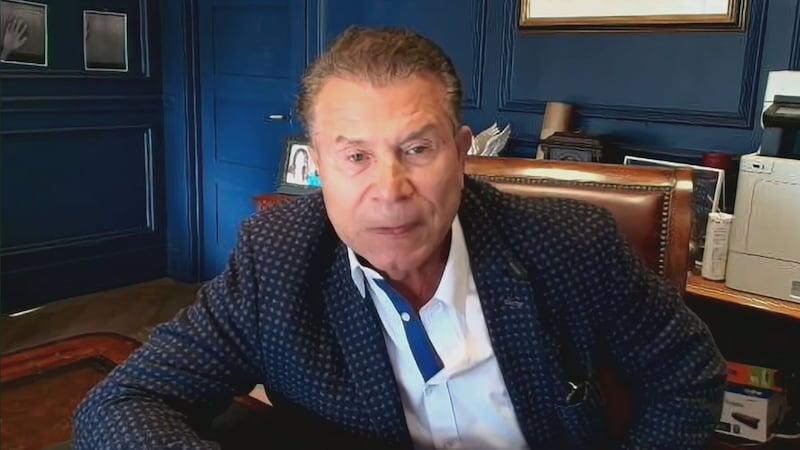
BNN Bloomberg spoke with Aurelio Baglione, CEO of Virtus Group of Companies, about his approach to the current property market.
Key Takeaways
- Baglione says apartment rents have pulled back in some markets and new rental projects are taking longer to lease.
- He says federally insured mortgages can still make some residential developments viable, while properties bought at low capitalization rates are harder to make profitable.
- Retail is the strongest segment of his portfolio, and he says tariffs have had no impact on those holdings.
- He sees data centre REITs as risky because the sector’s long-term winners remain unclear.
- Owners of difficult-to-sell development projects may need to sell apartment buildings or commercial plazas, creating more buying opportunities.
Read the full transcript below:
ROGER: As interest rates come down, investors are looking for signs of recovery across Canada’s real estate market. Joining us now is Aurelio Baglione, CEO of Virtus Group of Companies. Aurelio, thank you very much for joining us today.
AURELIO: Thank you for having me.
ROGER: Okay, let’s talk about the rates. What kind of an impact is that having on the REITs right now?
AURELIO: Well, it’s common knowledge that as real estate interest rates, mortgage rates, go up, it negatively impacts real estate. It’s been like that. I’ve been, I’ve been doing this actually since 1986, and I lived through, I guess you would call, the interest rate hike on steroids, which was 1990-91, and we saw what that did to real estate. This one has had a milder effect, of course, but we can all see what it’s done to the housing market in particular, but also on the commercial front.
ANDREW: So really, on top of interest rates, you mentioned back the early 1990s when that was really what we were dealing with. We’re also dealing with a recession. We’re also dealing with a trade war with the States right now and tariffs. What segments of the area that you’re looking at are more vulnerable from a REIT perspective than others?
AURELIO: We’ve seen, I think, the greatest impact in our industry has been in the multi-unit residential segment. Yes, the rental, the rental market is still fairly strong in some markets, but we’ve seen a pullback on rents. It’s taking us a longer time to rent new projects out than it did before. As far as the tariffs go, we’ve had zero impact on our retail side. Our retail side is the strongest segment of our portfolio. We do actually, do have some real estate in the U.S. We did buy a BJ’s Wholesale Club, which is similar to Costco. We bought during that, during COVID, so we’ve had a very good experience in terms of how that store is doing and the fact that they just exercised their five-year renewal.
ROGER: I just want to go back to the residential. What kind of, how are you factoring in the population stagnation, I guess, if you want to call it that, in Canada, even in the U.S., when it comes to residential rentals? Does that have you rethinking that, or are you looking at a short term?
AURELIO: Well, I think the saving grace that we have in Canada is the fact that we have a product such as CMHC insurance, which is a mortgage guarantee provided by the federal government. You pay a fee for that, but you do get very good interest rates. Right now, they’re still below four per cent, and so if you can build something and yield a, even a six, a six and a half, you can make the numbers work. But the days of buying what I call trophy properties at what used to be a four-and-a-half-per-cent capitalization rate, those days are gone in terms of being able to make a profit on those. And what we’re seeing as a reflection of that is a lot of REITs in that space have cut, either cut distributions or cut redemptions, or seen a negative impact in their NAV.
ANDREW: Aurelio, what are we seeing in growth in data centres in the REIT space right now, Canada or the U.S. or both?
AURELIO: I read a lot about, there’s even, like, specific REITs that have been formed just to buy these data centres as a, as a real estate play. But I’ve been, I’ve been around a long time, and these property-specific REITs, there’s been kind of like a flavour of the month for the last 30, 40 years, and that seems to be now. We all remember the thought bubble and the consequences of that. We know there’s a lot of players in the space. We know that it’s a growing space. We just don’t know who the winners and the losers are going to be 10 years from now, and so that seems, to me, like, I’m a very conservative investor, to me, that seems on the risky side in terms of deploying assets in that space at the moment.
ROGER: So where’s your focus then, right now, with everything, the way, the way everything is unfolding?
AURELIO: I would say that, so I’ve been doing this for 40 years, and I would say about 80 per cent of all the properties I’ve purchased have all been distress situations, one form or another. So they’re based on opportunity, based on fundamental yield. The REIT that I run has a seven per cent distribution rate, and another three or four per cent is baked in every year for mortgage principal reduction. So if that real estate that I’m looking at isn’t yielding that from the start with a decent bankable covenant, then I’m not looking at it. And fortunately for us in this market, there are opportunities. There’s opportunities out there where you have investors that have got into either infill projects or development projects, and those are pretty much unmarketable at the moment, so they have to sell something else. So they do have to sell that apartment building. They do have to sell that commercial plaza. There’s more supply than I’ve seen in the last few years.
And just to give you an example, when we had the Lehman Brothers fiasco in the U.S., I went down to the U.S. and I bought seven properties on my own just to take advantage of the marketplace. Those obviously done very well, but also there was the appreciation of the U.S. dollar, which added to that. So the fact that I bought the BJ’s Wholesale Club in New York State when New York State was actually shut down during COVID, and by the way, that was the only property ever purchased in my life without actually physically taking a look at the property because I couldn’t get across the border, so I had to use the realtor down there as a, as a robot with his little phone, and I would tell him to walk right, walk left, whatever. And we got through it.
Fortunately, COVID did have some. There’s, there is a pot at the end of the rainbow there, and that I used to have to go to the U.S. to buy prop, to actually do closings. I had to drive to Buffalo and sign papers because they wanted me in the U.S. when I was signing documents. And then COVID comes along, and now all of a sudden I can do everything from here, from my office. I can buy property, mortgage property, sell property. So it’s been great from that perspective. Also buying in other parts of Canada, it’s really opened the door for that and widened the scope of the properties that we can look at.
ROGER: All right, we have to wrap it up there, Aurelio. But thank you very much for joining us.
AURELIO: Thank you.
ROGER: Aurelio Baglione, CEO of Virtus Group of Companies.
---
This BNN Bloomberg summary and transcript of the Sept. 25, 2026 interview with Aurelio Baglione are published with the assistance of AI. Original research, interview questions and added context was created by BNN Bloomberg journalists. An editor also reviewed this material before it was published to ensure its accuracy and adherence with BNN Bloomberg editorial policies and standards.