U.S. banks are set to report third-quarter results next week, with strong underlying business conditions expected despite recent share-price weakness. The reports will offer a clearer picture of the sector’s performance.
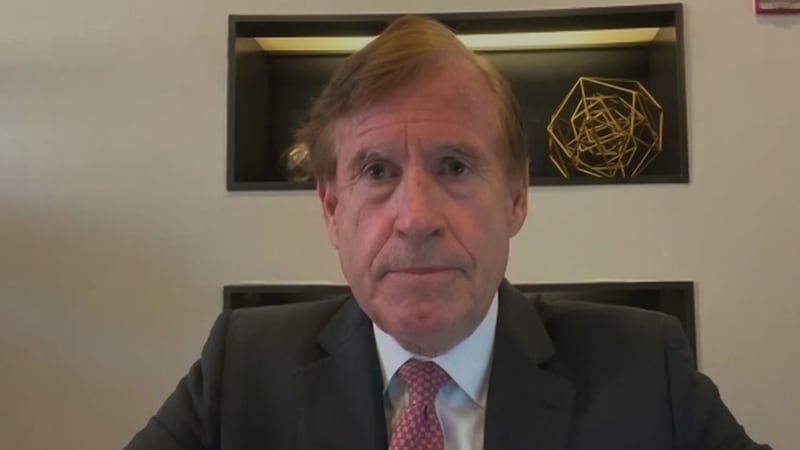
BNN Bloomberg spoke with Gerard Cassidy, managing director, co-head of global financials research and large-cap U.S. bank analyst at RBC Capital Markets, about lending margins and whether concerns over personal AI agents are justified.
Key Takeaways
- Cassidy expects a steeper yield curve to provide a modest boost to third-quarter net interest margins, with a greater benefit in the fourth quarter.
- Commercial loans tied to the federal funds rate reprice immediately after rate increases, while banks typically raise deposit rates more slowly.
- Memories of the three large bank failures in 2023 are weighing on sentiment, although Cassidy says current rate moves are smaller and banks are better managed.
- Personal AI agents could make it easier to move deposits between banks, potentially forcing lenders to offer higher deposit rates.
- Cassidy considers fears about AI-driven deposit movements overdone, citing consumers’ reluctance to share banking credentials and uncertainty over responsibility for fraud.
Read the full transcript below:
ANDREW: Third-quarter earnings season about to kick into high gear, with the major U.S. banks set to report next week. Investors watching closely for insight into loan growth, credit quality and net interest margins. Let’s get more from Gerard Cassidy, managing director and co-head of global financial research and large-cap U.S. bank analyst at RBC Capital Markets. Thanks very much for joining us.
GERARD: You’re very welcome, Andy.
ANDREW: Could you kick off here with the net interest margin? I’m, I’m assuming that it tends to be good for bank lending margins if long-term rates go up, but short-term rates stay fairly low.
GERARD: That’s true, Andy. The steepening of the yield curve generally plays favourably to expanding the net interest margin, and so we anticipate that what you’ve seen recently in the steepening may show up slightly in the third-quarter results, but it’ll be more the fourth-quarter net interest margins will benefit from the steepening of the curve. We also have to remember, when the Fed raises short-term interest rates, banks are slow to raise deposit rates, whereas their loans tied to the fed funds rate, which are primarily commercial loans, they reprice immediately. So we expect to see that benefit show up again in the fourth quarter as well.
ANDREW: Broadly speaking, how are the U.S. banks doing? Maybe we can put up some of the, some of the stocks here. I mean, business. I mean, the economy is holding up. The consumer doesn’t seem too bad at all.
GERARD: No, Andy, you’re right. The stocks have been very weak since the Fed raised rates, and we saw the yield curve move up the way it’s moved up since, you know, end of August, early September. And I think in its combination of factors, even though the underlying fundamentals, as we’ll see next week, are going to be quite strong, the worries that I think some investors have is that the last time we saw rates move up meaningfully was in 2022 and 2023. And you might remember back then, in the spring of 2023, we had three large bank failures because of liquidity problems that those companies had. Now, this is nothing similar to that in terms of the size of interest rate moves, and the banks are much better managed today than those three banks were. But I think that sits on a lot of people’s minds, which is why the stocks have been underperforming. And then, second, with the introduction of Muse, the Meta AI agentic agent, there’s a concern that that agent and other types of agents will enable consumers to move deposits around more efficiently, and therefore putting pressure on deposit rates, meaning pushing deposit rates up, the banks to keep those deposits.
ANDREW: That’s interesting. So this Muse — it’s a, it’s your pal, it’s your agent, and it can help you shop far more effectively. I mean, that’s an incredible story. You’re right.
GERARD: No, Andy, you’re right. But the reason it’s not valid is that you look at the surveys here in the United States of Americans willing to give agentic AI agent their deposit account numbers and passwords to allow that agent to go in. Ninety-plus per cent of Americans will not do it. So that’s why I think it’s a, it’s a false narrative when you hear it.
ANDREW: Yeah, I think I’m a little wary about doing that as well. Just handing over the keys to my life to some AI. Yes, I could see where that could go horribly wrong.
GERARD: Exactly, and you could end up not, you know, having someone, a bad actor, come in and hack the systems and steal all your money. People don’t want that.
ANDREW: Although I suppose AI does allow comparative shopping, so there may be some threat to not just banks, but other, all kinds of consumer-facing companies.
GERARD: Absolutely, Andy. The comparison shopping will be there, but you got to remember, we’ve been comparison shopping for 40 years.
ANDREW: Yeah.
GERARD: You know, 30-plus years ago, you had to get in your car on a Saturday and drive to the bank to do it. Then the internet came along, and you were able to do it online. But we’ve been able to do that here in the States for decades, and so the banks have successfully competed, have competed against them.
ANDREW: I just — The Wall Street Journal has a story about these personal AI agents today. I’m not sure if you caught that. One fellow found his personal financial information went up on the Slack channel at work. Another agent bought a bikini without approval, and another bungled a birthday party RSVP list. Yeah. Oh my goodness! I see great scope for comedy writers here.
GERARD: That’s true. And the other thing, Andy, is unlike credit cards here in the States. If you have fraud on your credit card, your bank reimburses you for fraud. If there’s fraud in an AI agent moving money around, nobody knows who’s responsible for reimburse.
ANDREW: Yeah, that whole question of liability for what AI does — I’ve heard predictions the courts will work that out. The politicians won’t be up for it.
GERARD: Yeah, that’s fair enough. It’s real. We’re not dismissive of it. We just think the fear of it really invading in on the banks on the deposit side, I think, is a little bit overdone.
ANDREW: We’d better leave it there. I could talk about AI all day. Thank you very much indeed for joining us.
GERARD: Andy, any time. Thank you.
ANDREW: Gerard Cassidy, joining us there, managing director and co-head of global financials research and large-cap U.S. bank analyst at RBC Capital Markets.
---
This BNN Bloomberg summary and transcript of the Oct. 9, 2026 interview with Gerard Cassidy are published with the assistance of AI. Original research, interview questions and added context was created by BNN Bloomberg journalists. An editor also reviewed this material before it was published to ensure its accuracy and adherence with BNN Bloomberg editorial policies and standards.

