Anthropic shares opened at US$111.50 on the Nasdaq Thursday, 34 per cent above the AI company’s US$83 initial public offering price. The debut came during a volatile stretch for technology stocks.
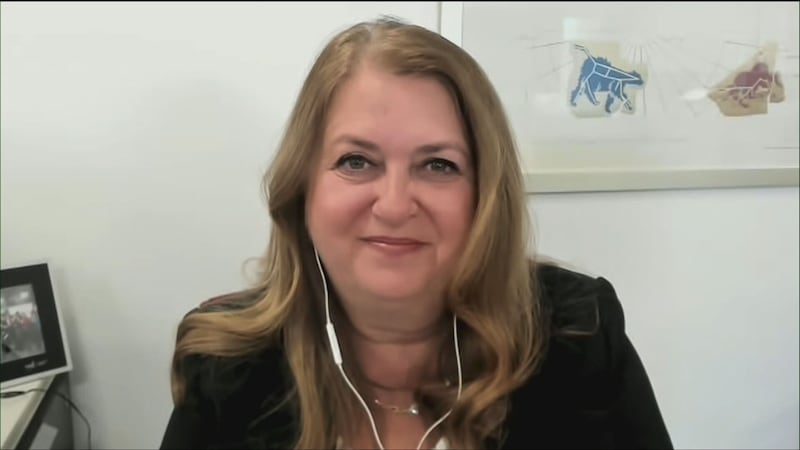
BNN Bloomberg spoke with Diana Avigdor, vice-president, portfolio manager and head of trading at Barometer Capital Management, about Anthropic’s debut and governance, and how she’s weighing opportunities in U.S. health care and payments as technology shares come under pressure.
Key Takeaways
- Avigdor expected some buyers who missed out on IPO allocations to seek Anthropic shares once trading began.
- She said Anthropic’s public benefit structure gives it room to weigh the broader consequences of AI development alongside shareholder returns.
- Avigdor saw a possible short-term trade in Anthropic if index funds buy shares, though insider shares becoming eligible for sale could offset some of that demand.
- She sees U.S. health care stocks as a hedge against tech weakness, citing Eli Lilly’s growth prospects and Merck’s lower valuation.
- She holds Visa and Mastercard for their payment-processing businesses, which collect fees when consumers use their cards.
Read the full transcript below:
LINDSAY: Anthropic expected to surge in its trading debut today, despite recent skepticism around AI-related stocks. Let’s get some perspective now from Diana Avigdor, vice-president and portfolio manager and head of trading at Barometer Capital Management. Good to have you join us again. Good morning.
DIANA: Good morning, Lindsay. Thanks for having me.
LINDSAY: Of course. So what are you expecting will happen when Anthropic actually starts trading today?
DIANA: So I’m actually watching it on the Hyperliquid exchange, these blockchain exchanges. I can see the quote just moving right as we speak. It’s trading at around 103.96 right now. I’ve seen it as high as 104.50 just a second ago, and it’s moving quite actively, so this is a good indication of where it might open. But it’s going to take some time. I don’t expect it to open any time before 11, maybe even 12. Could be even a little bit later, as they line up the buyers and the sellers. Underwriters tend to want to open the opening print to be as inclusive as possible for those that want to trade, but it’s going to be supported because about 60 per cent of the institutions or people that put in for this deal were shut out. In other words, got zero allocations. So, and 15 per cent went to retail. So those 60 per cent that got shut out, maybe not all 60 per cent, but there, some of them are going to be out there trying to get the stock that they didn’t get allocated on the IPO price.
LINDSAY: That’s what I wonder, too. Like, IPO buyers will own about six per cent of the company. The founders keep control of the rest. Does that matter?
DIANA: You know, if this was — it’s a different ESG environment. There were years where this would just not fly. But, you know, I would, I would say this about Anthropic. They listed themselves as a public benefit company. What a public benefit company is that they don’t have to maximize shareholder return. They have to think about the benefit of humanity as well. So from that perspective, trying to keep control over the development future of how this AI situation will unfold — it’s all happening so fast, and there are so many fears out there, and there’s been some hiccups about, you know, AI agents doing untoward things in other companies. So this control, maybe it’s necessary.
LINDSAY: And before we move on from Anthropic, like, grey markets are pricing in roughly 27 per cent jump at the open. I read that earlier today. Is that a buying opportunity or a warning sign in your eyes? Do you think?
DIANA: So depends on your time horizon. I can’t predict what happens in six months. There’s too much movement. There’s too much going on. The growth has been phenomenal. There is a whole list of positives I can say about it. Where you, where I can say, yeah, go ahead and buy it, and then there could be a whole host of negatives. So this is, this is the problem. If you’re a short-term trader, I think there is room for you to buy it for a trade. It goes into indices in the expedited factor, just like SpaceX did, so Dec. 11, probably Dec. 21, there’s going to be something like probably about $20 billion, $30 billion worth of demand from the indexers. So you have some support from them, and that’s as far as the visibility goes in terms of price action. SpaceX traded the same way. It rallied. It priced at 135, rallied to about 211, and then there is the lockups. The lockups — that’s shares coming to market from the insiders, and it’s staggered. And some of that, some of those lockups offset the index demand. So I think, from a short-term trading perspective, it’s now 104 bid. If it was to open here, you probably have a short-term trade, two, three, four weeks, probably be OK. OK. Beyond that, I don’t know the pricing.
LINDSAY: I wonder, like, what has your investment strategy been during recent volatility? I’ve read you’ve leaned more into, like, U.S. health care stocks. Why health care in particular?
DIANA: Well, OK. So health care is a bit of a hedge when you move away. Technology has really not acted well. And, you know, looking at the CPI components, for example, one of the largest components is health care. And with the demographic story out there, where all Western societies are getting older, the amount of money that gets spent on health care is very big, much more impactful actually than energy inside the CPI. So, you know, a couple of companies like Merck and Lilly. One of them cheap. One of them a lot more expensive. The expensive one has — that’s Lilly — has a big growth profile, whereas Merck a little less, but can surprise on the upside. So, you know, in oncology and the GLP-1, that’s the weight-loss story, which we all know. So we think that there is a lot of runway in these companies, plus the hedge, plus the amount of global spending that goes on health care. So we think it has a good runway.
LINDSAY: We don’t have a lot of time left, but you also are leaning into credit cards right now. Tell us more about that. What is it that you like?
DIANA: Yeah. So Visa and Mastercard, we own them. They’re toll booths. Every time a card taps, they make a little bit of money. No credit risk, really, no lending. In this situation where we are now, where we are in a tightening cycle, the companies that used to make money when rates were lower are not the same companies that make money when rates are moving upwards. We’re looking for companies that don’t — that benefit from the increase in rates, so good free cash flow, good dividend growth, 17 consecutive increases for Visa, for example, and Mastercard has a very good dividend yield, and no debt. So if you have no debt, you don’t get that hurt from the rise in interest rates.
LINDSAY: OK, we’ll leave it there. Diana Avigdor, vice-president and portfolio manager and head of trading at Barometer Capital Management. Great to have you join us once again. Thank you.
DIANA: Thanks for having me.
---
This BNN Bloomberg summary and transcript of the Nov. 19, 2026 interview with Diana Avigdor are published with the assistance of AI. Original research, interview questions and added context was created by BNN Bloomberg journalists. An editor also reviewed this material before it was published to ensure its accuracy and adherence with BNN Bloomberg editorial policies and standards.