The Bureau of Labor Statistics (BLS) reports its annual revision to total employment along with the regular monthly jobs report. It’s estimated that 2025 was overstated by about 863,000 jobs. If true, the U.S. economy lost jobs in 2025.
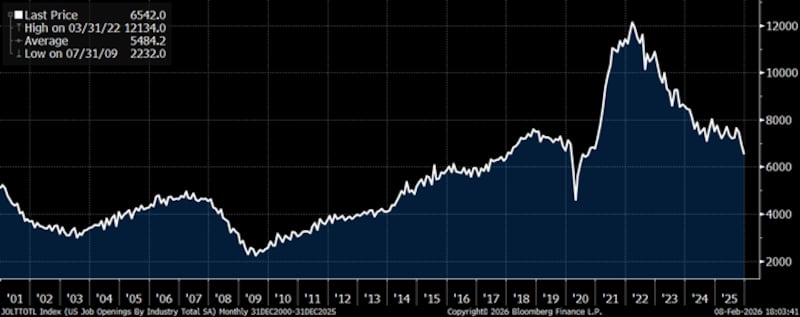
Last year, a similar revision lower shocked markets for a few days. This one could be way worse and hurt the Trump Administration’s narrative that this is the “best economy ever.” Last week, we saw the job openings loss and turnover survey (JOLTS) continue the trend of falling labour demand (job openings). When you add the significant changes to the labour force (immigration policy), there is a clear risk to an increased job mismatch, and likely an inflationary lift to employment costs.
Artificial intelligence impact is still unknown, but it could already be part of this dynamic. It will have significant impact on social policy in the years and decades ahead.
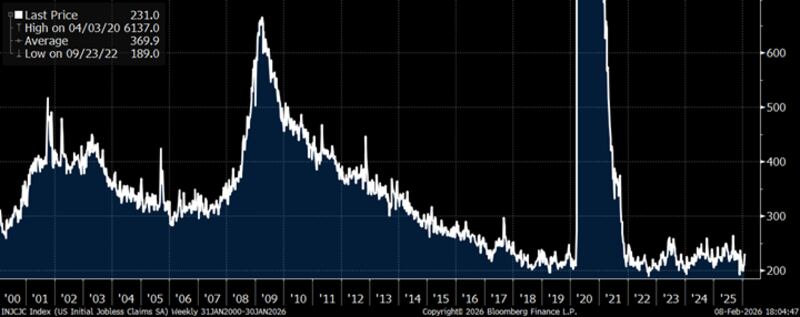
However, companies remain reluctant to fire employees (probably because it’s hard to find them) and for the most part, we are at full employment. Initial jobless claims continue to range in the extremely low category. A sustained uptick here would be a warning sign for sure.
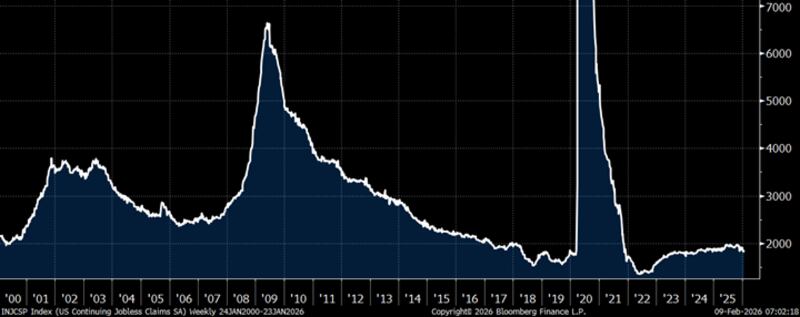
Once someone does get laid off, it’s taking a bit longer for them to find a job, but by historical standards, continuing claims are still very benign.
For us, the key to the market’s ability to continue to rally is linked to the labor market (the consumer). We know from listening to earnings reports that consumer spending is being supported by the top end of income earners. This is always the last part of the business cycle to break.
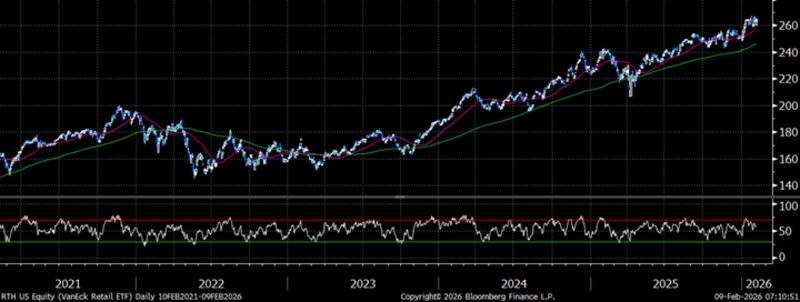
The post COVID-19 business cycle is unique. Never has there been so much monetary and fiscal stimulus thrown at the economy. The 2022 Fed tightening cycle did not break the economy and there is enough stimulus in the One Big Beautiful Bill (OBBB) to boost the consumer, the economy, and earnings in 2026. We get very concerned after the mid-term election in November that a fiscal cliff is ahead. Put these retail ETFs (RTH, RSPD) on your radar. Not to buy it, but to use it as a forward looking guide to the consumer. We keep seeing higher highs for now.