
The inflation headlines tend to focus on fuel prices and groceries because that impacts the news cycle and consumer in the most visible way (at the ballot box).
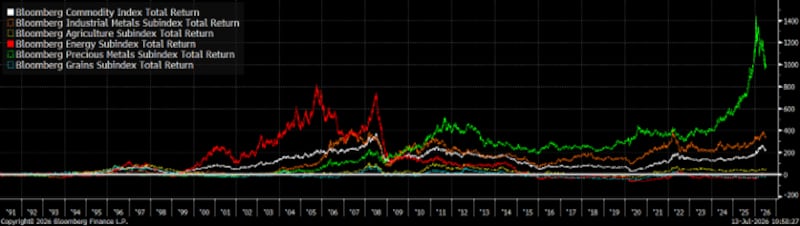
The reality is that outside of periodic spikes, commodity prices have actually gone down relative to inflation for decades. Productivity enhancing factors of production like machinery, medicines, pesticides, and technology have by and large taken cost of production down. Labour costs are a relatively small input cost to the basic goods supply chain. When pricing commodity indexes (read actually investing in them or an ETF that tracks them), the table below shows average annual returns, which in some cases is just the cash market return and in others, less or actual losses.
These do not include management fees. So I will reiterate again, while uncorrelated generally to stocks and bonds, buy and hold (outside of the metals) for portfolios makes ZERO sense. Commodities are cyclical and need to be traded.
| Class | Annual Return Since 01/01/1991 |
|---|---|
| Broad Commodities | 3.4% |
| Industrial Metals | 4.3% |
| Agriculture | 1.15% |
| Energy | -0.19% |
| Precious Metals | 6.88% |
| Grains | 0.64% |
The biggest input to inflation is cost of labour in a service economy like we have in North America. The Covid shock to wages may be an anomaly that is slowly normalizing or it could be that since 2011, when the first Baby Boomer hit 65, that changes to the supply of labour is now inflationary and the most important factor.
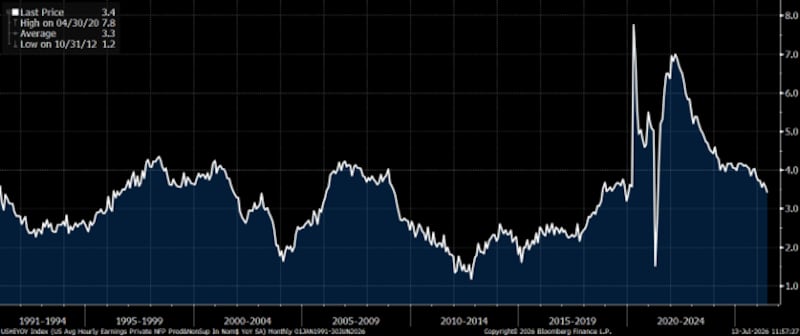
The interesting thing to note is what the impact of artificial intelligence will have in terms of labour productivity in the future and the supply and demand side of the labour picture. One thing is clear, lower levels of immigration and the aging demographic makes the supply demand equation really hard to forecast. We know the NEW FOMC leadership are creating task forces to better understand these dynamics, this is a good thing versus the DOT plot. Will they be better able to manage monetary policy? That is the question.
We can expect the U.S. Administration to try to manage the headline inflation risks heading into the U.S. mid-term elections in November. We should expect markets and commodity prices to remain volatile for longer than expected. We just heard this from Delta Airlines. We will be tuned to earnings calls to listen for what corporate America has to say on this dynamic. Will corporate America be absorbing rising input costs or passing along to consumers. That is the question I’m looking to answer, we know the middle east is a mess that is likely only temporarily curtailed due to U.S. political factors.

