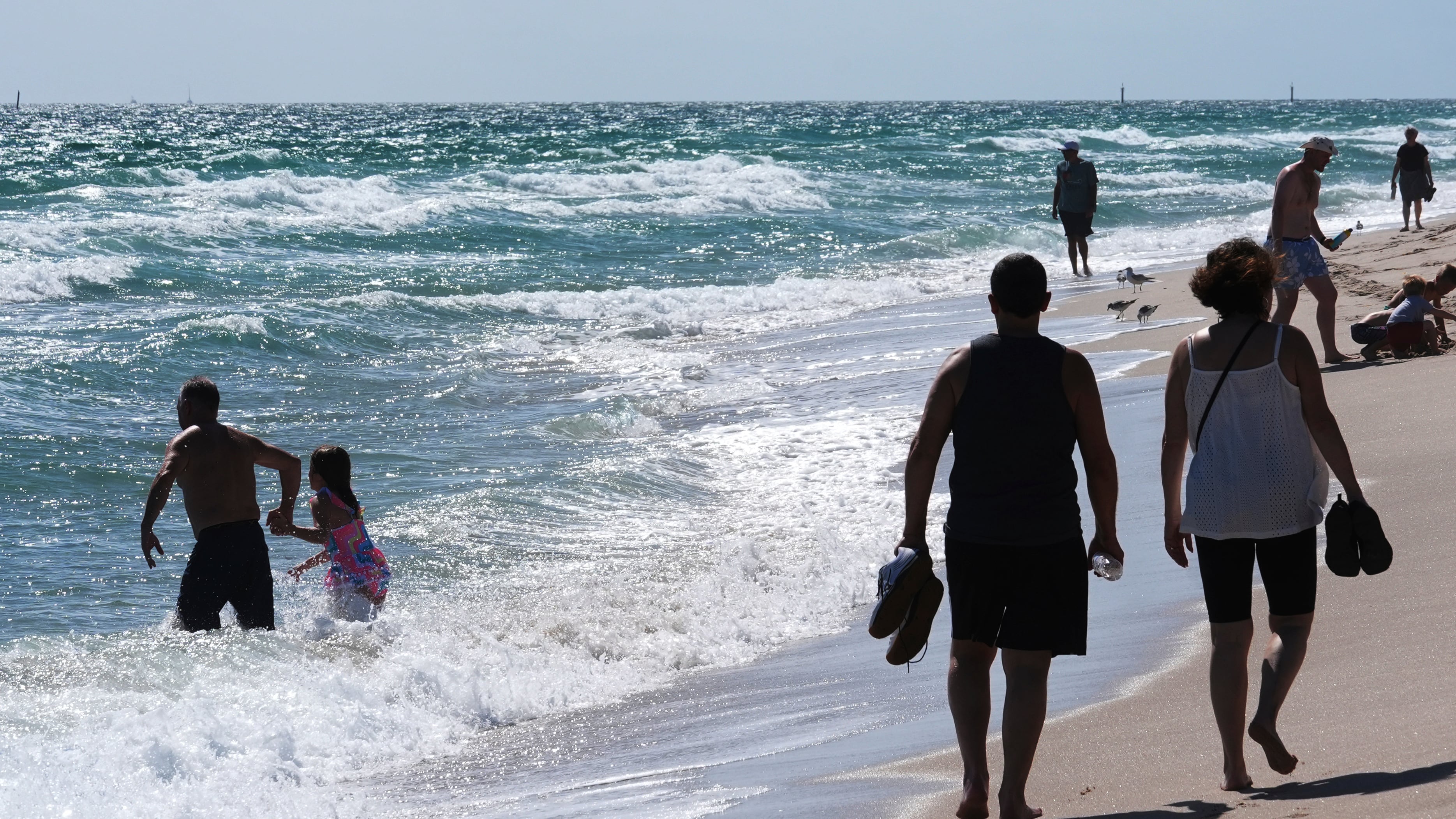
Ottawa continues to warn Canadians to expect extra scrutiny when travelling to the United States.
That includes the estimated one million retirees, called snowbirds, set to flock to warmer states like Florida and Arizona this winter. According to the Canadian Snowbird Association, that number has dwindled by 15 per cent to 20 per cent since the United States turned hostile to Canada.
Those still making the trek should be aware that as of April 2025, a new rule from Washington requires Canadians who spend 30 days or more in the United States to register with the Department of Homeland Security through an “Alien Registration Form.”
Not registering, or failure to provide proof of registration, could result in fines or even jail time.
There is no fee to register but the process could require indirect costs and advance planning.
Uncle Sam is watching
There could also be privacy issues.
U.S. customs agents have the authority to search phones and electronic devices at border crossings, but a 2014 information sharing agreement between the Canada Revenue Agency (CRA) and the U.S. Internal Revenue Services (IRS) could have already exposed more sensitive personal information.
The tax treaty attempts to determine which side of the border Canadians fall on for tax purposes through a complicated “substantial presence” formula that gives the IRS access to personal information including the location of their permanent home, family members, driver’s license and business activities.
Personal information available to U.S. tax authorities could also include where they vote and social, political, cultural or religious affiliations.
In 2016, Canada’s Privacy Commissioner - which provides advice for individuals about protecting personal information under the Federal Privacy Act - expressed concern. The privacy watchdog recommended that the CRA notify impacted individuals when and why their data is provided to the IRS.
Under the Privacy Act, general consent is required for the disclosure of personal information but also includes exemptions that allow for disclosures of personal information without consent.
The Privacy Commissioner says Canadians can contact the CRA directly to find out what information has been shared with U.S. authorities.
‘Substantial presence’ formula
Under the current agreement, snowbirds who spend more than 182 days in the U.S., based on a 3-year rolling average, can be taxed as U.S. citizens.
Those who fall under the IRS 183-day count and deemed not “substantially present” would not be obliged to pay U.S. tax but they must file a “Closer Connection Exemption Statement” (form 8840) with the IRS to establish they are more closely connected to Canada.
Since the tax-pact was penned, a growing number of Canadians - and even their advisors - have been blindsided by unexpected tax bills, penalties, or worse from the IRS.
“Such concerns get real for Canadian snowbirds who might have U.S. tax and filing obligations that are not up to date,” says Kim Moody, CEO of Moodys Tax in Calgary.
“If you spend too much time in the States without proper immigration status, you’re considered to be an illegal alien. If you’re caught, you could be permanently banned from the United States,” he adds.
Snowbirds who aren’t sure where they land on the tax divide should consider speaking with a qualified tax professional.
Moody says the information sharing agreement was likely sparked by an influx of Canadians buying U.S. rental properties in the wake of the 2008 real estate crash when high oil prices pushed the buying power of the Canadian dollar to over US$1.10.
According to a 2023 snowbirdadvisor.ca report, approximately one half of Canadian snowbirds in the U.S. own real estate.

