Disseminated on Behalf of: Total Metals Corp.
- Northwestern Ontario and southeastern Manitoba are experiencing a major exploration and production revival, with four mines expected to lift the area’s output to more than two million ounces annually by 2030 — restoring northwestern Ontario as one of Canada’s leading gold districts.
- High Lake and West Hawk Lake anchor Total Metals’ portfolio with defined high-grade gold resources and clear room for expansion in one of Canada’s most productive gold districts.
- Total Metals’ Electrolode Project adds polymetallic scale with copper, zinc, gold and silver in a defined high-grade core, along with new VTEM targets that have never been drill tested, providing near-term discovery upside. Electrolode is located in between Kinross Gold’s Great Bear Deposit and First Mining’s Springpole Lake Deposit.
- Located within a fully built mining corridor hosting multiple mills, Total Metals is pursuing a toll-milling and low-capex development strategy, preserving balance sheet strength while maintaining future partnership or acquisition optionality.
Northwestern Ontario has long been shaped by repeating waves of discovery. Each era of geologists has returned with better models, sharper structural understanding, and more precise exploration tools, revealing mineralization that earlier campaigns either missed or dismissed. The district is now entering another rise in activity driven by new discoveries and the redevelopment of historic mines.
By 2030, three major projects in the region are expected to be in production: West Red Lake Gold Mines at the Madsen Mine, Kinross Gold at the Great Bear Project, and First Mining’s Springpole Lake Project. Together, they are projected to lift northwestern Ontario’s gold output above two million ounces per year, or roughly 22 to 25 per cent of Canada’s estimated national production. This marks Red Lake’s return as one of the country’s most important gold-producing districts, reshaping economic expectations across the region.
The Great Bear discovery in 2017 has been central to this resurgence. It proved that even well-studied ground can hide high-grade zones that become visible only when historic core, drill logs and geophysical data are reinterpreted through modern frameworks. Investors, geologists, and producers have since begun revisiting earlier exploration footprints with renewed purpose.
It is within this period of renewed discovery momentum that Total Metals Corp. (TSXV: TT | OTCQB: TTTMF | FSE: O4N) is building its strategy. The company, which listed on the TSX Venture Exchange this month, has focused its strategy on assembling high-grade mineral resources near established processing infrastructure. Rather than pursuing large-scale mine construction, the company is concentrating on advancing resource growth, demonstrating continuity, and maintaining financial discipline by leveraging the region’s existing milling capacity. The intention is to refine the geological story, strengthen the resource base, and create optionality without the capital burden that accompanies new plant development.
Michael Dehn, Executive Chairman, @totalmetalscorp (TSXV:TT), and its executive management team, joined us to open the market and celebrate the Company's new listing on TSX Venture Exchange.
— Canada's Markets (@tsx_tsxv) November 6, 2025
Total Metals Corp. has rapidly accelerated its growth trajectory since its August 2025… pic.twitter.com/ixoGsUaTNF
“We want to become a serious resource company with ounces and tonnes in the ground,” said Executive Chairman Michael Dehn, known as the “Red Lake Guy.”
“Our gold model is focused on building a portfolio that consistently targets 10 grams per tonne or higher.”
Since its listing, the company has backed that vision with targeted transactions and steady technical progress.
High-grade gold with room to grow
The acquisition of the High Lake and West Hawk Lake projects in the Ontario–Manitoba corridor marked a defining early step for the company. High Lake currently hosts a NI 43-101 compliant mineral resource totaling 45,800 ounces of gold at 9.38 grams per tonne (Indicated) and 96,200 ounces at 10.43 grams per tonne (Inferred). These grades place High Lake among the higher-grade undeveloped gold assets in the region.
Early internal modeling suggests meaningful potential to expand mineralization both within the existing footprint and along structural extensions that have yet to be systematically tested. The project is also situated near established transportation routes, which supports operational efficiency for field programs and future haulage planning.
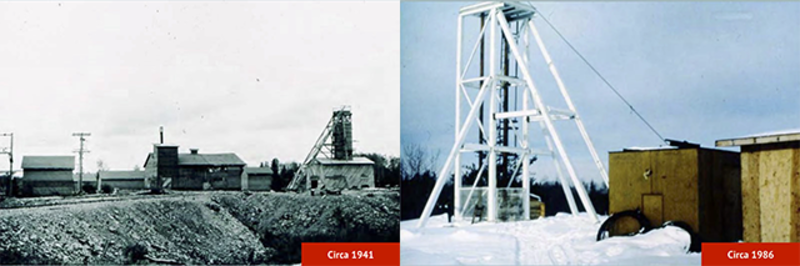
West Hawk Lake brings additional scale to the company’s portfolio. The property contains a historic resource of 204,292 ounces of gold grading 13.90 grams per tonne, supported by underground development completed during earlier mining cycles. The presence of development drifts and historical mine workings provides physical access points that may reduce the cost and complexity of drilling aimed at confirming resource continuity.
Total Metals is currently consolidating historical geological data, integrating modern structural interpretations, and preparing prioritized drill targets designed to convert legacy tonnage into compliant resource categories. Both projects demonstrate the company’s focus on high-grade systems that are not starting from zero but rather building on established mineralization that can be expanded through disciplined geological work.
Polymetallic system positioned for modern demand
The Electrolode Project, located in the Red Lake district, is one of the company’s core assets and the centre of its polymetallic resource growth strategy. The property spans more than 3,000 hectares and includes 143 mineral claims, all currently permitted for exploration drilling through May 2027.
Electrolode hosts a volcanogenic massive sulphide system with structural overprinting and contains a NI 43-101 inferred resource of 2.1 million tonnes grading 0.66 per cent copper, 4.75 per cent zinc, 0.66 grams per tonne gold, and 17.7 grams per tonne silver. Within this inventory is a high-grade core of approximately 490,000 tonnes grading 1.35 per cent copper, 17.87 per cent zinc, 0.86 grams per tonne gold, and 36.1 grams per tonne silver, providing leverage to both precious and base metal price strength.
Electrolode is west of the past producing South Bay Mine. The South Bay mine produced approximately 1.266 million tonnes of ore between 1971 and 1981, yielding an average grade of 2.3 per cent copper, 14.5 per cent zinc, and 3.5 ounces per tonne silver. The mine operated at a rate of about 500 tonnes per day from its discovery and initial production in the early 1970s until production ceased in 1981.
These metals play roles in foundational industrial sectors. Copper remains essential to electrical wiring, power transmission, and the accelerating buildout of electric vehicle charging infrastructure. Zinc is central to steel galvanization for bridges, transportation structures, and long-life construction. Silver continues to gain strategic relevance due to its critical function in solar cell manufacturing, electronics, and medical applications. The gold present in the deposit offers a stabilizing hedge within the broader metal mix.
Technical data from Electrolode also indicates the geological conditions needed for the presence of indium and germanium, two metals used in semiconductors, high-performance coatings, and specialized optical systems. While their presence remains to be confirmed through additional targeted assays, their potential introduces an additional layer of strategic upside consistent with supply chains tied to energy transition and digital infrastructure growth.
Recent geophysical surveys have expanded the discovery horizon at Electrolode. A series of VTEM conductor anomalies have been identified across the property, representing potential sulphide accumulations or structurally controlled mineralized zones that have never been drill tested.
Several zones also contain historical drill intercepts that were not assayed for gold, a reflection of earlier exploration campaigns that focused primarily on base metals.
This creates an unusual situation in which meaningful new discovery potential exists within already accessible areas, allowing the company to target high-impact exploration without requiring remote or deep step-out drilling programs.
Infrastructure and development advantage
One of the principal strengths of Total Metals’ approach is its location within a well-established mining and processing corridor. The broader northwestern Ontario and southeastern Manitoba region hosts multiple existing and planned mills, offering a network of potential toll-milling and processing partners within trucking range of the company’s assets.
This regional infrastructure context allows Total Metals to advance its projects without committing to the cost and timeline associated with building a new processing facility. It also creates flexibility in development sequencing and provides multiple strategic pathways as resources grow in size and confidence.
“We do not necessarily need to be the producer,” said Dehn. “The goal is to make the projects attractive enough that an existing mill will want to buy the rock. Putting 10-gram material on a truck is economical.”
Leadership grounded in local geological history
The company’s leadership has decades of experience tied directly to the Red Lake mining district and the development of its most influential deposits. Executive Chairman Michael Dehn spent more than a decade as a senior geologist with Goldcorp, working during the discovery, delineation and expansion of the High-Grade Zone that transformed Red Lake into one of the world’s most profitable gold operations. His background includes senior roles in corporate development and technical oversight across numerous Canadian exploration companies, giving him a practical approach to advancing projects from early-stage geology through to economic evaluation.
Rob Penczak, P.Geo, Vice-President of Exploration, leads exploration strategy and is recognized for his work in helping define the structural controls behind the High-Grade Zone. His field-based insights into Red Lake’s folding, shearing, and mineralization corridors have influenced how multiple companies now explore the district. Penczak’s background spans both discovery and resource-model refinement and advancement to production of the Cochenour, Eleanore and Borden deposits for Goldcorp, which positions the company well for staged expansion of known zones at Electrolode, High Lake, and West Hawk Lake.
Tim Twomey, P. Geo, ‘Mr. Red Lake’ has reunited with Michael and Rob to form a Goldcorp 2.0 dream team. Bringing new ideas, Director David Burga, P.Geo who worked on a the most recent 43-101 report on the West Hawk Lake and High Lake Project, and Colin Bowdige, P.Geo, who has many years experience on the Electrolode Project and many other projects in the district and across Canada.
President and CEO Tyler Thorburn brings project execution experience, permitting coordination, and operational leadership across Western Canada and Ontario. His experience bridging regulatory, contractor, and local community systems supports the company’s commitment to a disciplined, staged development plan.
Rounding out the board of directors is Eric Szustak, CPA, who has worked for decades with junior explorers.
A team of Four Qualified Persons (QPs) guide technical disclosure and ensure that resource work and exploration programs align with NI 43-101 compliance standards. This combination of district memory, geological specialization, and regulatory discipline provides the company with a foundation that is uncommon for a newly listed junior.
Building ounces and optionality
Total Metals is focused on building trust and long-term value, starting with early-stage engagement with First Nations at High Lake and West Hawk Lake, and prioritizing clear communication and minimal environmental impact in its permitting strategy. By bringing fully developed exploration plans to communities before entering deep consultation, the company aims for informed, transparent dialogue that supports responsible project development.
At the same time, Total Metals has set an ambitious target to define two to four million ounces of gold within the next 18 months, believing that steady resource growth will clarify options for toll milling, joint ventures, or acquisitions as geological models improve.
As Dehn noted, “When the geology becomes clear, strategic options tend to take care of themselves.”
To learn more about Total Metals, visit their website here.
For the latest updates, follow Total Metals on social media: LinkedIn, X, Facebook, and Instagram

