Disseminated on Behalf of: Charbone Corp.
- Charbone is North America’s only publicly traded pure-play focused exclusively on clean, ultra-high-purity hydrogen, providing investors with exposure to a booming market driven by industrial, semiconductor, and clean manufacturing demand.
- The company’s decentralized, modular plant strategy enables rapid, capital-efficient expansion near customers, minimizing logistics costs and offering near-term cash flow and profit scalability.
- Charbone is well-funded, while already generating revenue from industrial gas sales and positioned for profitability within a year as hydrogen production ramps up.
The global shift toward cleaner industrial production has pushed hydrogen from the sidelines into the centre of strategic planning across manufacturing, defence, steelmaking, and advanced technology sectors. But not all hydrogen is created equal. The future belongs to clean, ultra-high-purity (UHP) hydrogen, and a Canadian company is now positioning itself as an early leader in this fast-expanding market.
Charbone Corp. (TSXV: CH | OTCQB: CHHYF | FSE: K47) is building what it calls a modular and decentralized network of clean UHP hydrogen production sites located close to industrial users. This approach lowers transportation costs, speeds delivery, and allows Charbone to scale capacity based on local demand.
As company CEO Dave Gagnon puts it, “We are actually the only publicly traded hydrogen player in Canada focused on clean, ultra-high-purity hydrogen, and we have stayed focused on industrial users since day one.” He adds, “If you are using water and renewable electricity, you are producing UHP hydrogen. If you are using natural gas, you are producing grey or blue hydrogen. The difference in emissions can be from two kilograms to 10 kilograms of GHG per kilogram of hydrogen. With us, it is near zero.”
While much of the public conversation around hydrogen has centred on fuel cell cars or heavy trucking, Charbone has deliberately avoided the hype cycle. “We are not chasing mobility. We are focused on the industrial market, where hydrogen has been used for over 50 years. These users want a cleaner molecule, and they need supply now,” Gagnon said.
This clarity of focus is shaping the company’s trajectory at a critical moment in the energy transition. Industry analysts forecast the green hydrogen market to grow from US$1.5 billion in 2024 to nearly US$170 billion by 2034, driven by industrial decarbonization mandates, semiconductor expansion, and global net-zero policies.
A different way to build hydrogen production
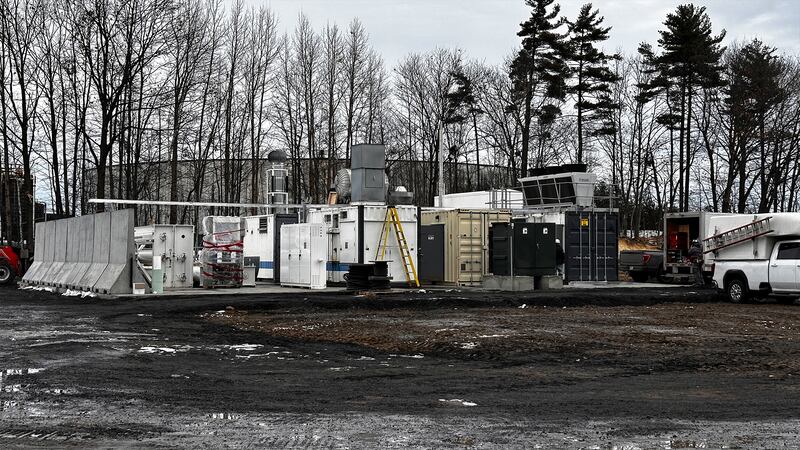
Traditional hydrogen developers often pursue large centralized “super hub” facilities that can take five to eight years to plan and construct. Charbone is doing the opposite.
“We are much more agile. We are much more flexible. Our modular systems can be built quickly and reproduced close to the end users,” Gagnon explained. “It is simply more profitable to build near the customer because you save on logistics and storage.” That model is now being executed at Sorel-Tracy, the company’s flagship project in Québec.
A recent project update confirmed that Charbone has completed the electrical interconnection to Hydro-Québec and the installation of the water supply system capable of supporting all five planned phases of expansion. With both core inputs for electrolysis now secured, construction crews are preparing the site for equipment installation and initial production. “We are proud of the progress to date and remain on track to commence production this fall,” said Gagnon.
Since that update, Charbone has completed the installation of equipment for Phase 1A at the Sorel-Tracy site and confirmed the production of its first ultra-high-purity hydrogen molecule following initial commissioning tests conducted in late November. The company said the system is functioning properly, validating initial performance parameters and marking a key operational milestone for the project.
CHARBONE Announces the Reception of the Main Components at the Sorel-Tracy Site and the Launch of Civil Works
— CHARBONE hydrogen TSXV:CH (@CHARBONE_news) October 22, 2025
CHARBONE annonce la réception des principales composantes sur le site de Sorel-Tracy et le lancement des travaux civils pic.twitter.com/mXtTaiGBpc
The significance of Sorel-Tracy goes beyond Québec; it establishes the template for how Charbone intends to scale. With first hydrogen production now completed, the Sorel-Tracy facility represents Québec’s first local and decentralized clean ultra-high-purity hydrogen production site, positioning it as the foundation for Charbone’s broader North American production and distribution network.
Sorel-Tracy’s Phase 1A (of five phases) has a target of supplying roughly 200 kilograms per day of ultra-high-purity hydrogen to industrial users in Québec, Ontario, and the U.S. northeast. Furthermore, the company is also applying the same decentralized approach in Malaysia, where a new collaboration is underway to support one of the fastest-growing electronics and semiconductor regions in Asia.
Hydrogen in this sector is not merely an energy input. It is a precision material used in wafer fabrication and advanced component manufacturing, where ultra-high purity standards are mandatory. “Malaysia has been interested in hydrogen development for many years,” Gagnon said. “What they are looking for with us is to save years of investment. Our model can be deployed quickly to serve strong industrial demand.”
Like Sorel-Tracy, the Malaysian strategy is built around smaller, repeatable plants located close to the customer. It avoids the long financing cycles and multi-year construction timelines that define traditional hydrogen megaprojects. It also means Charbone is not trying to create the market. It is following it.
“We follow our customers. We listen to where the demand is. And we go there,” Gagnon said.
Expansion in the United States
Charbone’s next major project will be built south of Detroit, placing the company in the centre of one of the most important industrial corridors in North America. The region is home to steel producers, automotive manufacturers, specialty metal fabricators, and emerging battery and fuel cell supply chains, all of which use hydrogen today and are under pressure to cut emissions in their production processes. “Detroit is a fantastic place to deploy our business model. We are close to Chicago, Cleveland, and Toledo. It is the industrial heartland. This is where we will be,” Gagnon said.
As in Québec, the Michigan site will be built in modular phases, beginning with a facility capable of producing roughly one tonne of hydrogen per day, with room to expand as customer demand scales. The strategy mirrors Sorel-Tracy: build small, local, and expandable, instead of chasing multi-billion-dollar centralized hydrogen hubs that take years to finance and construct.
Gagnon explains, “We are very customer-oriented. If a customer needs supply in Michigan, we build in Michigan. If the demand grows, the plant grows. That is our model.”
The company has already secured strong regional backing for the U.S. launch. Gagnon referenced direct engagement with state leadership, including Michigan Governor Gretchen Whitmer, during recent meetings in Québec. That support reflects a wider trend of American states competing aggressively for clean manufacturing investment and specialty material supply chains.
The difference in emissions can be from two kilograms to ten kilograms of GHG per kilogram of hydrogen. With us, it is near zero.
— Dave Gagnon, CEO of CHARBONE Corp.
The Michigan facility will also act as a cross-border distribution anchor, linking Sorel-Tracy into U.S. supply chains while reducing tariff exposure on deliveries into the Midwest and Great Lakes region. “We are not concerned about tariffs because we are building on both sides of the border,” Gagnon said. “Cross-border flexibility is part of our model. We will produce in Canada and in the U.S. to serve demand in both markets.”
Production from the Detroit-area facility is planned to follow the Sorel-Tracy commissioning in Québec, creating a two-node supply network capable of serving industrial hydrogen users across Eastern Canada and the northeastern and midwestern United States.
This next step signals Charbone’s transition from a single-asset developer to a multi-site hydrogen producer, supplying customers on both sides of the border, and doing so with near-zero-emission, ultra-high-purity hydrogen at a time when the industry is under pressure to decarbonize quickly.
Revenue and profitability timeline
Revenue and profitability are central to Charbone’s transition from developer to producer, and the company is clear that this shift has already begun. Charbone CFO Benoit Veilleux said the company has moved into revenue generation ahead of hydrogen production ramping online.
The successful commissioning of Phase 1A and the confirmation of first hydrogen output at Sorel-Tracy signal Charbone’s entry into its commercial production phase, moving the project from construction into early operational delivery.
“We have already started generating revenue through industrial gas distribution, and hydrogen production will start next month. We expect to break even within a year,” he said, noting recent sales of helium to customers in Ontario as the first revenue milestone.
Phase 1 production at Sorel-Tracy is projected to generate approximately $5.1 million in annual revenue, rising toward $66 million annually at full buildout as the facility expands through five stages of modular growth.
The economics are driven by the nature of the company’s core product. Ultra-high-purity hydrogen is a specialty commodity used in electronics, semiconductors, aerospace, medical, and precision manufacturing. These sectors buy based on purity and reliability, not commodity discounting. The price premium is structural.
As Veilleux explained, “It is a high-margin market where Charbone will be able to offer competitive prices while generating more than 50 per cent IRR for our projects.” That margin profile is strengthened by Charbone’s decision to localize production near end users, reducing transportation costs and storage losses. It also shortens the time from delivery to revenue recognition, further accelerating cash flow.
“The company has also already secured offtake arrangements with Tier 1 industrial gas distributors in North America, ensuring a ready market for supply”, said Veilleux.
For investors, Charbone is no longer a concept waiting on validation. It is a company entering commercial operation with a replicable model, clear customer demand, and a pathway to profitability. As production begins and new facilities follow, the market will measure Charbone not by projections, but by delivered volumes and recurring revenue. That shift from promise to performance and profitability is now underway.
To learn more about Charbone, visit their website. For the latest updates, follow Charbone on social media and other online platforms: X, Threads, Instagram, and LinkedIn.

