The University of Calgary is launching new programs to quickly grow Canada’s carbon capture, utilization and storage (CCUS or CCS) workforce.
The move coincides with Alberta and Ottawa’s recent memorandum of understanding, which puts national focus on major emissions-reduction projects.
The initiatives—backed by federal funding and developed in partnership with Carbon Management Canada (CMC), SAIT and geoLOGIC Systems Ltd.—are designed to meet a widening talent gap across the clean-energy sector.
With the MOU committing both governments to advance the massive Pathways Plus CCUS network, academic leaders say demand for engineers and geoscientists with specialized skills is expected to surge.
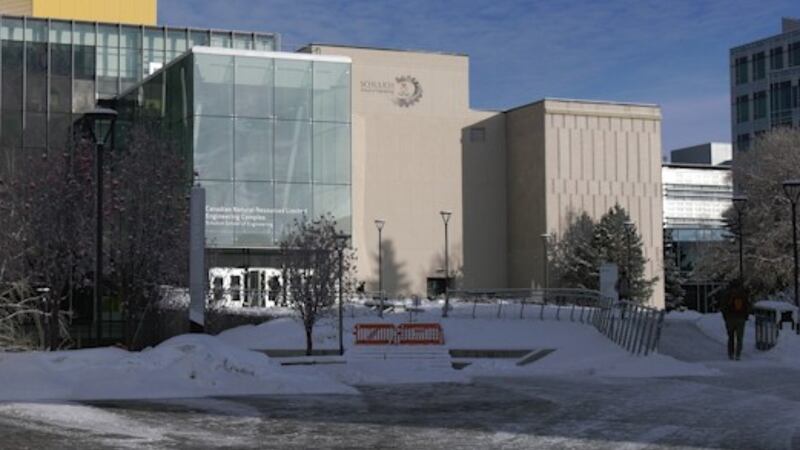
“We are contributing to developing the workforce that’s going to be needed to implement things like Pathways,” said Anders Nygren, dean of the Schulich School of Engineering.
“There’s going to need to be engineers in the province who have not only the engineering background but also this specific domain knowledge for carbon capture and storage.”
CMC president and CEO Neil Wildgust said the partnership represents a major step forward.
“We’re really excited about the partnership with the University of Calgary, with SAIT and with geoLOGIC Systems,” he said.
“With the awarded $11-million grant over three years from the federal government to provide CCS training, we think it’s a vote of confidence in this sector, in the province and in Canada.”
Building Canada’s CCUS workforce
The flagship offering at UCalgary is a new four-course graduate certificate in carbon capture, utilization and storage, delivered over 16 months and tailored to engineers, geoscientists and energy professionals already working in the industry.
Fully funded scholarships covering tuition, program and supplementary fees are available for two cohorts of 56 Canadian students beginning in January 2026 and September 2026.
Courses will run one at a time, in evenings or on flexible schedules, allowing students to continue working full-time.
The curriculum includes:
- Carbon capture principles and technologies;
- Subsurface energy engineering and storage;
- Data science and machine learning applications in CCUS; and
- Life-cycle analysis for emissions-reduction projects.
“The goal is to equip individuals with specialized knowledge and practical skills in CCUS technologies,” Nygren said.
“The growing need and interest in carbon capture and storage is what drove the new program, so we wanted to take engineers who already have experience and give them the domain knowledge specific to CCS so they can quickly get up to speed.”
Wildgust highlighted the multi-institutional approach and its reach.
“Our aim is to train over a thousand workers over those three years,” he said.
“We think this is a great opportunity to develop a talent pool for CCS as it moves forward.”
The university’s faculty of science is also launching a graduate micro-credential program called Subsurface Evaluation for Clean Energy, offered entirely online through continuing education.
It covers CCUS, hydrogen production, geothermal energy and critical minerals, with fully funded scholarships available for five cohorts of 35 Canadian students.
Wildgust said the training aligns with an urgent national need.
“If a large number of projects move forward, there’ll be a large demand for jobs as well,” he said.
“We’re hopeful this initiative will create a very substantial workforce for those projects to use.”
MOU accelerates opportunities
The launch of the new programs overlaps with a major political and economic shift: the federal-provincial MOU signed by Prime Minister Mark Carney and Alberta Premier Danielle Smith, which lays out a path toward constructing a new, privately financed bitumen pipeline to the B.C. coast.
In exchange for federal project facilitation—including potential “national interest” designation—Alberta has committed to enacting a higher industrial carbon price and advancing the Pathways Plus CCUS megaproject.
In a statement to CTV News, Pathways Alliance president Kendall Dilling said news of more training opportunities is encouraging.
“We’re always glad to see new opportunities for training and skills development focused on CCS,” Dilling said.
“CCS is a proven technology used around the world, including here in Canada. According to the Global CCS Institute’s 2025 Report, there are 77 carbon capture and storage projects in operation, 47 under construction, 313 in early development and 297 in advanced development.”
Wildgust said the MOU also reinforces the need for rapid scale-up of CCUS expertise to support large storage hubs, develop capture technologies, design monitoring systems and accelerate emissions-reduction timelines.
He said two elements of the deal could also significantly accelerate CCUS investment and aid in addressing labour gaps.
“The first is that there’s an ambition to have a $130 carbon price, and the second is the inclusion of enhanced oil recovery projects in the federal tax incentive for CCS,” he said.
“Both of those developments will really help to incentivize CCS projects moving forward.”
Urgent need for trained workforce
Breanne O’Reilly, chief operating officer of the International CCS Knowledge Centre, emphasized the need for labour to keep up with the growing number of CCS projects.
She said there are currently 85 projects being planned or proposed across Canada—most within Alberta.
“If all of the projects went ahead, we do not have enough labor in Canada, or the supply chain in general,” she said.
“I don’t even know if we’d have to be importing a lot of labour, a lot of steel and a lot of concrete and cement. It would be a logistical nightmare.”
It’s why O’Reilly called the new UCalgary training program “fantastic news,” stressing the importance of structured training to avoid labour shortages and excessive wage inflation.
“The challenge when you’re looking at an industry that’s growing so much is the temptation to just hire from somebody else so that you don’t have to do training yourself,” she said.
“That would lead to a huge increase in salaries, so having programs that can help with that upskilling without needing to steal from existing projects is essential. Otherwise, there’s not enough labour out there that can hit the ground running.”
Within the Schulich School of Engineering, researchers say the need for CCUS skills is no longer a future projection—it is already being felt in industry today.
“There have been lots of requests from industry, from government, from people outside the university to participate and learn more about the cause,” said Nader Mahinpey, a professor specializing in novel CO₂ capture technologies.
“Companies have departments dedicated to this. They need more people with the job.”
Mahinpey said the certificate program was designed to translate real-world problems, research breakthroughs and industry challenges directly into classroom learning.
“This course provides basic and fundamental knowledge,” he said.
“It gives people a sense of how they can make an impact.”
Alberta’s role as the centre of Canada’s energy sector also gives it an advantage in both CCUS deployment and labour development, Mahinpey added.
“My graduate students, almost all of them, are hired in CCUS-related areas,” he said.
“Students trained in CCUS consistently move directly into industry roles, a trend expected to accelerate as the Pathways Plus project advances.”

