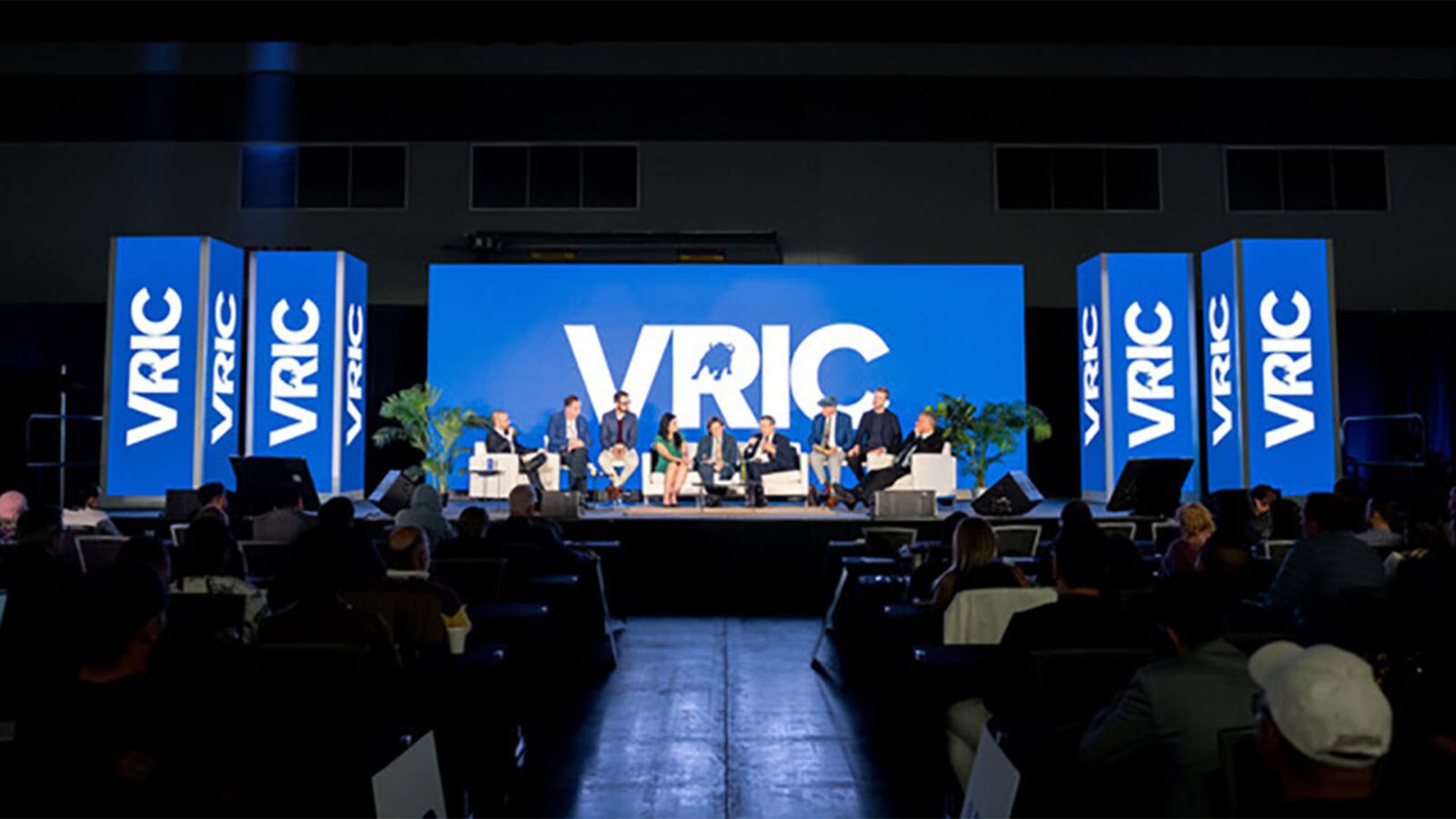
Disseminated on Behalf of: Vancouver Resource Investment Conference
- The Vancouver Resource Investment Conference, one of the continent’s most strategically influential mining sector events, takes place Jan. 25 and 26, 2026, at the Vancouver Convention Centre.
- Over 12,000 investors, 120 keynote speakers, and more than 300 mining company exhibitors will converge over two extraordinary days of programming and meetings.
- This consequential gathering will expose attendees to exclusive perspectives, forecasts, and predictions, as well as key emerging resource investment opportunities.
What’s past is prologue
Looking out through the towering windows of the Vancouver Convention Centre, where the annual Vancouver Resource Investment Conference (VRIC) will be staged later this month, one is genuinely moved by the sweeping shorelines and beautiful mountain vistas of Coal Harbour.
It’s the perfect setting in one of Canada’s most mining-rich provinces for an international gathering on natural resource investment. And if you gaze wistfully out those windows just long enough, you might imagine seeing a century-old convoy of ore freighters transporting coal, copper, gold, and silver through the mist for delivery to markets throughout North America and beyond.
Jay Martin, CEO of Cambridge House International and Host of the VRIC, is the visionary executive driving this strategically influential event in the mining sector. Intellectually engaged and possessing a focused energy, he holds a distinctive grasp and appreciation of resource history, which has greatly influenced his structure and design of the conference. Martin is also a scheduled speaker himself and a crowd favourite, moderating many of the featured panels as well.
“There’s nothing that I love more than studying global power and why it is distributed the way it is,” said Martin, in an interview on the eve of the VRIC’s 26th edition.
“You can track centuries of power distribution around the world and what you will always find is that it gravitates around who controls the most valuable resources of the day… and it is shocking sometimes what those resources may be,” he added.
Martin says that the daily, hyperbolic, and sensationalistic headlines we all see make it hard to distinguish what monumental events actually matter, and which ones will disappear after the 24-hour news cycle. However, he believes that using the supply and demand of raw materials, and effectively applying trade as the filter to understand global events, can help provide a lot of clarity and simplicity about how many things actually function, and accordingly, how one might be able to make more astute investment decisions in the resource sector.
“Of course, we fight over oil, it’s the most important commodity there is,” said Martin, and certainly recent events in Venezuela, and the ongoing political positioning related to the Arctic (of vital interest to Canada) and Greenland, may result in a redrawing of the global map as world powers move to secure energy dominance.
“But if you go back 500 years, we also went to war over black pepper, cumin, mace, and nutmeg, and the spice islands were that geopolitical hot spot that the Dutch, Spanish, and English all wanted,” Martin added.
“So it’s fascinating to study these trends because it’s the same story repeating itself again and again and again, and I find it helpful to step back and realize that it all comes down to who’s got what and who wants what.”
One of the big themes of the conference this year is that this is a seismic shift in sentiment in our industry and we’re going to feel this for the next ten years.
— Jay Martin, CEO of Cambridge House International and Host of the Vancouver Resource Investment Conference
Seismic shifts and the end of an era
Martin’s study of historical resource development, control, and conflict helps him better understand the macroeconomic, microeconomic, and geopolitical forces currently at play in order to better gauge how to capitalize on market movements and trends.
He draws from this to better build out his conference to educate and inform attendees so they can more effectively construct and grow their own resource-based investment portfolios amid the present machinations at play, as well as those that are staging for the future.
Martin underscores that mining is still emerging from 15 years of being universally hated as a toxic sector, and that the world is steadily waking up to the reality that the industry contributes ingredients to the economy that are non-discretionary. He believes that the era of globalization and cooperative shared access to resources is over, that western governments have now started to realize that they don’t control or own anything anymore, and that this puts incredible demand on scarce assets.
As a result, Martin says the resource sector is now being embraced in a major way, with the U.S. government becoming one of its lead activist investors.
“They are now writing cheques into mining deals and taking equity positions, and this puts a tailwind behind our industry that we’ve never seen before,” said Martin.
“The U.S. government is the largest shareholder of MP Materials (the largest rare-earth materials company in the Western Hemisphere), a 10 per cent shareholder of Lithium Americas, a five per cent shareholder of U.S. Antimony, and a 10 per cent shareholder of Trilogy Metals here in Vancouver,” he added.
Martin said he doesn’t want governments in his industry and business, and that they don’t care what he thinks, but it’s his job as an investor to play the game in front of him, and to advise his conference delegates to do the same.
“One of the big themes of the conference this year is that this is a seismic shift in sentiment in our industry and we’re going to feel this for the next ten years,” he added.
Martin says this year’s VRIC will also focus on the acceleration of de-dollarization and how the shift away from the U.S. dollar is impacting commodity prices; how geopolitical changes are reshaping critical resource supply chains and creating both volatility and opportunities; emerging market growth and how this will boost resource demand; the advance of AI and how its insatiable need for energy is driving commodity demand; and how years of underinvestment in the mining and hard commodities sectors are creating a supply squeeze that could dramatically raise prices.
Dissecting noise from signal
Martin and his team—which he praised and extolled throughout the interview—work hard all year to organize a powerhouse lineup of speakers for the conference, representing a wide range of experiences and backgrounds, to effectively address and interpret the program’s themes and focuses.
This year’s 120 keynote speakers include industry legends like Rick Rule, Robert Quartermain, Ross Beaty, and Frank Giustra, along with a myriad of other accomplished CEOs, speculators, geologists, traders, authors, policymakers, and entrepreneurs, including three young billion-dollar company founders who represent the next generation of sector achievers.
And Martin says they are all coached to effectively deliver their viewpoints in the short, mostly 20-minute speaker segments and corporate workshop presentations that the conference has become famous for, and to communicate in a way that the retail investor can easily understand.
“I tell them to get up there and swing for the fences, throw some haymakers, deliver 20 minutes of value, and then go follow up on the floor,” said Martin. All his speakers are contracted to be at the event for the full two days and to mix and mingle with delegates throughout, answering questions and providing further colour one-on-one.
On the other side of the coin, Martin is very clear that the 12,000 attendees themselves have to work hard at the conference to derive maximum benefit from its dense programming by listening intently to a wide variety of opinions, forecasts, and predictions, and then taking what works for them and discarding the rest.
“None of these analysts, none of the newsletter writers, none of the seriously successful investors have a foolproof plan or an investment thesis that’s a one-size-fits-all scenario,” said Martin.
“Each investor’s time horizon, available risk capital, investment goals, and life stage are going to be different from the next person, so you have to listen to as many ideas as possible and create your own strategy,” he added.
Martin says that 35 per cent of his attendees at last year’s event were there for the first time, eight per cent were under the age of 25, 20 per cent were under the age of 35, and that he expects similar statistics this time around too.
A huge supporter of educating youth on the basics of resource investing, Martin has also created The Commodity University, an expansive online education program providing a strong foundation for young people interested in investing in the resource sector, and for newcomers as well, including attendees who may want an investment primer to help better prepare for the conference.
“You’ll see kids at this show, including high school students who are 16 and 17, and it is a growing trajectory,” said Martin. “Every time I see somebody who is extraordinarily young at the conference, I just have to meet them, and I go talk to them... I think it is awesome.”
On the exhibition floor, Martin says attendees can expect to visit over 300 booths representing a diverse range of producers, including some of the biggest royalty companies in the business, like Wheaton Precious Metals Corp.
“Randy Smallwood (President and CEO of Wheaton Precious Metals) never misses our event and always joins me up on stage for a catch-up and a bit of a chat on his take on the silver sector, and likes to remind everybody how much cash Wheaton generates, which is a lot,” said Martin. “So, it’s a super fun conversation that I enjoy every single year.”
To help set the stage, Martin says that he will be opening up the conference with a panel called “This Isn’t Our First Bull Market,” featuring mining legends Bob Quartermain, Rick Rule, and Ross Beaty. Martin says he will ask these panellists to put the variety of predictions, forecasts, and opinions delegates will hear over the course of the conference into context by applying the lens of their almost 150 years of collective experience and success.
“If we can start off framing it all through the lens of three individuals—two company builders and one financier—who have outperformed the market for decades and understand its history, then that will be a great place to begin,” said Martin.
To learn more about the Vancouver Resource Investment Conference, visit their website. To register as an attendee for free, visit their event page.

