Disseminated on behalf of: PesoRama Inc.
- As the global dollar-store market tracks toward roughly 41 per cent growth by 2033, PesoRama’s first-mover expansion in Mexico is resonating with investors drawn to the country’s rising demand for affordable, convenience-driven retail.
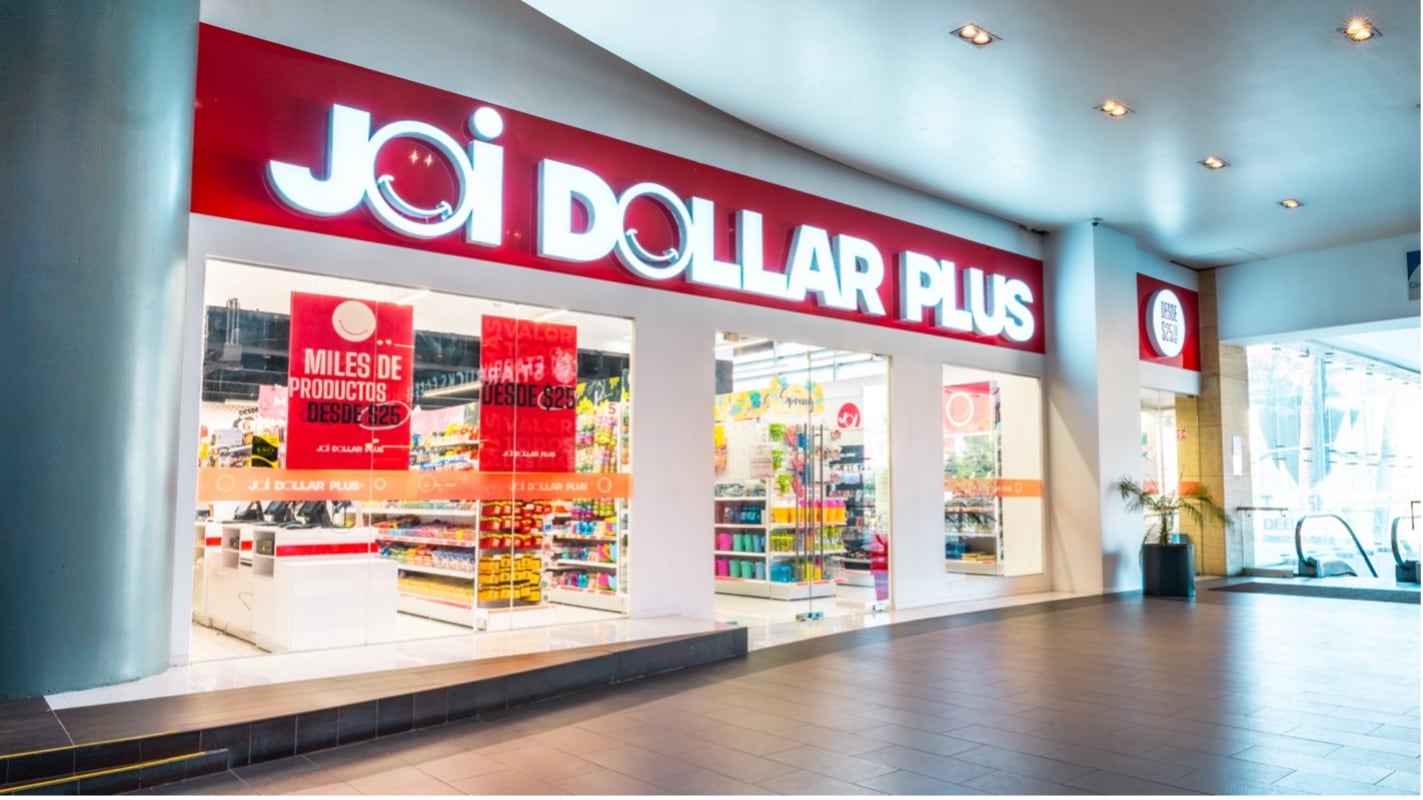
- PesoRama has grown to 35 JOi Dollar Plus stores and plans to add another 30 this year, doubling down on a Mexican discount retail market that remains largely open and underpenetrated.
- PesoRama’s latest reported results point to sustained growth, with nine-month gross profit up 41.1 per cent to $9 million, as it works toward its goal of opening 500 JOi Dollar Plus stores in Mexico over the next five years.
Inflation has reshaped consumer spending, pushing more shoppers toward lower prices, private-label products, and retailers that help everyday purchases go further. That shift is powering growth across the global dollar-store sector, a format built on low-ticket goods, repeat visits, and sharp pricing.
According to HTF Market Insights, the global dollar-store market is projected to grow from US$92 billion in 2025 to US$130 billion by 2033, as consumers gravitate toward retailers that offer clear value, attractive stores, convenient high-traffic locations, and predictable pricing.
Nowhere is that opportunity clearer than in Mexico, where a population of about 133 million could support more than 13,700 dollar stores, says Rahim Bhaloo, Founder, CEO and Chairman of PesoRama Inc. (TSXV: PESO).
Building early scale in a big market
With 35 JOi Dollar Plus stores already operating in and around Mexico City, the Canadian company is pushing deeper into a discount retail market with significant room to grow.
“We plan to open another 30 stores this year as we work toward our goal of 500 JOi Dollar Plus stores in Mexico over the next five years,” said Bhaloo.
“We have a robust pipeline of high-density traffic areas where we plan to open additional stores to drive continued growth and success.”
Bhaloo said PesoRama’s model is resonating with Mexicans in much the same way Dollarama connected with Canadian consumers.
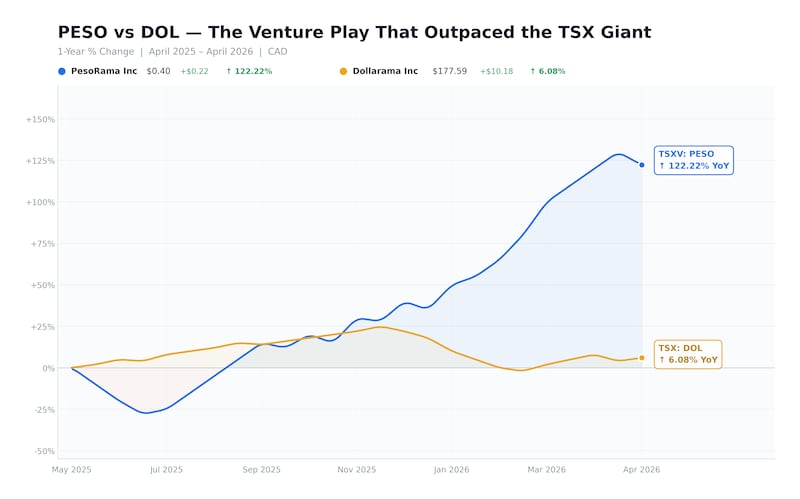
Dollarama, Canada’s dominant dollar-store chain, has 1,691 stores across the country, or roughly one location for every 24,500 people in a population of about 41.5 million.
“In Mexico, the dollar-store opportunity is about eight times larger than Dollarama’s current Canadian footprint,” said Bhaloo.
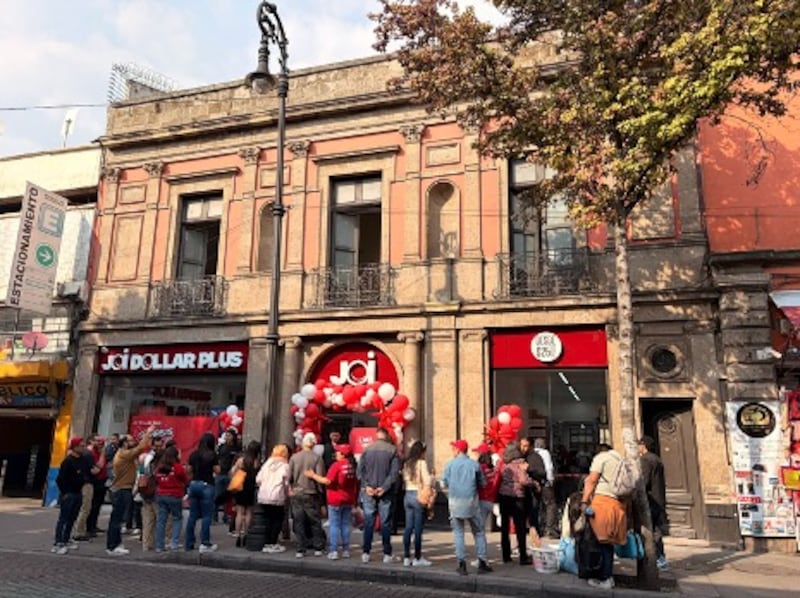
What matters for investors is that PesoRama is no longer talking about a concept. It is talking about rollout. PesoRama launched operations in 2019 in Mexico City and the surrounding areas, targeting high-density, high-traffic locations, and has steadily built out its footprint from that base.
“It’s no longer an idea now that the stores are up and running,” Bhaloo said, framing PesoRama as an execution story built around store growth, merchandising depth, and scale economics.
A model built for Mexico
At store level, the proposition is simple and built for repeat traffic. Bhaloo said every item is priced at 85 pesos (C$6) or less, with roughly 80 per cent of the assortment priced below 50 pesos (C$3).
That kind of price clarity matters in a market where shoppers are watching everyday spending closely and where organized discount retail still has room to mature.
“It is a business model that’s resonating well with the Mexican consumer,” said Bhaloo.
More than low prices
A more dependable shopping experience is also part of PesoRama’s pitch.
Unlike many informal discount outlets in Mexico, JOi Dollar Plus stores are designed to feel clean, bright, and easy to shop, with wide aisles, orderly shelving, standardized layouts, and clearly marked product groupings.
“We are not just competing on price,” said Bhaloo.
PesoRama offers consistency, price certainty, and a more reliable shopping experience in neighbourhoods where discount retail often remains fragmented and uneven, he said.
Growing the product mix
As traffic and customer demand build, PesoRama is also broadening its merchandise mix.
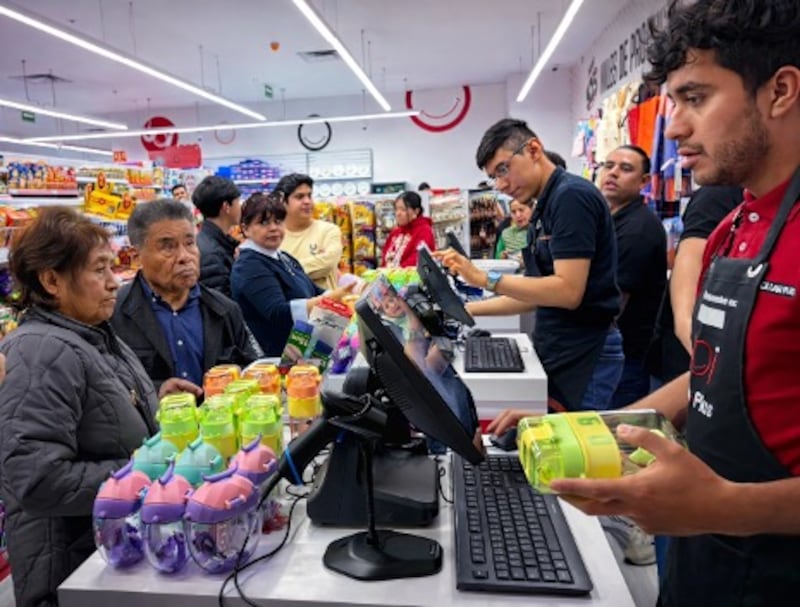
Bhaloo said the chain is expanding its product offering from roughly 5,000 items to about 7,000 across 24 categories because “the customers are loving it, and they want more.”
The offering spans household goods, pet supplies, seasonal items, party supplies, health and beauty products, snacks, and confectionery, alongside a broader mix of home, consumables, variety, beauty, and seasonal merchandise.
That merchandising depth feeds basket growth and gives PesoRama more room to drive repeat visits through seasonal campaigns, said the company.
“Seasonal merchandise is big,” Bhaloo said, pointing to Halloween, Christmas, back-to-school, Easter, Mother’s Day, Father’s Day, Children’s Day, and FIFA-related merchandise as examples of how the stores can stay relevant beyond basic essentials.
“What keeps our customers coming back is the convenience, the shopping experience, the product mix, and the overall value proposition,” Bhaloo said.
Disciplined rollout, high-traffic focus
Behind PesoRama’s store rollout is a site-selection model that is disciplined rather than speculative.
“They have to be high traffic,” Bhaloo said. “Our rollout strategy is going to be 50 per cent in shopping centres and 50 per cent standalone locations in high traffic, dense neighbourhoods.”
The focus is on dense, visible, high-traffic trade areas also shows up in the company’s stated expansion strategy, which calls for stores in shopping centres with complementary tenants, accessible street-front sites, and neighbourhoods near business hubs, entertainment areas, and recreation corridors.
Geography is being handled with similar discipline. Rather than chase premature national sprawl, PesoRama is concentrating first on Mexico City and the urban ring around it.
“Our focus is going to be in and around Mexico City,” Bhaloo said. “In and around Mexico City, Puebla and Querétaro, that gives us 30 million people.”
The stores are corporately owned, a strategy designed to protect brand standards, pricing discipline, and profitability as the network expands. Private-label products account for roughly 60 per cent of sales, with management aiming to increase that mix as scale builds.
A strong team behind the infrastructure
Bhaloo said that JOi Dollar Plus stores need to stay close enough to the company’s logistics backbone to be serviced efficiently, an important point for investors who understand that discount retail margins are won or lost in distribution and execution.
That logistics backbone is already being built. Bhaloo said the company has a 50,000-square-foot central distribution centre and now has the capacity to open two to three stores a month. In other words, PesoRama is not trying to scale first and figure out infrastructure later. It is putting the plumbing in place while the network is still relatively small.
Execution is also backed by a management team with deep operating experience in Mexico, including executives with backgrounds spanning Walmart Mexico, Tiendas D1, Coca Cola, Heinz and large-scale supply chain management.
In March, PesoRama added to the team by appointing Eduardo Fernández as Chief Financial Officer, adding another layer of financial and operating discipline as the company moves into its next growth phase.
Financial growth starts to follow
PesoRama’s financial story is also starting to catch up with the store rollout.
In its latest reported results, the company posted sales of $23.4 million for the nine months ended Oct. 31, 2025, up 41.1 per cent from $16.6 million in the comparable prior-year period, while same-store sales rose 12.6 per cent, gross profit increased 41.1 per cent to $9 million, product gross margin held at 44.8 per cent, and store profit climbed 25.4 per cent to $2.4 million.
Bhaloo said the PesoRama story is now centred on growth, with store openings, traffic, basket size, margin discipline, and supply chain execution being the key things for investors to watch.
From early traction to scaled execution
PesoRama is still in build-out mode, and that brings the usual execution risks that come with scaling a young retail chain. The company has raised more than $22 million in oversubscribed financing in the last 10 months for their roll out strategy.
That is also where the investor appeal starts to sharpen because PesoRama already has stores on the ground, a growing distribution backbone, rising customer traction, and a more visible rollout plan.
For investors looking at the next phase, the simple read-through is that PesoRama is no longer just describing the opportunity. It is starting to show what turning that opportunity into scale looks like.
To learn more about PesoRama, visit their website here.
For the latest updates, follow the company on social media: LinkedIn, Facebook, and Instagram

