Disseminated on behalf of: Voyageur Pharmaceuticals Ltd.
All figures in Canadian dollars unless otherwise noted.
- Bayer is funding up to US$2.35 million of feasibility work on Voyageur’s Oklahoma iodine project, with an offtake agreement and potential project financing built into the same deal.
- Voyageur currently pays $10,000 per tonne for pharmaceutical-grade barium sulfate; its own Frances Creek resource was costed at $650 per tonne in the project’s 2022 preliminary economic assessment (PEA).
- Engineering firm Fluor was retained in June 2026 to complete feasibility studies on iodine production and an integrated United States manufacturing plant, with three sites under evaluation.
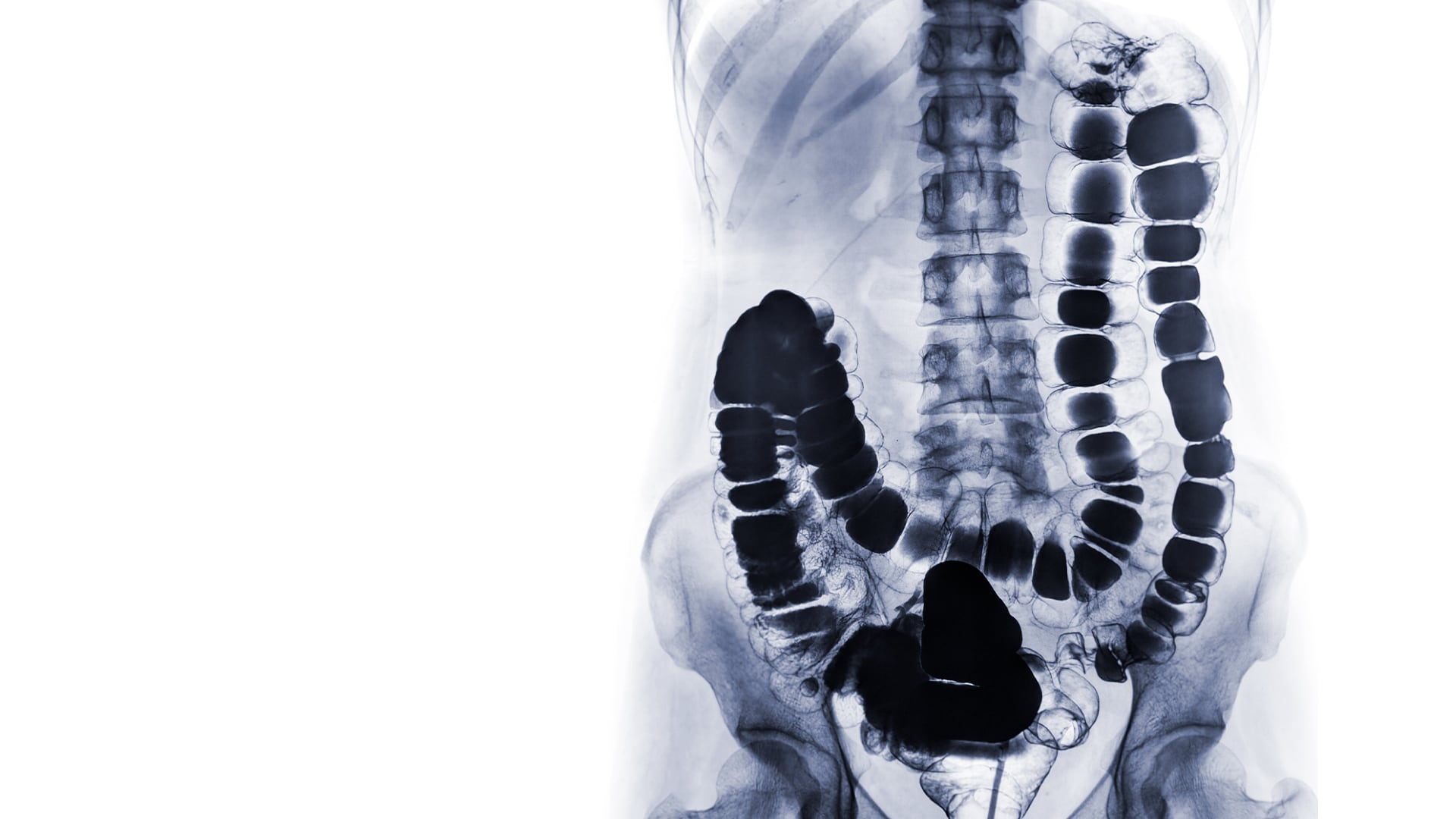
Approximately 93 million CT examinations are performed in the United States each year, and a substantial share of them rely on raw materials North America does not produce at scale.
Those materials go into contrast media, the drinks and injections that make the inside of the body visible on a scan. They depend on two dense elements: barium and iodine. Iodinated agents handle blood vessels and organs. A parallel category, barium-based contrast, is used for gastrointestinal imaging.
The United States currently has no meaningful commercial-scale domestic production of iodinated contrast agents from elemental iodine. All supply is imported. Global iodine production itself is highly concentrated, with Chile accounting for the majority of world output.
That concentration worked, until it didn’t. In 2022, the temporary shutdown of a major overseas manufacturing facility cut United States iodinated contrast supply by roughly half within weeks, forcing hospitals to ration doses, delay procedures, and scramble for alternatives. The vulnerability has not been resolved.
In October 2025, Bracco Diagnostics implemented a 95 per cent allocation across all Isovue (iopamidol) products, citing sustained multi-year growth in iodine-based procedures of more than 20 per cent and stating that a new production facility commissioned in 2024 had already proven insufficient. All of Bracco’s Isovue manufacturing remains located in Europe.
The episode and the subsequent allocation regime demonstrate how dependent American diagnostic imaging remains on a small number of foreign production sites.
That is where Voyageur Pharmaceuticals Ltd. (TSXV: VM | OTC Pink: VYYRF) now finds itself.
The Calgary-based company owns the Frances Creek barite resource in British Columbia, which supplies the barium. It is developing an iodine extraction project in Oklahoma, alongside Bayer. It is designing a United States manufacturing plant to turn both into finished drugs. And it already sells five Health Canada-approved barium products in Canada today.
The company calls the model, “from the Earth to the bottle.” President and CEO Brent Willis frames the problem more plainly.
“There are severe shortages because demand has increased significantly from aging populations, chronic disease, and more and more of this equipment going out to market,” Willis said. “As demand for the drugs goes up, the multinationals who manufacture them are struggling to source the minerals they need.”
When the supply chain snapped
The clearest illustration came during the pandemic, when a GE Healthcare plant in Shanghai shut down.
“The shutdown of a single plant in Shanghai, China caused a 50 per cent reduction in iodine drugs to the United States, which caused major delays in people getting their scans,” Willis said. “It highlighted how critical and strategic these minerals and drugs are for North America, because we are reliant on imports from Europe and China.”
The barium side of the market carries a different problem: there is effectively one supplier. Bracco Imaging dominates global barium contrast, which means pricing and availability sit largely with a single company.
A resource nobody else has
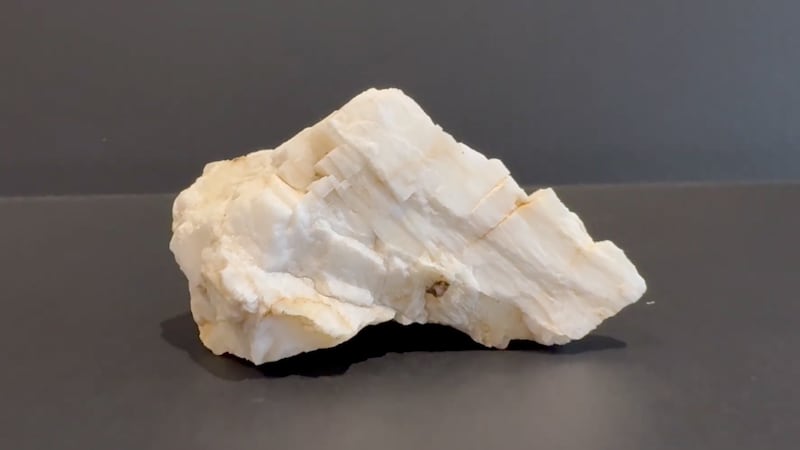
Most barite forms alongside base metals, which leaves trace mercury, cadmium, and arsenic locked in the crystal matrix of the barium sulfate. Pharmaceutical rules require total metals below 10 parts per million, and stripping them out is expensive to the point of being uneconomic.
Frances Creek mineralization formed differently. That is why it matters far more than its size suggests.
“Our analysis indicates Frances Creek is the only barium resource in the world that has a grade of over 97.5 per cent with no metals in it,” Willis said. “That is what makes it so unique, and why no one else can do this.”
Testing by SGS Canada confirmed the material meets United States pharmacopeia specifications, the standard required for use in a drug. The grade achieved with the company’s recent mini-bulk sample for clinical trials was 98.8 per cent barium sulfate, against a pharmaceutical-grade threshold of 97.5 per cent.
The resource is small by mining standards, which is beside the point. Voyageur reports an indicated and inferred resource of 121,000 tonnes of pharmaceutical-grade barium sulfate, which the company describes as decades of supply for its target market rather than years.
Our analysis indicates Frances Creek is the only barium resource in the world that has a grade of over 97.5 per cent with no metals in it.
— Brent Willis, President and CEO of Voyageur Pharmaceuticals Ltd.
From $10,000 a tonne to $650
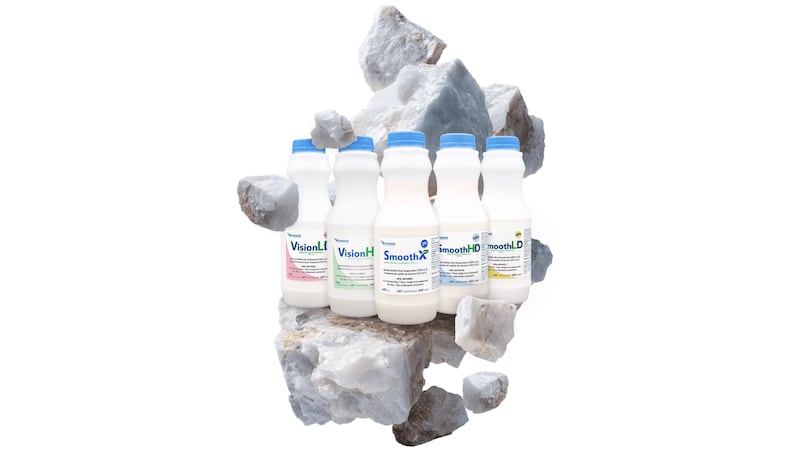
Voyageur sells in Canada today, but not for the margin. It buys imported synthetic barium sulfate at $10,000 per tonne and pays a Calgary contract manufacturer to bottle it, which means the current business does not make money – it does something more useful. It establishes real pricing, real costs, and real market data in a category where a near-monopoly has left almost no public information, and that data feeds directly into the Frances Creek feasibility study.
The gap it is closing is stark.
“When we get Frances Creek into production, based on the PEA, our cost to make the barium sulfate powder is $650 a tonne versus $10,000 a tonne,” Willis said.
In bottle terms, the two leading products carry more than $3 and more than $4 of barite cost, respectively. Willis expects that to fall to between 20 and 30 cents once the company supplies itself, which is where management’s 70 per cent gross margin target comes from.
Why Bayer spent 18 months on a micro-cap
For a company of this size, the more telling development is who agreed to fund the next step.
Voyageur signed a letter of intent with Bayer in December 2024 and converted it into a collaboration and milestone-based funding agreement in February 2026, worth up to US$2.35 million. The money pays for the iodine feasibility study. Bayer receives exclusivity to negotiate an offtake agreement on the resulting production.
“They provided us the non-dilutive path forward, and they did not tie us up with any non-competes,” Willis said. “They spent 18 months doing due diligence on our company.”
A potential second phase would see Bayer finance the capital cost of the project while Voyageur operates it, subject to definitive agreements. Willis estimates the buildout at US$120 to $150 million.
Iodine, pulled out of oilfield water
The iodine plan rests on technology Voyageur acquired in January 2026 from Brian Mueller.
The concept is deliberately simple. Iodine-rich brine from oilfield water disposal wells flows through a medium, the iodine attaches to it, and the concentrate is recovered at low cost.
Oklahoma’s Anadarko Basin was chosen because its brine carries the grade and the state is regulated for iodine production. The pitch to disposal operators is that they get something back.
“It is an added benefit to the disposal companies because our process cleans the brine water with removal of all solids and oil while returning a pristine brine. As a result, it will reduce formation pressures within disposal reservoirs, increase volume and flow rates into the formation, and reduce the risk for earthquakes,” Willis said.
Voyageur is in discussions with three water disposal companies, with additional parties expressing interest. Separately, it is evaluating three United States locations for the manufacturing plant across Oklahoma and Texas.
“When it comes to site selection, it really comes down to who is going to give us the best deal,” Willis said.
From bench to field
On Aug. 10, 2026, Voyageur put the first hard numbers behind that process. Laboratory work in Houston produced iodine at 99.8 per cent purity, with more than 90 per cent of the iodine in the brine recovered.
The recovery rate is the number that decides whether the economics work. Purity decides whether the output can go into a drug at all. Both were achieved in continuous runs on untreated oilfield brine rather than a prepared laboratory sample, which is the harder test.
“Achieving 99.8 per cent purity and greater than 90 per cent recovery in laboratory testing using real oilfield brine provides meaningful technical validation as we prepare for field pilot operations,” Willis said.
The Houston site draws brine from both the Anadarko and Permian basins, and returns clean water suitable for disposal or reinjection.
A mobile pilot unit sized to treat roughly 80,000 litres of brine per day has now been built. Field testing begins in the coming weeks, with operations planned for September 2026.
The design is modular by intent. Voyageur envisions 200-tonne-per-year units dropped at individual disposal sites, with concentrate trucked to a central hub for final processing. Management is targeting up to 1,000 tonnes per year of iodine capacity over the longer term.
What the next 12 months will decide
The nearest item is the iodine pilot, which goes to the field in September 2026 and puts operating data on the table before any feasibility work lands.
After that, the company’s value is tied to a sequence of studies rather than a single event.
A prefeasibility study on Frances Creek is due late in the third quarter of 2026. Final feasibility waits on British Columbia government approval of a notice of work covering removal of 2,000 tonnes of barite ore. Management expects a separate prefeasibility study on Voyageur’s own iodine drug process in a similar window. Willis puts the Bayer-funded study in the first quarter of 2027.
Fluor will then combine the pieces into a single feasibility study for the integrated plant.
On the regulatory side, Voyageur is working through the batch testing and stability requirements for a United States filing for barium contrast.
“We expect the FDA to approve our products in 2027,” Willis said.
At a market capitalization of roughly $25 million, Voyageur trades as an explorer. The pilot and the studies ahead will determine whether the market starts pricing it as a manufacturer.
The scientific and technical information contained within this article has been reviewed and approved by Bradley Willis, P.Eng., Voyageur Pharmaceuticals Ltd.’s Director and Chief Operating Officer, who is a Qualified Person, as defined under National Instrument 43-101.
About Voyageur Pharmaceuticals Ltd.
Voyageur Pharmaceuticals Ltd. (TSXV: VM | OTC Pink: VYYRF) is a Canadian company focused on becoming a producer of barium and iodine active pharmaceutical ingredients (APIs) and finished imaging contrast agents. The company is positioned to become North America’s first vertically integrated, low-cost manufacturer of both barium and iodine contrast media. By owning 100 per cent of the high-grade, metal-free Frances Creek barite project, Voyageur controls its own secure, domestic source of pharmaceutical-grade barium sulfate.
Learn more at voyageurpharmaceuticals.ca.

