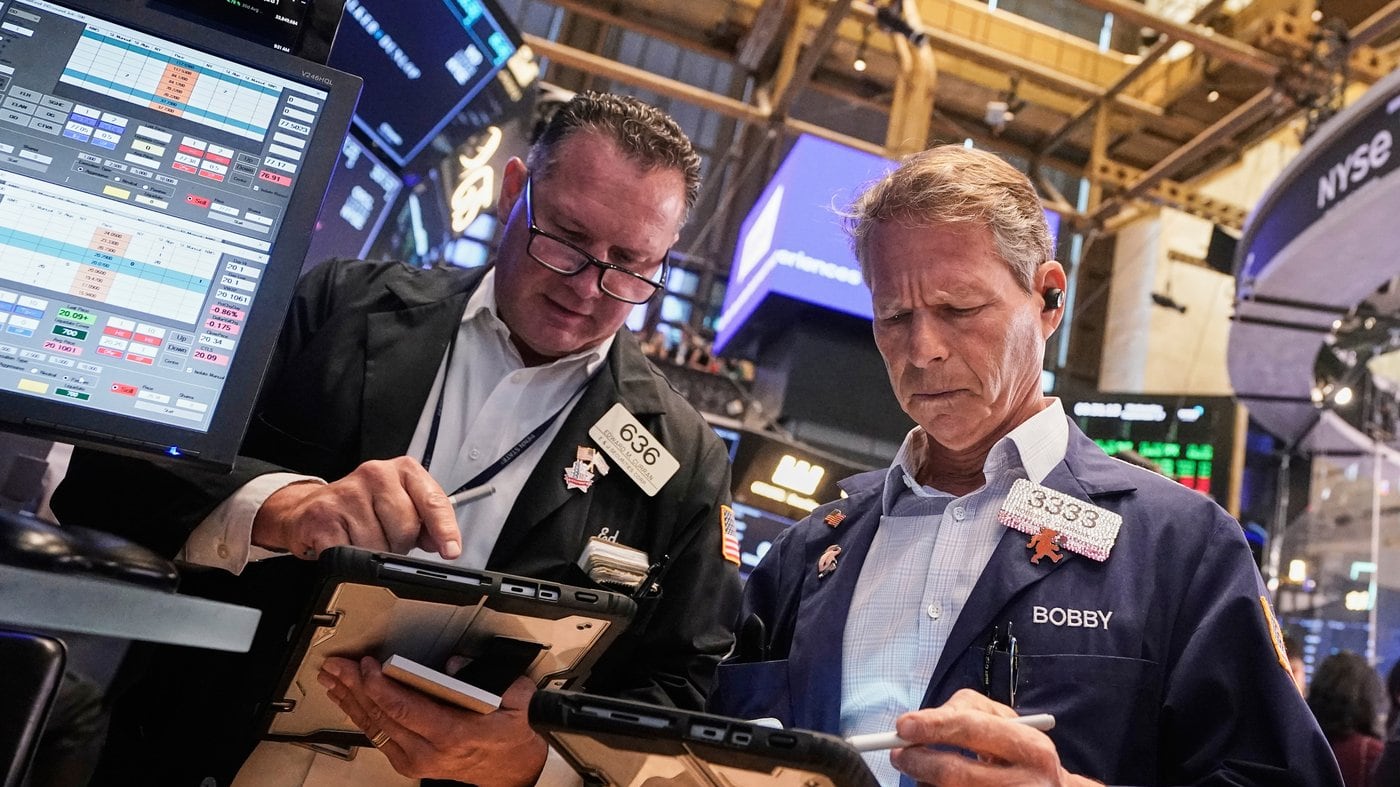
NEW YORK — U.S. stocks climbed Friday and trimmed their losses for the week after a report showed that inflation is behaving roughly as economists expected, even if it’s still high.
The S&P 500 rose 0.6 per cent and broke its three-day losing streak. The Dow Jones Industrial Average gained 299 points, or 0.7 per cent, and the Nasdaq composite added 0.4 per cent. All three indexes pulled closer to the all-time highs they set at the start of the week.
Stocks got some help from a report showing that inflation in the United States accelerated to 2.7 per cent last month from 2.6 per cent in July, according to the measure of prices that the Federal Reserve likes to use. While that’s above the Fed’s two per cent target, and it’s more painful than any household would like, it was precisely what economists had forecast.
That offered some hope that the Fed could continue cutting interest rates in order to give the economy a boost. That’s critical for Wall Street because it’s already sent U.S. stocks on a blistering run to records from a low in April in large part because of expectations for a string of rate cuts.
Without such cuts, growing criticism that stock prices have become too expensive by rising too quickly would become even more powerful. The Fed just delivered its first rate cut of the year last week but is not promising more because they could worsen inflation.
One factor threatening to push inflation higher is President Donald Trump’s tariffs, and he announced a set of more late Thursday. They include taxes on imports of some pharmaceutical drugs, kitchen cabinets and bathroom vanities, upholstered furniture and heavy trucks starting on Oct. 1.
Details were sparse about the coming tariffs, as is often the case with Trump’s pronouncements on his social media network. That left analysts unsure of their ultimate effects, and the announcement created ripples in the U.S. stock market instead of huge waves.
Paccar, the company based in Bellevue, Washington, that’s behind the Peterbilt and Kenworth truck brands, revved 5.2 per cent higher, for example.
Big U.S. pharmaceutical companies nudged higher. Eli Lilly rose 1.4 per cent, and Pfizer added 0.7 per cent.
Several companies that sell home furnishings, which could be hurt by higher prices for imports, swung between gains and losses. Williams-Sonoma went from an initial loss of 2.5 per cent to a modest gain and back to a loss before rising 0.1 per cent. RH dropped 4.2 per cent following its own back and forth.
On the losing end of Wall Street was Costco Wholesale, which fell 2.9 per cent even though it reported a stronger profit for the latest quarter than analysts expected. Renewal rates for its membership slowed a touch, while an important measure of underlying revenue growth at its stores fell short of analysts’ expectations.
All told, the S&P 500 rose 38.98 points to 6,643.70. The Dow Jones Industrial Average added 299.97 to 46,247.29, and the Nasdaq composite gained 99.37 to 22,484.07.
In stock markets abroad, indexes rose in Europe after slumping in Asia.
France’s CAC 40 climbed 1 per cent, while South Korea’s Kospi tumbled 2.5 per cent for two of the world’s bigger moves.
Japan’s Nikkei 225 fell 0.9 per cent as Sumitomo Pharma Co.’s shares lost 3.5 per cent and Chugai Pharmaceutical sank 4.8 per cent.
In the bond market, the yield on the 10-year Treasury held steady at 4.18 per cent, where it was late Thursday.
A report said sentiment among U.S. consumers was weaker than economists expected. The survey from the University of Michigan said consumers are frustrated with high prices, but their expectations for inflation over the coming 12 months also ticked down to 4.7 per cent from 4.8 per cent.
One notable exception was among Americans who own plenty of stocks, who have benefited from Wall Street’s run to records even as the job market slows. Sentiment for them held steady in September, while falling for households with smaller or no stock investments.
The next big event for Wall Street could be a looming shutdown of the U.S. government, with a deadline set for next week. But investors have experience with such political impasses, and they have had limited impact on the market before.
“The market and broader macroeconomic effects of a shutdown, even lengthy ones, are often mere blips on the charts,” according to Brian Jacobsen, chief economist at Annex Wealth Management.
___
Stan Choe, The Associated Press.
AP Writers Teresa Cerojano and Matt Ott contributed.

