NEW YORK -- U.S. tax season is over, but meme-stock season is just getting started.
That is the view from Vanda Research, which tracks trading by self-directed individual investors. The firm says it has spotted the first signs of renewed enthusiasm for meme stocks — companies whose shares surge on social media buzz and speculative excitement rather than business fundamentals.
As investors become less preoccupied with the Middle Eastern conflict “and this group of people can focus on what to do with their tax refunds, we’re starting to see some early indications of another meme-stock summer,” said Viraj Patel, global macro strategist at Vanda.
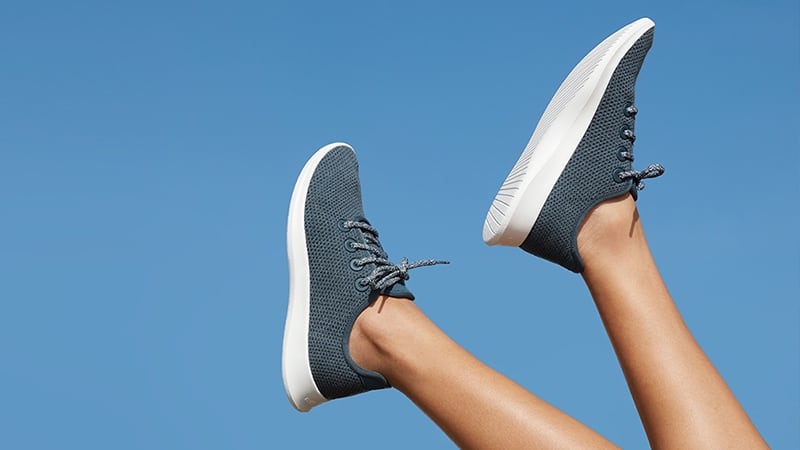
Exhibit number one: Wednesday’s eye-popping five-fold rally in shares of Allbirds after the company formerly known for its sneakers said it would reinvent itself as an artificial intelligence computing infrastructure business.
Retail investors appeared to love the idea and the pending name change of the company to NewBird AI. Even though the stock relinquished some of its gains on Thursday, falling nearly 36 per cent to US$10.91 a share, it remains well above its 52-week low of only $2.15 a share.
Retail net buying of Allbirds shares on Wednesday hit a record of $5.2 million, Vanda estimated, topping even the $5 million turnover seen on the day of its 2021 initial public offering, when Allbirds’ eco-friendly footwear fueled demand for the stock.
“We’ve seen this playbook before – retail stepping in aggressively when a ‘non-tech’ company pivots toward AI,” Vanda analysts said in a note on Thursday.
Patel said the signs of a broader meme-stock wave do not rest on an outsized move in a single company. He pointed to indications that retail investors are once again aggressively buying long-standing favourite stocks, ranging from Tesla and Palantir Technologies to quantum computing firm IonQ.
“These are retail favourites; meme stocks that capture the imagination of the individual trader,” Patel said.
Myseum shares surge
Another favourite this week was social networking firm Myseum MYSE.O, whose shares rose 150 per cent on Thursday after it announced its own AI pivot.
A few months ago a short-lived favourite was Algorhythm Holdings The company, which just a year before was selling karaoke machines under the name the Singing Machine Co, saw shares briefly quadruple to $4 in February on its claim to boost customers’ freight volumes by 300 per cent to 400 per cent “without a corresponding increase in operational headcount.”
Meme stocks emerged as a market phenomenon during the early days of the pandemic, when more investors stuck at home turned to trading stocks to help fend off boredom and anxiety. But few companies caught up in successive waves of speculation have managed to hold onto those gains.
Shares of Opendoor Technologies, one of last year’s crop of meme stocks, currently change hands at about $5.20 a share, less than half of its 52-week high of $10.87. Beyond Meat, which also had a moment in the meme trading spotlight, now sees its shares languishing at only 79 cents each, down from a 52-week high of $7.69.
How much froth?
The emergence of new meme stocks and firms advertising market buzzwords often raises questions about market froth.
Allbirds’ sudden rise and fall this week, for instance, prompted some to recall the December 2017 near-tripling in shares of Long Island Iced Tea when it announced its pivot to blockchain as bitcoin prices hit new highs.
The company, renamed Long Blockchain, sold off its legacy beverage assets in 2019 after bitcoin prices tumbled and it received a delisting notice from Nasdaq.
For some investors, however, the current rally rests on a solid backdrop of improving corporate profit expectations and a persistent fear of missing out during a three-year-old bull market.
“We are going to always see froth around the edges, and all too often they coincide with market rallies,” said Art Hogan, market strategist at B. Riley Wealth. “There’s a cohort of investors who sadly always seem to want to chase the most speculative names in the market.”
Reporting by Suzanne McGee; Additional reporting by Lewis Krauskopf, Lance Tupper and Purvi Agarwal; Editing by Colin Barr and Jamie Freed, Reuters

