U.S. futures were pushed lower after explosions were reported in the Saudi capital, pushing the price of crude sharply higher Thursday.
Futures for the S&P 500 slumped 0.6 per cent, and Dow Jones futures fell one per cent, shedding nearly 500 points. Futures in the tech-heavy Nasdaq slid 0.9 per cent.
Several explosions were heard in the Saudi capital on Thursday, including one at the Riyadh airport that halted flights, a witness said. Yemen’s Iran-backed Houthis have targeted the kingdom’s infrastructure, though there was no word on what had caused the explosions and no claim of responsibility.
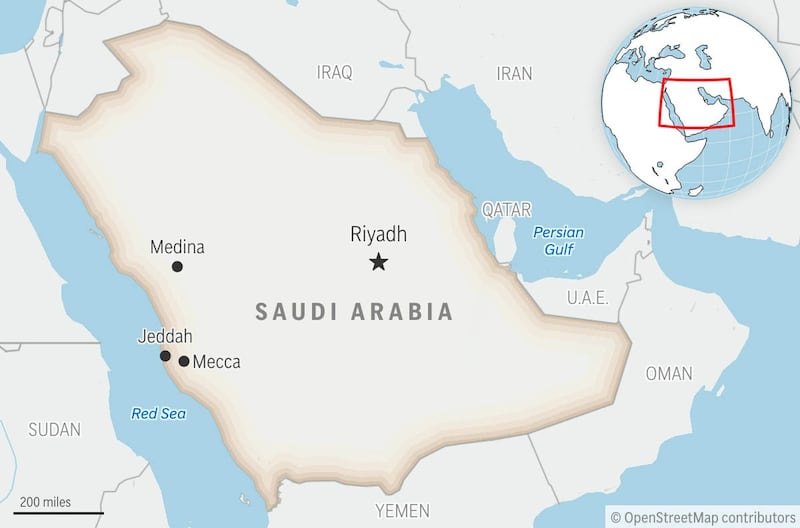
Fighting has intensified around the strategic Bab el-Mandeb Strait that was besieged by Iran-backed Houthi rebels, disrupting shipping in the channel at the same time that Iran has targeted ships in the Strait of Hormuz to the northeast, a major transit point for global crude.
Brent crude, the international standard, jumped five per cent to reach US$105.16 per barrel early. Benchmark U.S. crude rose 5.1 per cent to $92.75 a barrel.
Rising oil prices have intensified inflationary pressures globally, including the U.S.
The yield on the 10-year U.S. Treasury hit a 24-year high Wednesday of 5.36 per cent and remained close Thursday, hovering around 5.35 per cent.
Inflation in the U.S. remains above the Fed’s two per cent target. In September, the Fed raised rates for the first time in three years by a quarter percentage point to a range of 3.75 per cent to 4.00 per cent.
Speaking at the Istanbul Economic Forum on Thursday, Federal Reserve Governor Christopher Waller said additional rate hikes are likely.
“If the economic data continue to come in as expected, I anticipate additional hikes to support a timelier return of inflation to our two per cent goal,” Waller said. “But there is some flexibility about when those hikes will occur. The hikes do not need to come at consecutive meetings, but they should be in place in an acceptable period of time.”
Quarterly earnings from some of the biggest U.S. companies are beginning to arrive. On Thursday, PepsiCo posted better-than-expected revenue in the third quarter, but it cut its expectations for earnings-per-share growth in half for the year. Shares rose almost two per cent.
Delta Air Lines will post quarterly earnings on Friday and several of the country’s biggest banks release quarterly performances next week.
Analysts expect companies in the S&P 500 to deliver overall growth of nearly 30 per cent in earnings per share from a year earlier, according to data provider FactSet. If they’re correct, it would be the third consecutive quarter of growth that exceeds 25 per cent.
In Europe, Germany’s DAX fell 1.1 per cent to 24,819.80 and the CAC 40 in Paris lost one per cent to 7,691.12. Britain’s FTSE 100 declined 0.5 per cent to 10,411.31. Asian markets were lower.
The U.S. dollar rose to 158.23 Japanese yen from 158.08 yen. The euro was trading at $1.1183, down from $1.1197, as elevated yields for bonds in France and growing worries about its government debt pressured the euro.
By Chan Ho-him and Michelle Chapman

