ISLAMABAD - U.S. President Donald Trump is sending his envoys Steve Witkoff and Jared Kushner to Pakistan to meet with Iran’s foreign minister, the White House said Friday, as officials in the South Asian nation pushed to revive ceasefire talks between the U.S. and Iran.
The talks planned for Saturday come as much of the world is on edge over a war that has snarled crucial energy exports through the Strait of Hormuz, clouded the global economic picture and left thousands dead across the Middle East.
Iranian Foreign Minister Abbas Araghchi arrived in Islamabad late Friday. Earlier on social media, he wrote that he was traveling to Pakistan on a trip focused on “bilateral matters and regional developments.” He didn’t specify who he would meet.
White House press secretary Karoline Leavitt said in an interview on Fox News Channel that Witkoff and Kushner would meet with Araghchi.
“We’re hopeful that it will be a productive conversation and hopefully move the ball forward to a deal,” Leavitt said.
She said U.S. Vice President JD Vance would not travel but that he remains “deeply involved,” and would be willing to go to Pakistan “if we feel it’s a necessary use of his time.”
Vance, U.S. Secretary of State Marco Rubio and the president’s national security team are on “standby” to fly to Pakistan if needed, Leavitt said.
Araghchi and the two Trump envoys held hours of indirect talks in Geneva on Feb. 27 over Tehran’s nuclear program, but walked away without a deal. The next day, Israel and the United States started the war against Iran.
Leavitt said the president decided to send Witkoff and Kushner to Pakistan “to hear the Iranians out.”
“We’ve certainly seen some progress from the Iranian side in the last couple of days,” Leavitt said. She did not offer any details about what U.S. officials were hearing.
Islamabad has sought to reinject momentum into the negotiations between Iran and the United States, which did not resume this week as had been expected.
- READ MORE: How disruptions within Strait of Hormuz could reshape how much we pay for food
- READ MORE: Trump orders U.S. military to ‘shoot and kill’ Iranian small boats choking Strait of Hormuz
Trump extends the Jones Act waiver for 90 days
Separately Friday, the White House said Trump issued a 90-day extension to the Jones Act waiver, making it easier for non-American vessels to transport oil and natural gas.
He first announced a 60-day waiver in March in a move intended to stabilize energy prices and ease oil and gas shipments to the U.S. following the effective closure of the Strait of Hormuz.
“New data compiled since the initial waiver was issued revealed that significantly more supply was able to reach U.S. ports faster,” the White House post on social media said.
The price of Brent crude oil, the international standard, retreated on the news, vacillating between US$103 a barrel and more than US$107 -- still early 50 per cent higher than where it was on Feb. 28, when the war began.
The squeeze on shipments through the strait has rippled through global maritime trade flows, including through the Panama Canal nearly halfway around the world.
- READ MORE: Iran fires on 3 ships in the Strait of Hormuz
- READ MORE: Trump says U.S. will extend ceasefire with Iran at Pakistan’s request
Pakistan forges ahead with diplomatic efforts
Pakistan has been trying to get U.S. and Iranian officials back to the table after Trump this week announced an indefinite extension of the ceasefire with Iran, honouring Islamabad’s request for more time for diplomatic outreach.
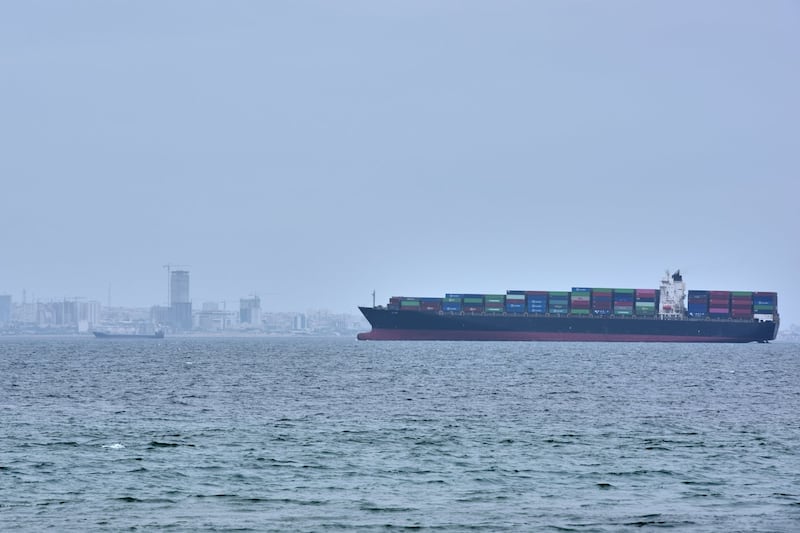
That hasn’t lowered tensions in the strait, a strategic waterway through which a fifth of the world’s oil and natural gas is shipped during peacetime.
Iran has kept its stranglehold on traffic through the strait, attacking three ships earlier this week, while the U.S. is maintaining a blockade on Iranian ports and Trump has ordered the military to “shoot and kill” small boats that could be placing mines.
“Iran has an important choice, a chance to make a deal, a good deal, a wise deal,” U.S. Defence Secretary Pete Hegseth told reporters on Friday. He said a second U.S. aircraft carrier will join the blockade in a few days.
Washington already has three aircraft carriers in the region; the USS George H.W. Bush in the Indian Ocean; the USS Abraham Lincoln in the Arabian Sea; and the USS Gerald R. Ford in the Red Sea.
It is the first time since 2003 that three American carriers have been operating in the region simultaneously. The force includes 200 aircraft and 15,000 sailors and marines, U.S. Central Command said.
- READ MORE: A longer Iran conflict could boost risk for Ukraine securing missile defences, Zelenskyy says
- READ MORE: Condom maker may raise prices because of Iran war
A growing toll even as ceasefires hold
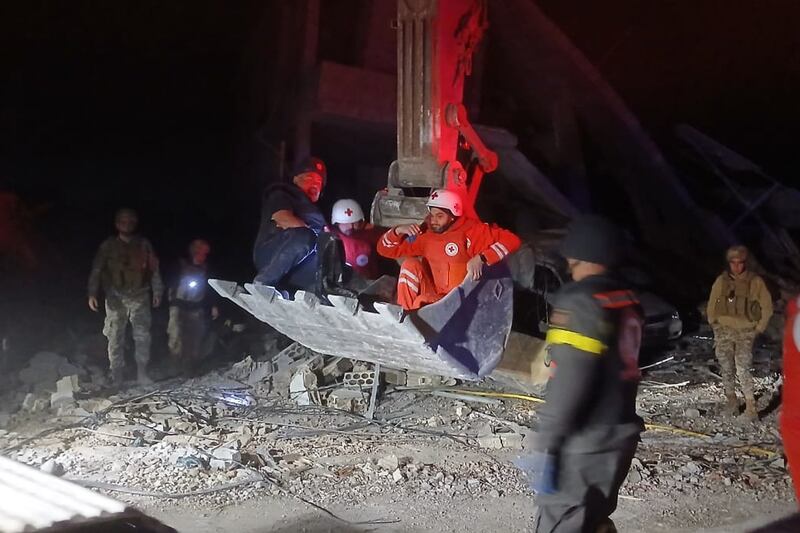
Since the war began, at least 3,375 people have been killed in Iran, and more than 2,490 people in Lebanon, where new fighting between Israel and the Iran-backed militant group Hezbollah broke out two days after the war started, according to authorities.
Additionally, 23 people have died in Israel and more than a dozen in Gulf Arab states. Fifteen Israeli soldiers in Lebanon and 13 U.S. service members throughout the region have been killed.
The UN peacekeeping force in southern Lebanon has also sustained casualties. UNIFIL said Friday that an Indonesian peacekeeper died of wounds sustained in an attack on his base on March 29, raising to six -- four Indonesians and two French -- the number of force members killed since the war erupted.

- READ MORE: SLB quarterly profit slips as Iran war dents Middle East oilfield activity
- READ MORE: Ottawa has boosted monitoring of Iran’s threats to diaspora in Canada, official says
Tensions linger in Lebanon despite extended truce
The situation in Lebanon remained tense a day after Trump announced Israel and Lebanon had agreed to extend a ceasefire between Israel and Hezbollah by three weeks. Hezbollah has not participated in the diplomacy brokered by Washington.
Israeli Prime Minister Benjamin Netanyahu, in a video statement released by his office on Friday, hailed “a process to achieve a historic peace between Israel and Lebanon.”
Earlier, the Israeli army asked residents of the southern Lebanese village of Deir Aames to evacuate, saying Hezbollah was using the village to launch attacks against Israel.
Israel’s military said it downed a drone over Lebanon following the launch of a small surface-to-air missile by Hezbollah. The militant group, meanwhile, said it shot down an Israeli drone with a surface-to-air missile over the outskirts of the southern port city of Tyre.
By Munir Ahmed, Jon Gambrell And Jamey Keaten.
Gambrell reported from Dubai, United Arab Emirates, and Keaten from Geneva. Associated Press writers David Rising in Bangkok; Koral Saeed in Abu Snan, Israel; Bassem Mroue in Beirut; and Aamer Madhani and Josh Boak in Washington contributed.

