Global oil prices fell on Monday following news of a tentative deal between Iran and the U.S. to extend their ceasefire agreement and reopen the Strait of Hormuz, but a veteran oil watcher doesn’t see crude prices returning to pre-war levels anytime soon.
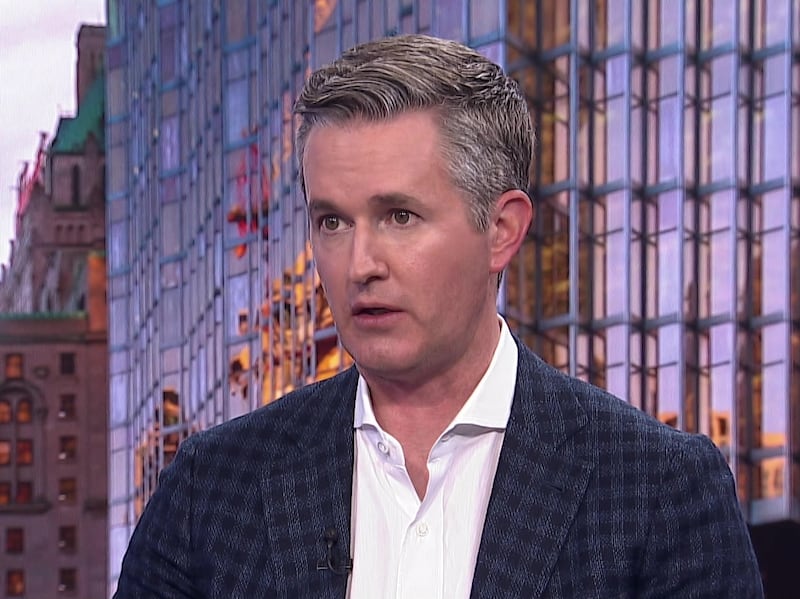
Eric Nuttall, partner and senior portfolio manager at Ninepoint Partners, told BNN Bloomberg on Monday that traders are trying to determine where the price of oil will settle out in the coming days and weeks, as many key details about the deal still need to be ironed out.
“Will the Strait of Hormuz actually be toll-free? The (U.S.) vice president this morning said that those details are going to be worked out over the next 60 days, and that has a really profound impact,” he said.
Nuttall noted that even if the strategically important Strait of Hormuz is fully reopened as a result of the Iran-U.S. deal, it will take time for oil markets to recover from the volatility of the last three and a half months.
“Let’s acknowledge where we sit today; the market has forfeited 1.7 billion barrels of Middle Eastern (oil) production by the time the lag effect ends,” he said.
“We will have lost roughly 11 million barrels per day of that production, and it can’t come onstream until ships are actually willing to not just leave the Strait empty, but actually come back.”
In addition to the logistical backlog and supply chain disruption, the war in Iran has caused extensive damage to petroleum facilities across the Middle East, Nuttall explained.
“We also have enormous damage at a number of facilities, about 70 in the world,” he said. “I was in Washington last week and some of the scuttlebutt was that damage in some countries is far worse than has been let on.”
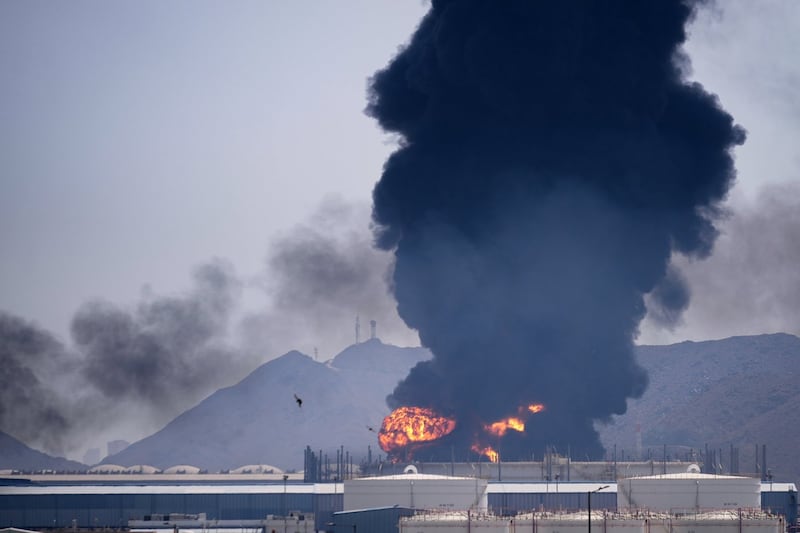
Although the Iran war led to higher oil prices, which is typically a positive for North America’s major petroleum producers, Nuttall noted that energy investors “should never have wanted” the direction oil markets were heading prior to Monday’s ceasefire extension.
“The U.S. strategic petroleum reserve only really had 50 million barrels left of actual usable capacity,” Nuttall said, citing information he and his team gathered after recent meetings in Washington.
“That would have been exhausted by July to August, so we think the U.S. administration was under far, far more pressure than what they acknowledged, and the new normal, so to speak, for the oil market is much, much different than what it was three or four months ago.”
Nuttall said he believes around US$80 a barrel for the U.S. benchmark West Texas Intermediate will “serve as the approximate floor” for oil prices going forward. Oil prices were sitting at roughly $70 per barrel prior to the start of the Iran war in late February.
“Just getting all of this unbelievable, nausea-inducing volatility out of the way, where we have to spend our Saturdays following Donald Trump’s Truth Social network, hopefully those days are over,” said Nuttall.
“But again, we will not have details for either days, weeks, or up to two months.”

