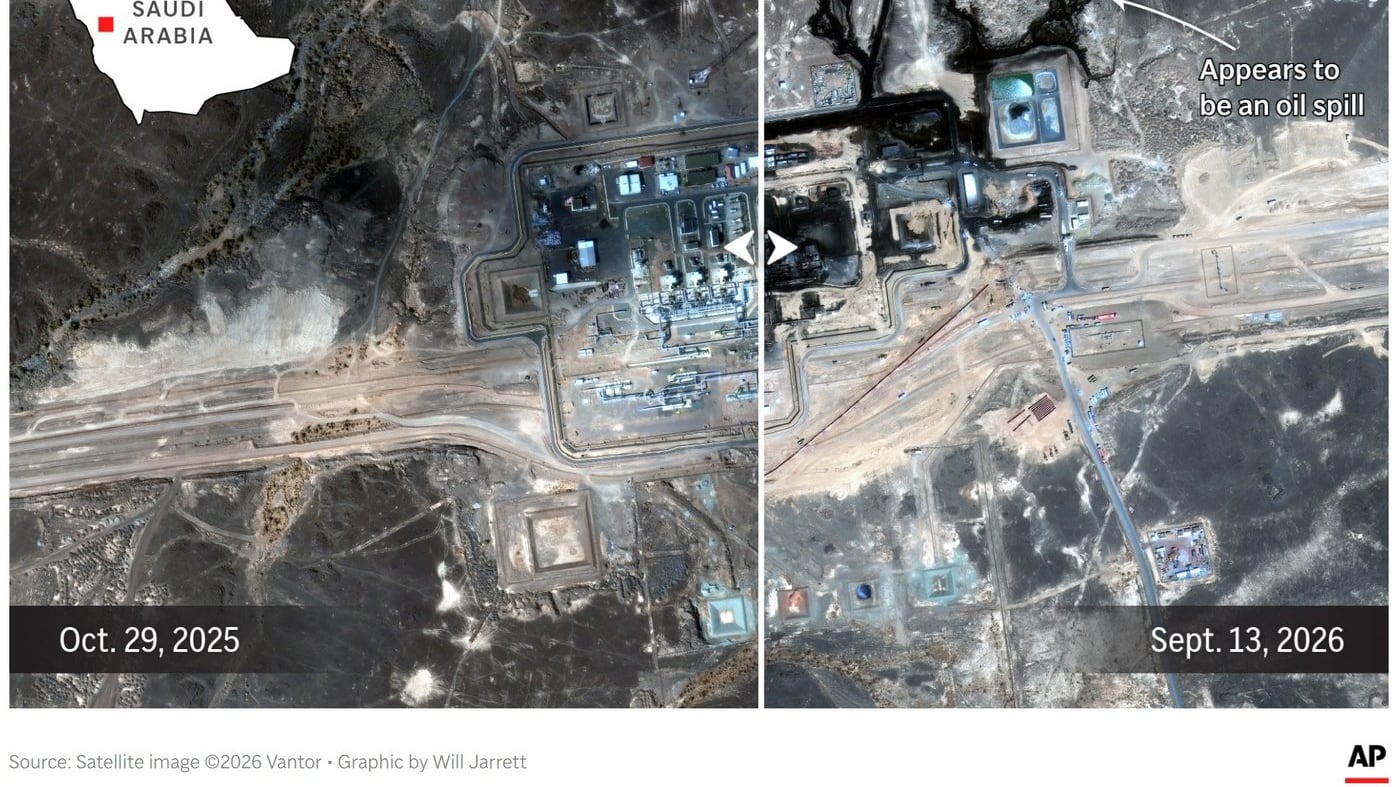
Oil prices rose on Tuesday after attacks on Saudi Arabian energy infrastructure left the kingdom’s East-West Pipeline offline, raising fears that damage to energy infrastructure and transport routes could take longer to repair.
Brent crude futures LCOc1 were 21 cents, or 0.2 per cent, higher at $105.89 a barrel by 1148 GMT after hitting a session high of $108.43, while U.S. West Texas Intermediate CLc1 futures were up 90 cents, or 0.89 per cent, at $102.29 a barrel after rising as far as $104.21 earlier in the session.
Concerns over oil supplies intensified after Iran-backed Houthi forces in Yemen launched fresh attacks on Saudi Arabia on Monday, while Gulf Arab states postponed planned discussions with Iran.
“Fresh attacks by the Houthis targeting Saudi Arabia may be influencing oil market investors’ expectations about the severity and duration of the conflict,” said Hamad Hussain, senior climate and commodities economist at Capital Economics.
The Houthis on Monday said they fired dozens of missiles and drones at a military air base in Khamis Mushait in southern Saudi Arabia, targeting aircraft hangars, radar systems, runways and ammunition depots in retaliation for Saudi airstrikes in Yemen.
This followed attacks on Friday on Saudi Arabia, which Riyadh blamed on Iranian-backed fighters in Iraq, that disrupted the country’s East-West Pipeline, which allows oil exports to bypass the blockaded Strait of Hormuz, through which about a fifth of global oil supplies previously passed.
Saudi Arabia could exhaust crude available for export within days unless the East-West Pipeline resumes operations, according to buyers and traders. The pipeline strike threatened up to 4 per cent of global oil supply.
“The recent attack may be more severe and could threaten the remaining 2mb/d of recent Yanbu exports, with the latest repair assessments ranging from ‘very soon’ to eight weeks,” Goldman Sachs said in a note.
The attacks on oil infrastructure marked a meaningful escalation of the conflict and increased the probability of Brent rising above $120 a barrel, Goldman Sachs said, citing a scenario in which average Gulf oil output in 2027 remains 4 million barrels per day below pre-war levels.
Commodity vessel traffic through the Strait of Hormuz dropped to four on Monday, down from 10 a day earlier, preliminary data from Kpler showed on Tuesday.
“In the absence of an adjustment in demand or greater oil flows through the Strait of Hormuz, several weeks of the East-West Pipeline being closed could lift Brent crude prices towards $130 per barrel,” Hussain said.
Oman’s Maritime Security Centre said on Tuesday that the Panama-flagged oil tanker ‘El Gaia’ was being towed to an Omani port after a fire broke out in its engine room following an attack.
Separately, half of Russia’s six top diesel-producing refineries were forced to significantly cut back or completely halt output in September due to damage sustained in drone attacks, according to Reuters calculations based on data from fuel market participants.
(Reporting by Colleen Howe in Beijing and Anushree Mukherjee and Pranav Mathur in Bengaluru; Editing by Louise Heavens, Kirsten Donovan)

