Gas prices in Canada are finally falling.
As of Friday morning, the Canadian Automobile Association recorded the national average for gas prices at 144.4 cents per litre.
That’s almost 30 cents-per-litre lower since late October, when the average sat at 171.3 cents per litre, and a 46 cents-per-litre drop since the year’s highest price, recorded in May at 190.4 cents per litre.
“Oil prices have come down to their lowest level in about two months,” former CIBC World Markets chief economist Jeff Rubin told CTV’s Your Morning on Friday.
He attributed the drop to a significant decrease in global demand and supply diversification.
“On the supply side, they’re diverting oil flows from the Strait of Hormuz,” he said. “(And) higher oil prices raise supply, but they also kill demand and the world’s consuming about almost four million barrels a day less than it was before the war started because of the higher oil prices.”
Supply up, demand down
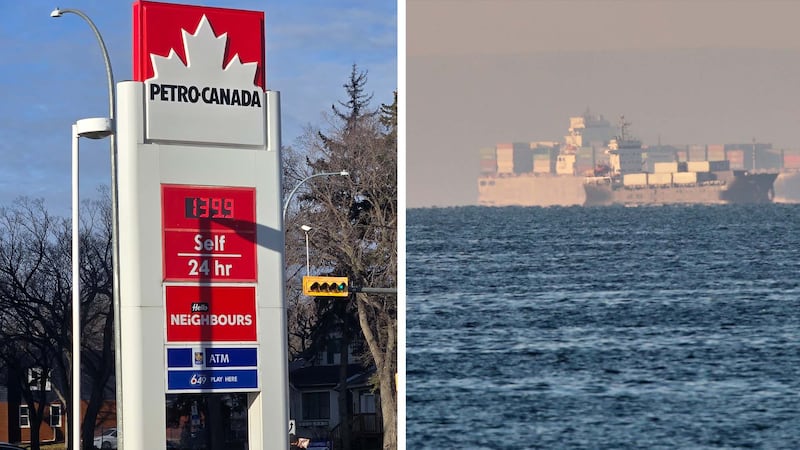
The war between the U.S., Iran and Israel, which began in February, has choked one of the world’s most important shipping routes in the Strait of Hormuz, by damaging refineries, offshore oil platforms and processing facilities, stranding tankers and forcing suppliers to rethink routes, adding weeks to delivery time.
Approximately eight million barrels of oil are transported through the Hormuz strait, Rubin said. “But there are another five or six (million) that are getting through other routes.”
“Middle Eastern producers have been relatively successful at finding ways of getting their product to world markets, bypassing the straits.”
The U.S. has also increased its oil production to almost 14 million barrels a day, he added.
“Refineries are running at 96 per cent capacity,” he said. “So yes, inventories have increased.
Thursday’s meeting between the U.S., China and Russia, out of which the leaders of all three nations pledged to stabilize energy flows, could also have implications, he said.
“China’s got the most to gain from that because China’s the largest energy importer,” Rubin said. “(And) will the Trump administration put pressure on Zelenskyy not to target Russian diesel installations. These are all certainly factors that could affect the ultimate outcome.”
On Wednesday, Ukrainian officials confirmed strikes on two refineries in Russia’s Krasnodar region. Together the refineries process around 95 million barrels of oil a year and supply Russian forces in southern and eastern Ukraine.
Ukraine has consistently struck refineries in Russia, aiming to hurt its oil sector, a mainstay of the country’s economy.

