


A defiant U.S. President Donald Trump said he will impose an additional 10 per cent global tariffs on Friday after the Supreme Court’s decision to strike down many of the existing tariffs, including some levied against Canada.
Trump called the decision “deeply disappointing,” adding he is “ashamed” of certain members of the court.
Meanwhile, several Canadian premiers, including Ontario’s Doug Ford, Alberta’s Danielle Smith and British Columbia’s David Eby praised the court’s decision, with some hoping it gets negotiations on the Canada-United States-Mexico Trade Agreement “back on track.”
Here’s everything that happened on Feb. 20, 2026
New global tariff fact sheet released
The White House has released a fact sheet outlining the new global tariffs announced by Trump earlier today, which will take effect Feb. 24 at 12:01 a.m. ET.
CUSMA-compliant goods of Canada and Mexico are not subject to the new tariffs.
“In a separate Executive Order, President Trump also reaffirmed and continued the suspension of duty-free de minimis treatment for low-value shipments, including goods shipped through the international postal system, which will also be subject to the temporary import duty imposed under section 122,” the fact sheet continues.
Lynn Chaya, CTVNews.ca journalist
Trump signs executive order on 10% global tariff
Trump shared Friday night that he signed an executive order that would soon make his 10 per cent global tariffs go into effect “almost immediately.”
“It is my Great Honor to have just signed, from the Oval Office, a Global 10% Tariff on all Countries,” Trump wrote on Truth Social.
Hunter Crowther, CTVNews.ca digital producer
Alberta’s Smith hopes CUSMA negotiations get ‘back on track’
The premier of Alberta said Friday she’s hopeful that goods currently covered under the Canada-United States-Mexico Agreement (CUSMA) will continue to be traded across the border tariff-free, following Trump’s announcement of blanket 10 per cent global levies.
“We know we have some allies in the U.S. saying: ‘Treat Canada differently,’ and I hope we’re able to continue arguing for the CUSMA carveout,” Danielle Smith told Vassy Kapelos in a pre-taped interview that will air Sunday on CTV’s Question Period.
Smith said around 97 per cent of the goods currently traded between Alberta and the U.S. cross the border tariff-free; however, specific sectoral tariffs continue to be a sticking point in trade talks between Washington and Ottawa.
“But I’m still hopeful that we’re going to be able to get our negotiations back on track and be able to continue an extension of that agreement,” Smith said.
Jordan Fleguel, CTVNews.ca journalist
With files from CTV News’ Spencer Van Dyk
You can watch the full interview Sunday at 11 a.m. ET on CTV’s Question Period
B.C.’s Eby hopes decision highlights importance of CUSMA
B.C. Premier David Eby told reporters Friday that the U.S. Supreme Court’s decision was an important one for British Columbians and all Canadians, arguing that the justification for Trump’s global tariffs was flawed from the beginning.
“People around the world knew that this process was wrong, that it should not be happening,” he said.
“It’s not consistent with the role of the U.S. as a jurisdiction of predictability and respect for law and order and international relationships, and those of you who felt that way, you were right.”
However, the decision will have “limited meaningful impact” when it comes to addressing the challenges that B.C. businesses are facing amid ongoing trade uncertainty with the U.S., said Eby.
“The second piece of significance for B.C. and Canada, in my opinion, is the influence that this has on the discussion around the free trade agreement with the U.S.,” he added.
CUSMA, the current agreement that dictates trade terms between Canada, the U.S. and Mexico, is set to be renegotiated later this year.
“It’s my hope that this decision creates a shared understanding about the president’s authorities, about the importance of this free trade agreement and enables us to be able to have a realistic conversation about how we can engage in a trade relationship that has benefited both Americans and Canadians for so long,” Eby said.
Jordan Fleguel, CTVNews.ca journalist
Ontario’s Ford calls decision ‘victory’
Ontario Premier Doug Ford says the court’s decision represents “another important victory,” but he says the fight will continue.
“We need to watch how the White House reacts. We need to keep up the fight against tariffs on auto, steel, aluminum and forestry, which remain in place and continue to hurt our workers,” the premier wrote in a post on X.
“I won’t stop fighting until every last tariff against Canada is dropped so we can grow our economies and create jobs on both sides of the border.”
Ford said his government is prepared to do “whatever it takes” to protect not only the province, but the workers, families, and businesses living in Ontario.
Alex Arsenych, CTVNewsToronto.ca journalist. Read the full story here
When does the Supreme Court’s decision go into effect?
The decision goes into effect right away, and the Trump administration could stop collecting tariffs imposed under the emergency-powers law as soon as practically possible, given any system updates that might need to be completed, said Jeffrey Schwab.
Schwab is the senior counsel and director of litigation at the Liberty Justice Center, the libertarian-leaning nonprofit that brought a lawsuit on behalf of several small businesses.
Trump fiercely pushed back against the ruling and vowed to keep collecting tariffs, but under a different law that has more constraints on the president’s tariff power.
The Associated Press
SCOTUS ‘reinforces’ Canadian position: LeBlanc
Canada-U.S. Trade Minister Dominic LeBlanc says the U.S. Supreme Court’s decision “reinforces” Canada’s position that Trump’s tariffs are “unjustified.”
“We are working to create growth and opportunities on both sides of the border, while strengthening our collaboration with reliable trading partners and allies around the world,” he wrote on X, acknowledging the free trade deal between Canada, the U.S. and Mexico is up for review later this year.
Luca Caruso-Moro, CTVNews.ca journalist
Trump slams court, will charge 10% global tariff
Trump took to social media after Friday’s decision by the U.S. Supreme Court, calling it “ridiculous” and “nonsensical.”
“The Court said that I’m not allowed to charge even $1 DOLLAR to any Country under IEEPA, I assume to protect other Countries, not the United States which they should be interested in protecting,” Trump said in a post on Truth Social.
“But I am allowed to cut off any and all Trade or Business with that same Country, even imposing a Foreign Country destroying embargo, and do anything else I want to do to them.”
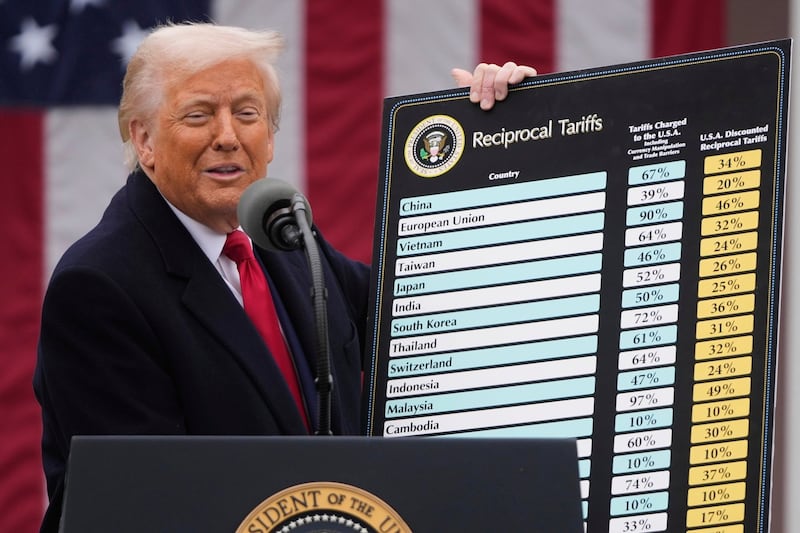
Speaking to reporters earlier in the day, Trump vowed to continue implementing tariffs in other ways and announced a 10 per cent global tariff under a U.S. trade law known as Section 122.
Unlike previous levies, however, they can only be in place for a maximum of 150 days unless Trump receives congressional approval to have them extended.
Full story here.
Luca Caruso-Moro, CTVNews.ca journalist and Jordan Fleguel, CTVNews.ca journalist
Trump tariff policy ‘going in another direction’
In a post to Truth Social on Friday, Trump said that although he disagrees with the U.S. Supreme Court’s ruling, it now allows his administration to go “in a different direction” with its tariff and trade policy, “which is even stronger than our original choice.”
Trump cited Associate Justice Brett Kavanaugh’s dissenting opinion, which stated that “the decision might not substantially constrain a President’s ability to order tariffs going forward.”
Kavanaugh, appointed by Trump in his first term in office, was one of three justices who voted in favour of the administration. The other two – Clarence Thomas and Samuel Alito – were also appointed by Republican presidents.
In the post, Trump wrote: “Thank you Justice Kavanaugh!”
“In actuality,” he said, “while I am sure they did not mean to do so, the Supreme Court’s decision today made a President’s ability to both regulate Trade, and impose TARIFFS, more powerful and crystal clear, rather than less.”
Jordan Fleguel, CTVNews.ca journalist
Illinois governor demands refund
Illinois Gov. JB Pritzker is demanding a refund. The Democrat’s gubernatorial campaign on Friday released a letter addressed to Trump — with an attached invoice for $8.68 billion — following the Supreme Court’s ruling on tariffs.
“Your tariff taxes wreaked havoc on farmers, enraged our allies and sent grocery prices through the roof,” wrote Pritzker, who’s eyed as a 2028 presidential contender and has repeatedly sparred with the president. “This morning, your hand-picked Supreme Court justices notified you that they are also unconstitutional.”
The invoice, marked “Past Due—Delinquent,” sets the tariffs’ cost at $1,700 for each of the state’s 5.11 million households, a total of $8,679, 261,600.
Pritzker says failure to pay will elicit “further action.”
The Associated Press
Trump tariffs still affect Canada, despite ruling: Unifor president
Unifor national president Lana Payne told CTV News Channel on Friday that while she expected the U.S. Supreme Court to rule the way it did, Canada is still greatly affected by Trump’s tariff strategy.
“The reality is: this is an important decision, but the impact of the most important – and punishing – tariffs are still there,” she said, highlighting sectorial tariffs on auto, steel, aluminum, forestry and heavy-duty trucks.
Payne, who is also on Prime Minister Mark Carney’s Canada-U.S. relations council, says those industries could be further impacted by Trump’s additional 10 per cent global tariff, which he announced soon after the court’s decision.
“The reality is that the president of the United States has many tariff tools in his toolbox, and we have been experiencing a variety of them in Canada, (which) have been designed to surgically destroy jobs in this country.”
Hunter Crowther, CTVNews.ca digital producer
Are judges invited to State of Union?
When asked if the six U.S. Supreme Court judges who ruled against Trump on Friday were still invited to his State of the Union address next week, he said: “They are, but barely.”
“(The other) three are happily invited but they’re barely invited … honestly I couldn’t care less if they come,” he said.
Jordan Fleguel, CTVNews.ca journalist
Trump says no answer on refunds
Trump says he has not received a clear answer on whether he needs to reimburse companies for taxes paid on the International Emergency Economic Powers Act tariffs.
“They take months and months to write a decision, and they don’t even discuss that point,” he said. “Wouldn’t you think they would’ve put one sentence in there (saying) keep the money or don’t keep the money?”
He said that question will be hammered out in the courts.
Luca Caruso-Moro, CTVNews.ca journalist
‘It’s already been approved’
Asked if he will seek additional congressional action on tariffs, Trump says he doesn’t need to, and that it has “already been approved.”
Luca Caruso-Moro, CTVNews.ca journalist
Trump has stronger tools available
Now that he can no longer lean on IEEPA provisions to impose this round of tariffs, Trump says he has other tools that are even stronger to carry out his trade regime.
“We have alternatives. Great alternatives.”
He has not yet offered specifics on his plans.
Luca Caruso-Moro, CTVNews.ca journalist
Trump ashamed of majority
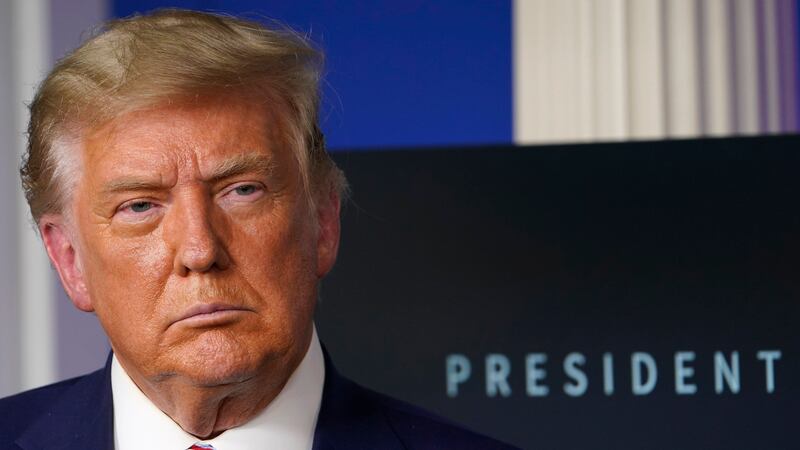
Trump has taken the mic. He started his address by calling the ruling “deeply disappointing,” adding he is “ashamed” of certain members of the court.
He thanked and congratulated the dissenting justices, and said that the country was proud of them.
“Foreign countries that have been ripping us off for years are ecstatic,” said Trump.
Luca Caruso-Moro, CTVNews.ca journalist
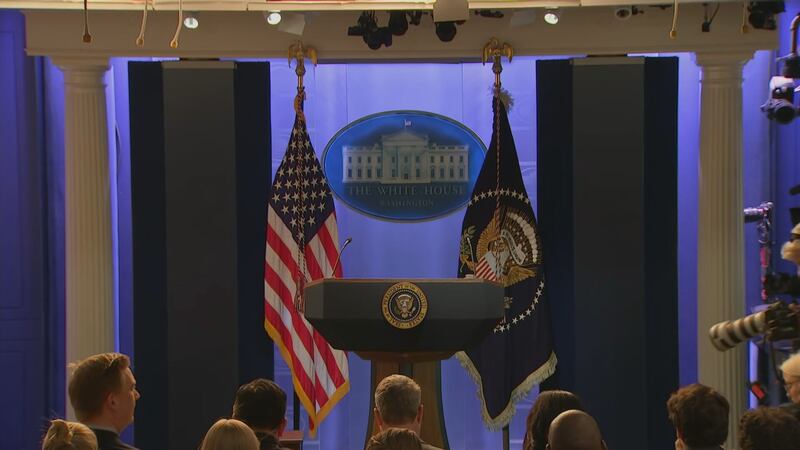
Press await president
The lights in the White House briefing room have dimmed some, prompting a wave of “ooohs” from the reporters in the room, followed by laughter.
The president, who was originally scheduled to speak at 12:45 p.m., has not yet appeared.
Luca Caruso-Moro, CTVNews.ca journalist
Groans after Canada scores
There were mixed emotions after someone in the press room mentioned Team Canada had scored in the Olympic semifinals against Finland.
“Canada 3-2,” said one journalist, to a collective groan among colleagues.
Canada vs Finland in Olympic semifinal showdown. Live updates here
Luca Caruso-Moro, CTVNews.ca journalist
Trump to hold press briefing following court decision
The White House has confirmed that U.S. President Donald Trump will hold a press briefing following the U.S. Supreme Court’s tariff decision.
The briefing is scheduled for 12:45 p.m. ET.
Lynn Chaya, CTVNews.ca journalist
‘Some’ trade deals will stand, Trump says
Trump said that following Friday’s U.S. Supreme Court decision, some of the trade deals his administration has already struck with foreign countries will remain in place, but some will need to be renegotiated.
“Some of them stand; many of them stand, but some of them won’t, and they’ll be replaced,” he said.
Jordan Fleguel, CTVNews.ca journalist
The ‘X-factor’ in the upcoming CUSMA talks
Today’s ruling by the Supreme Court on Trump’s tariffs makes clear he’s being squeezed between the judiciary and legislative branch.
The courts have neutered the president’s ability to enforce tariffs and now Congress is passing legislation to repeal his tariffs. This is checks and balances playing out in real time.
Many say Trump operates unilaterally, but we are seeing other branches step in and step up.
Eric Ham, CTV News Political Analyst
Tariffs 3.0?
The U.S. president indicates he’s intent on continuing to impose tariffs, meaning Americans will continue paying import duties that will only keep prices high.
This could result in the sinking of Trump’s approval ratings and deliver both the House and Senate to Democrats.
I can’t imagine any Republican lawmaker will willingly endorse these new Section 122 tariffs when on the campaign trail.
Eric Ham, CTV News Political Analyst
Bad timing for Trump: NYT
New York Times White House reporter David E. Sanger points out the timing of the SCOTUS decision is bad for the president, who’s heading to China in about five weeks, from March 31 to April 2.
The court’s decision could “limit his leverage with the world’s second largest economy,” says Sanger.
Phil Hahn, CTVNews.ca senior producer
‘Across the board’ tariffs
President Trump says he will invoke Section 122 tariffs across the board. These new tariffs allow a maximum amount of 15% and sunset after 150 days. Beyond that he will need congressional approval to keep the tariffs in place.
He is showing signs that he’s taking the Supreme Court ruling deeply personally. He’s mentioned his electoral victory suggesting it should buttress him against SCOTUS rulings that go against his administration.
Eric Ham, CTV News Political Analyst
Tariff threat isn’t over for Canada: trade expert
The U.S. Supreme Court may have struck down Trump’s sweeping emergency tariff powers, but Canada’s threat is far from over.
Now the risk has shifted, says Carlo Dade, director of International Policy at the School of Public Policy at the University of Calgary.
He says the ruling will not end Canada’s tariff angst. Instead, Trump is likely to turn to other tariff authorities delegated by Congress.
“If he loses one tool, he’s going to look at the next best thing he has, and that’s Section 232,” which allows Trump to impose tariffs on specific products, said Dade.
“He’s not going to give up tariffs. It’s too much money coming in. It’s too good a lever.”
Full story here.
Anam Khan, BNNBloomberg.ca journalist
Poilievre pledges collaboration
Conservative Leader Pierre Poilievre called the court decision a “step in the right decision” in a post on X, pledging collaboration with the federal government during this “critical period.”
Pointing to the upcoming free trade review between Canada, the U.S. and Mexico, Poilievre says he expects lumber, aluminum, steel and auto tariffs to be lifted as well – all of which were not affected by Friday’s ruling.
Criticizing Prime Minister Mark Carney for not reaching a trade deal with the U.S. by last summer, Poilievre said, “The truth is no one can control what President Trump will say or do and so we must instead focus on what we can control.”
“We must unblock our energy and minerals, unleash our economy, and bolster our military and self-reliance for leverage to fight for tariff-free trade with the U.S.”
Luca Caruso-Moro, CTVNews.ca journalist
‘Tariffs were nothing more than an illegal cash grab’: Newsom
California Gov. Gavin Newsom is demanding Trump and his administration repay Americans for the “illegal” tariffs he imposed during his presidency.
“Your tariffs were nothing more than an illegal cash grab that drove up prices, hurt working families, and wrecked longstanding global alliances,” Newsom wrote on X.
“Every dollar your administration unlawfully took needs to be immediately refunded — with interest.”
Lynn Chaya, CTVNews.ca journalist
Ruling made amid ‘growing resistance’
Former foreign affairs minister Peter MacKay called the ruling a “major blow to the president,” telling CTV News Channel that it comes at a time of “growing resistance” to Trump’s punitive tariffs even within his own party.
“The cracks are starting to form” in the Republican party, MacKay said, “and I think as Canada prepares to enter into (CUSMA negotiations), this is a positive development.”However, a former Canadian ambassador to the U.S. said because of CUSMA, Canada won’t feel the impacts of the court decision as much as others.
“Actually the rest of the world gains more from this than Canada” because of CUSMA said Frank McKenna, now U.S. deputy chair of wholesale banking for TD Bank Group.
Still, McKenna said in an interview with CTV News Channel Friday, the ruling combined with a recent U.S. congressional vote signifying opposition to tariffs are strong signals to the Trump administration.
Kendra Mangione, CTVNews.ca journalist
Uncertainty surrounds the decision, what’s next
Matthew Holmes, executive vice-president and chief of public policy at the Canadian Chamber of Commerce, spoke to CTV News Channel Friday about the uncertainty surrounding the decision.
“What does this mean? What will the administration do next in the United States?” he said. Holmes said the “good news for Canada” is that most trade into the U.S. is tariff-free under CUSMA, and that continues to be in place.
He said what is significant to note about the ruling is IEEPA doesn’t make reference to tariffs, and had previously never been used to implement tariffs, and this seemed to be the focus of the court’s decision. What that means is that the impact of the ruling is isolated to use of IEEPA, and so doesn’t impact far-reaching tariffs that could be implemented in another way, if Trump was able to get buy-in from U.S. Congress.
The ruling does not mean the U.S. can’t use “a whole range” of other tools at its disposal to continue to impose tariffs, Holmes said.
Section 232, as an example, is behind the tariffs Holmes says are most impactful on the Canadian economy right now - those impacting the automotive, steel and aluminum sectors.
“It’s pretty clear from the signals so far that they have a number of other mechanisms, and the intent to continue on this tariff journey they’re on,” Holmes said.
Kendra Mangione, CTVNews.ca journalist
Saskatchewan leaders call it ‘good news’
Leaders in Saskatchewan are sharing their reactions to the U.S. Supreme Court’s decision to strike down several of Trump’s tariffs.
In a statement, the Government of Saskatchewan said that while the ruling is “good news,” the province is still evaluating the impact on the local economy, industries and finances.
“This ruling does not remove all the U.S. tariffs, and the U.S. administration may be evaluating other mechanisms to reimpose some or all of these tariffs,” the statement read.
Full story here.
Caitlin Brezinski, journalist, CTVNewsRegina.ca
Kavanaugh’s dissent
Justice Brett Kavanaugh, in his dissent to the majority opinion, writes it’s not the court’s job to resolve the “vigorous policy debates” stemming from Trump’s sweeping import tariffs.
Instead, the court must focus on the “sole legal question” of whether IEEPA allows Trump to “regulate … importation.”
“Statutory text, history, and precedent demonstrate that the answer is clearly yes: Like quotas and embargoes, tariffs are a traditional and common tool to regulate importation,” reads his opinion.
Luca Caruso-Moro, CTVNews.ca journalist
How will companies get refunds?
The U.S. Supreme Court did not say how the government should refund the illegal tariffs, worth an estimated US$175 billion.
Each importer might have to sue in the Court of International Trade to get a refund, and it is not clear that a class action could be formed to cover the broad range of companies that paid tariffs, legal experts said.
Importers have two years to sue to claim a refund, under U.S. trade law.
Trump’s ‘dizzying’ tariffs
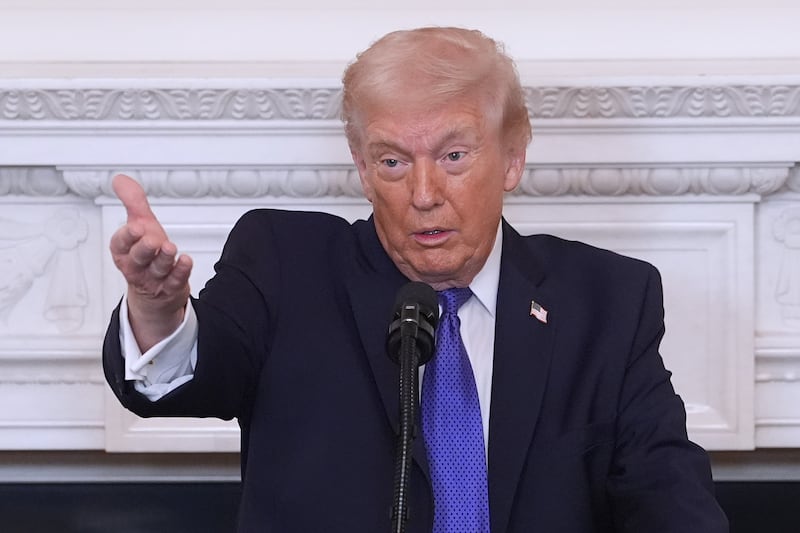
Chief Justice John Roberts writes the government’s interpretation of the law allows the president to be “unconstrained by the significant procedural limitations in other tariff statutes and free to issue a dizzying array of modifications at will.”
“All it takes to unlock that extraordinary power is a Presidential declaration of emergency, which the Government asserts is unreviewable,” he adds.
Luca Caruso-Moro, CTVNews.ca journalist
What’s not in the ruling?
The court’s decision is not being seen as a clear win for Canadian business.
The ruling doesn’t affect the sector-specific tariffs imposed on metals, lumber and automobiles, while the broad 35 per cent duties against Canada don’t apply to goods compliant under the Canada-U.S.-Mexico trade agreement.
CIBC chief economist Avery Shenfeld says in a note that the ruling provides more immediate relief to Canada’s competitors that face tariffs on all of their U.S. exports.
But he says it does remove the threat that the 35 per cent tariffs could come into play if the U.S. opts to withdraw from CUSMA, which also boosts Canada’s negotiating position.
Dennis Darby, CEO of Canadian Manufacturers & Exporters, says that while the ruling is welcome, it doesn’t change the sectoral tariffs and uncertainty continues to weigh.
He says the best outcome would be a productive renewal of the CUSMA trade deal that puts an end to recurring trade disruptions.
The Canadian Press
‘New, blunter mechanisms’
The president and CEO of the Canadian Chamber of Commerce said Friday that the ruling is “not the last chapter of this never-ending story.”
Candace Laing said in a media statement, “Canada should prepare now for new, blunter mechanisms to be used to reassert trade pressure, potentially with broader and more disruptive effects.”
Kendra Mangione, CTVNews.ca journalist
Will more Republicans side with Democrats?
It was just last week when those opposed to Trump’s tariffs scored a win, when House Joint Resolution 72 passed the House of Representatives.
The resolution called for a repeal of Trump’s tariffs on Canada.
Six Republicans joined all Democrats in the House to successfully pass the legislation. The resolution now sits in the Senate, where it’s expected to also pass with bipartisan support.
Now that the U.S. Supreme Court has struck down Trump tariffs, it’s an open question of how many Republicans will cross the aisle and side with Democrats.
Eric Ham, CTV News Political Analyst
Trump needs a Plan B ‘fast’: analyst
The 6-3 ruling from the Supreme Court is one many court watchers saw coming, including the White House.
The Trump administration has signalled there are contingencies in place to keep the tariffs in place, but it’s unclear what those are and when it will pivot to such plans.
The president will need to come up with a Plan B, fast. Even before the ruling came down, lawsuits were already building, seeking relief from the tariffs, and now the floodgates will fly open as businesses that paid the tariffs will want refunds.
Strangely, the courts did not address the issue of refunds which will likely lead to additional fights the court will have to sort out.
Eric Ham, CTV News Political Analyst
SCOTUS ‘reinforces’ Canadian position
Canada-U.S. Trade Minister Dominic LeBlanc says the U.S. Supreme Court’s decision “reinforces” Canada’s position that Trump’s tariffs are “unjustified.”
“We are working to create growth and opportunities on both sides of the border, while strengthening our collaboration with reliable trading partners and allies around the world,” he wrote on X, acknowledging the free trade deal between Canada, the U.S. and Mexico is up for review later this year.
Luca Caruso-Moro, CTVNews.ca journalist
Will Trump change course?
The U.S. Chamber of Commerce expressed hope that the court’s ruling means Trump will change course and abandon import taxes once and for all.
“We encourage the administration to use this opportunity to reset overall tariff policy in a manner that will lead to greater economic growth, larger wage gains for workers, and lower costs for families,” said Neil Bradley, vice-president and chief policy officer at the U.S. Chamber of Commerce.
He said the ruling is welcome news for businesses and consumers and that “swift” refunds would be “meaningful for the more than 200,000 small business importers,” and will “help support stronger economic growth this year.”
Phil Hahn, CTVNews.ca senior producer
White House expected to shift strategy
Despite the Supreme Court blocking Trump from levying sweeping “reciprocal” tariffs on nearly every country in the world, tariffs may not be going away.
Brian Jacobsen, chief economic strategist at Annex Wealth Management said he expects Trump’s White House to shift strategy and use tariffs that target specific countries or industries.
“This will give some short-lived relief as it just delays the inevitable of tariffs from a different authority,” he said.
The Associated Press
‘Tariff or no tariff,’ Toronto is diversifying, mayor says
Speaking at an unrelated news conference on Friday morning, Mayor Olivia Chow said the city is still working to diversify Toronto’s economy, pointing to new partnerships in the film and television industry.
“You notice in the film industry, which is very vibrant in the City of Toronto, we have, rather than just going to Hollywood, Los Angeles, we have branched out and connected with the British and the Irish filmmaking industry to do collaborations,” she said at the news conference.

“We are diversifying our approach so that tariff or no tariff, we have a stronger base. But most importantly, shopping and loving local, that campaign will continue.”
Codi Wilson, CP24.com journalist
How the court decided
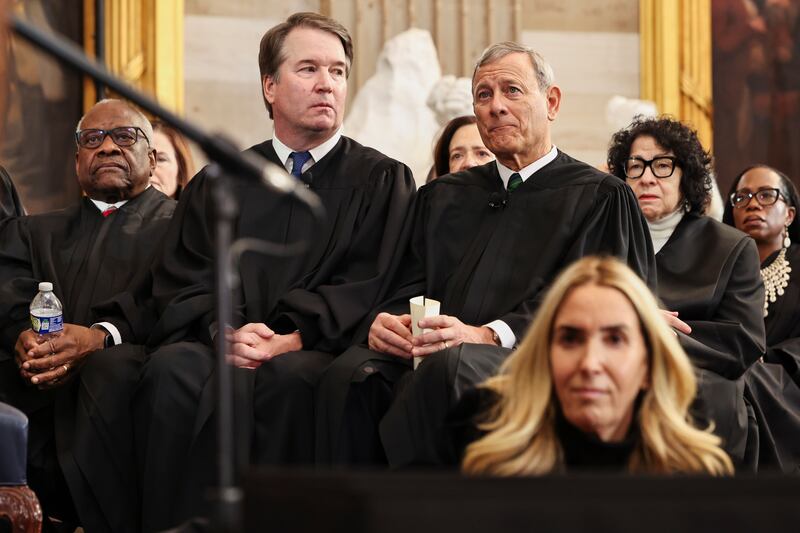
Chief Justice John Roberts authored the majority opinion, joined by justices Sonia Sotomayor, Elena Kagan, Neil Gorsuch, Amy Coney Barrett, and Ketanji Brown Jackson.
Justices Clarence Thomas, Brett Kavanaugh and Samuel Alito dissented.
Luca Caruso-Moro, CTVNews.ca journalist
Gold pares gains
Gold prices trimmed some gains on Friday as investors assessed the U.S. Supreme Court ruling striking down Trump’s broad tariff plan, although the safe-haven metal remained supported by weaker-than-expected U.S. GDP data.
Spot gold was up 0.5 per cent at US$5,025.19 an ounce by 10:35 a.m. ET, after rising as much as $5,063.49 earlier in the session. U.S. gold futures for April delivery were up one per cent at $5,045.
Reuters. Read the full story here.
President needs Congressional green light
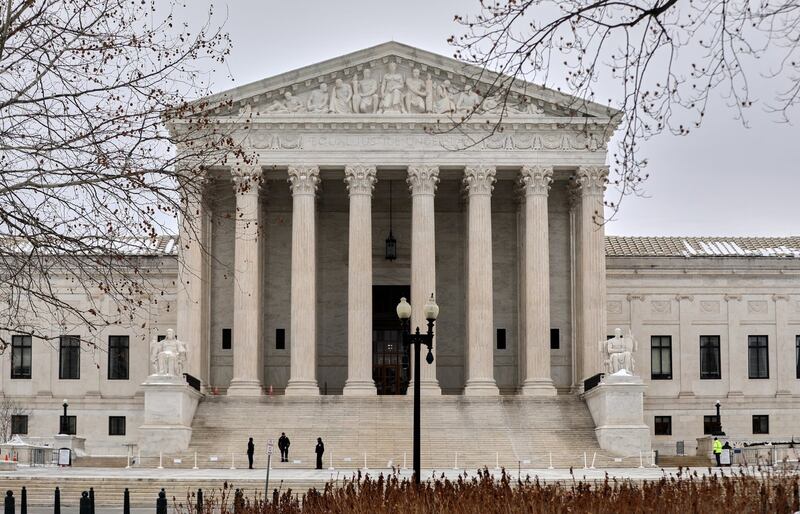
The court ruled that the Trump administration’s interpretation that the law at issue - the International Emergency Economic Powers Act, or IEEPA - grants Trump the power to impose tariffs would intrude on the powers of Congress and violate a legal principle called the “major questions” doctrine.
Roberts, citing a prior Supreme Court ruling, wrote that “the president must ‘point to clear congressional authorization’ to justify his extraordinary assertion of the power to impose tariffs,” adding: “He cannot.”
Reuters
What is IEEPA?
Trump declared a national emergency in order to use the International Economic Emergency Powers Act, also called IEEPA, to hit Canada and other countries with 35 per cent tariffs.
Those duties did not apply to goods compliant under the Canada-U.S.-Mexico Agreement on trade, known as CUSMA. Most trade between the two countries is covered under that deal, which is up for review this year.
IEEPA historically has been used to impose sanctions on enemies or to freeze their assets, not to impose tariffs. The law does not specifically mention the word tariffs. Trump’s Justice Department had argued that IEEPA allows tariffs by authorizing the president to “regulate” imports to address emergencies.
IEEPA was passed by Congress and signed by Democratic President Jimmy Carter. In passing the measure, Congress placed additional limits on the president’s authority compared to a predecessor law.
Luca Caruso-Moro, CTVNews.ca journalist. With files from Reuters.
A ‘victory’ for people’s wallets, say Democrats
Democratic lawmakers are reacting positively to the Supreme Court ruling.
Sen. Chuck Shumer of New York called it “a victory for the wallets of every American consumer” and accused Trump of trying to “govern by decree,” and sticking “families with the bill.”
Massachusetts Sen. Elizabeth Warren said consumers should be paid back for the extra costs they’ve incurred thanks to Trump’s tariffs.
“No Supreme Court decision can undo the massive damage that the Trump tariffs have done to small businesses, to American supply chains,” she said, according to the New York Times, ”and especially to American families forced to pay higher prices on everything from groceries to housing.”
Phil Hahn, CTVNews.ca senior producer
Trump not out of options
BBC’s international business correspondent warns the law used by Trump to impose sweeping tariffs, which the Supreme Court ruled as illegal, isn’t the only legal avenue his administration has used.
Correspondent Theo Legget says there are other laws at Trump’s disposal that he could use to re-impose his tariffs, although they could require congressional approval and would likely take longer.
Phil Hahn, CTVNews.ca senior producer
Tariff revenue
The U.S. Congressional Budget Office has estimated that if all current tariffs stay in place, including the IEEPA-based duties, they would generate about US$300 billion annually over the next decade.
Total U.S. net customs duty receipts reached a record $195 billion in fiscal 2025, which ended on Sept. 30, according to U.S. Treasury Department data.
Reuters

