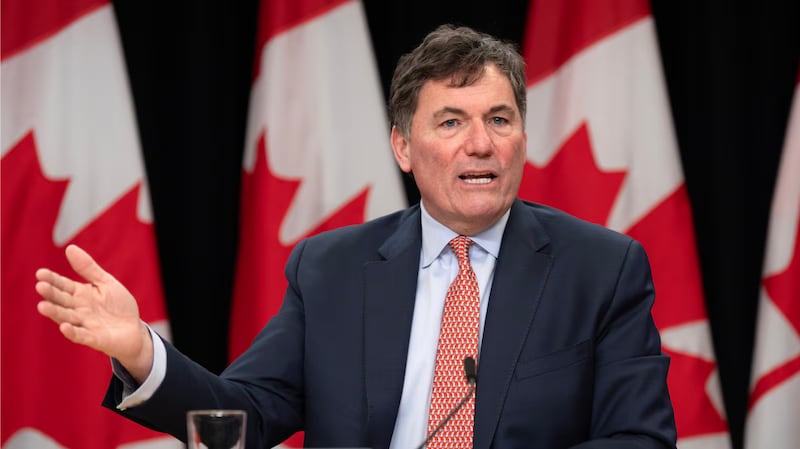
OTTAWA – Despite accusing the United States of weaponizing the deep integration of its economy with Canada’s, Dominic LeBlanc says he “absolutely” wants the trilateral trade deal including Mexico to remain intact.
“We’ve become overly dependent on one trading partner who has turned around, as the prime minister has also said, and weaponized that very dependency or integration against us,” the Canada-U.S. trade minister said in an interview on CTV Power Play with Vassy Kapelos on Tuesday.
“For 30 or 40 years, we became reliant on that particular market for Canadian exports,” he also said. “So, we’re not going to continue that, but we need to manage that to preserve what is the best circumstance we’re in compared to other countries now.”
Canada and the United States have been in a prolonged trade war since U.S. President Donald Trump imposed a slate of tariffs on Canadian imports last February. While many of them have since been scrapped, steep levies remain on key Canadian sectors, such as steel, aluminum, and autos.
Now, the trilateral trade deal between Canada, the U.S. and Mexico, known as CUSMA, is imminently up for review by July 1.
Canada ‘absolutely’ wants CUSMA to stay
In a 10-minute video posted online on Sunday, Prime Minister Mark Carney addressed Canada’s relationship with its closest neighbour.
“The U.S. has fundamentally changed its approach to trade, raising its tariffs to levels last seen during the Great Depression,” Carney said. “Many of our former strengths, based on our close ties to America, have become our weaknesses; weaknesses that we must correct.”
Asked specifically by Kapelos whether the federal government wants CUSMA to stay in place, LeBlanc said: “Absolutely.”
“I think it’s reasonable to tell Canadians the truth,” he added, when pressed by Kapelos on the reasoning for that, considering the prime minister’s characterization of the close economic ties as a weakness. “There’s an example of the prime minister telling Canadians the truth.”
“We are not going to continue to be overly reliant or dependent on one trading partner that puts the country and the workers that we are understandably concerned about in this position,” he added. “So, we’re going to control what we can control. We’re going to diversify trading relationships as aggressively and as quickly as we can.”
Conservative Leader Pierre Poilievre has criticized the video, releasing one of his own on Monday and going out of his way on Parliament Hill Tuesday morning to scrum with reporters waiting outside the Liberal cabinet meeting to speak about it.
Poilievre is urging the prime minister to sign a tariff-free trade deal with the United States, and saying Carney has “squandered Canada’s leverage” in negotiations.
“He refuses to stand up against these wrong-headed American tariffs,” he said on Tuesday. “He has done absolutely nothing on this file in the last year other than use it to stoke fear and distract from his catastrophic failings here at home.”
Leblanc insists talks with U.S. are ‘serious’
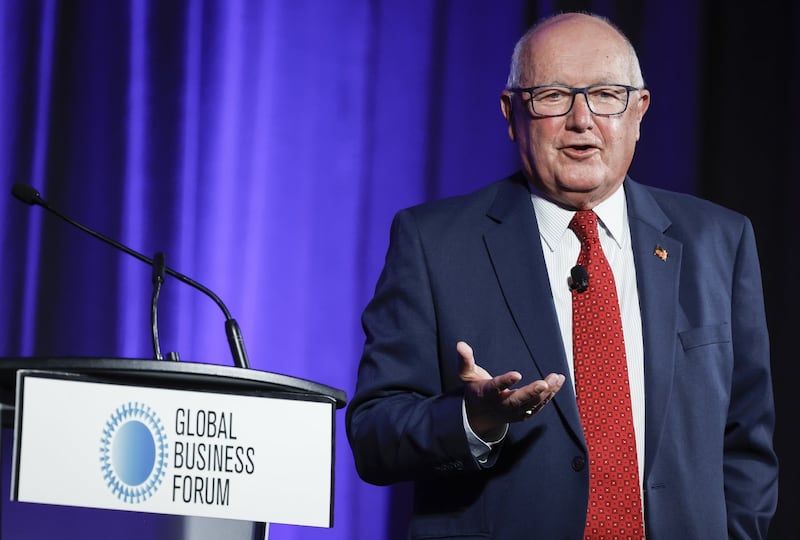
Last week, U.S. Ambassador to Canada Pete Hoekstra said there have been no “serious” trade talks with Canada since last fall after Trump ended discussions over Ontario’s anti-tariff ad.
“It’s not an intense negotiation. There really have been no serious negotiations since October of last year,” Hoekstra told podcaster Jasmin Laine.
Speaking to Kapelos, LeBlanc said he disagreed with those comments, saying he is having “active conversations” with U.S. Secretary of Commerce Howard Lutnick and U.S. Trade Representative Jamieson Greer.
“They’re not going to have 45-minute meetings, one-hour meetings, schedule other meetings with us if they didn’t think it was serious,” LeBlanc insisted. “It’s serious in the sense that we’re discussing serious issues with them.”
LeBlanc also spoke to Greer last week over the phone, and to Lutnick “for an extended period a week go.”
“We have made a deliberate decision not to discuss the content of our conversations with American officials publicly,” LeBlanc added.
July 1 deadline approaches
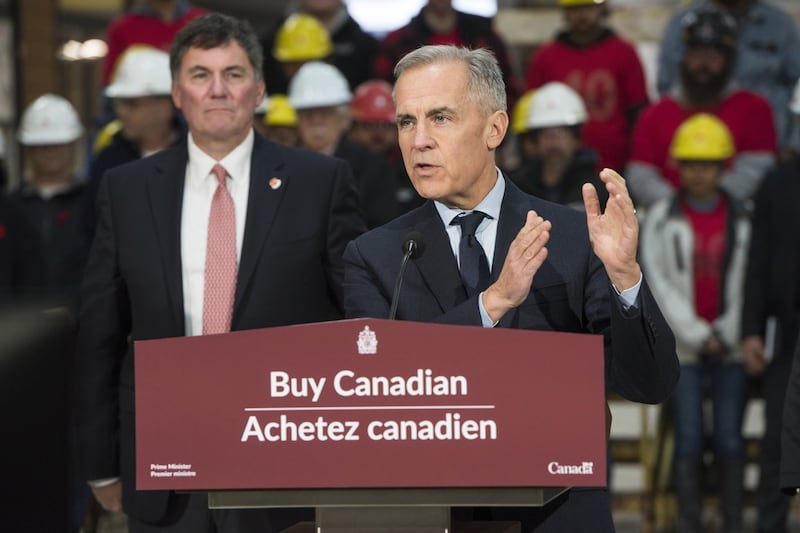
On Tuesday, Carney unveiled a new 24-member Canada-U.S. advisory committee — chaired by LeBlanc — ahead of a formal CUSMA review process this summer.
Greer, meanwhile, has repeatedly stated that negotiations between the U.S. and Mexico are progressing much quicker than they are with Canada.
Speaking to a Washington, D.C.-based think tank earlier this month, he said while it’s unlikely the U.S. administration will hash out all of its trade issues with Canada and Mexico by July 1, he’s optimistic they’ll be resolved as soon as possible.
During a fireside chat in Ottawa on Tuesday, Canada’s top CUSMA negotiator, Janice Charette, referred to the July deadline as “kind of a checkpoint,” rather than “a cliff.” She said the trade deal is not being entirely renegotiated or rewritten, but rather reviewed.
“We are hoping that the resolution that comes will deal both sides with tariffs, as well as the underlying framework” she said.
“I think what we heard through the consultations is really important here,” she added. “That is (CUSMA) is a very good, strong agreement. There is no need to renegotiate, there’s no need to open it up and change fundamental underpinnings of it. It is a robust agreement.”
With files from CTV News’ Stephanie Ha, Graham Richardson and Mike Le Couteur

