Prime Minister Mark Carney’s Advisory Committee on Canada-U.S. Economic Relations was set to meet for the first time on Monday as contentious trade negotiations between the two countries are expected to resume in the coming months.
Drew Fagan, professor at the Munk School of Global Affairs & Public Policy at the University of Toronto, says similar advisory councils were created prior to the signing of previous trade deals, including the current Canada-United States-Mexico Agreement (CUSMA).
“This is typical,” he told BNN Bloomberg in an interview Monday morning.
“Canadian negotiating stances are complicated (given that) it’s a regional economy, the power of the provinces and our federal structure.”
Monday’s meeting comes ahead of a July 1 deadline to review CUSMA, which was signed in 2018 by Canada, Mexico and the United States during U.S. President Donald Trump’s first term in office.
Canada’s chief trade negotiator Janice Charette said during a Canadian Chamber of Commerce summit in Ottawa last week that the deadline “is kind of a checkpoint — it’s not a cliff,” suggesting negotiations may still be ongoing at that time.
“There’s sort of a deadline of July 1, the language in the original agreement isn’t very clear on the review,” said Fagan.
“It’s unlikely that there will be an agreement by then, given the timing; we’re already at the end of April, and the complicated structure of negotiations among the three countries… right now the U.S. and Mexico are talking more than the U.S. and Canada are talking.”
Official high-level trade negotiations between Ottawa and Washington have been stalled since the fall, however representatives and officials from both sides have made numerous comments in recent months regarding future talks.
Last week, U.S. Commerce Secretary Howard Lutnick criticized Canada’s approach to trade negotiations in response to a report quoting a former Canadian official who said that time was on Canada’s side, given the pressures on the U.S. economy.
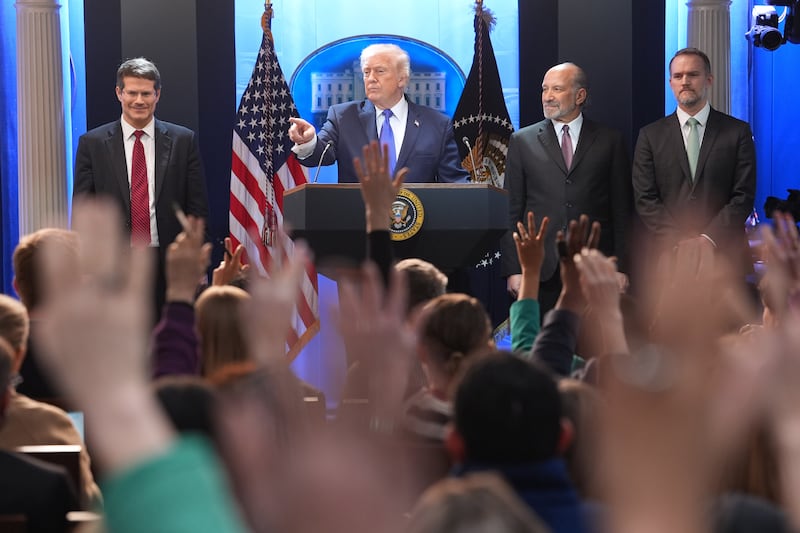
“That is, like, the worst strategy I’ve ever heard,” Lutnick said at a conference hosted by the media outlet Semafor.
“They suck, they — look, we are a $30-trillion economy, right?”
Despite those types of comments from the Trump administration, Fagan said both sides are likely to come together some time between now and the summer to iron out the details of a future agreement.
“There’s a lot of rhetoric being thrown around, particularly from the White House… so the Canadian side is trying to hold back a little bit, but reports are that the engagement is now increasing,” he said.
“I would expect later in the summer, there’ll have to be some sort of statement by July 1, but later in the summer, into the early fall, we’ll have a better sense of what an agreement, assuming there is one – and I think there likely will be – is going to look like.”
With files from The Canadian Press

