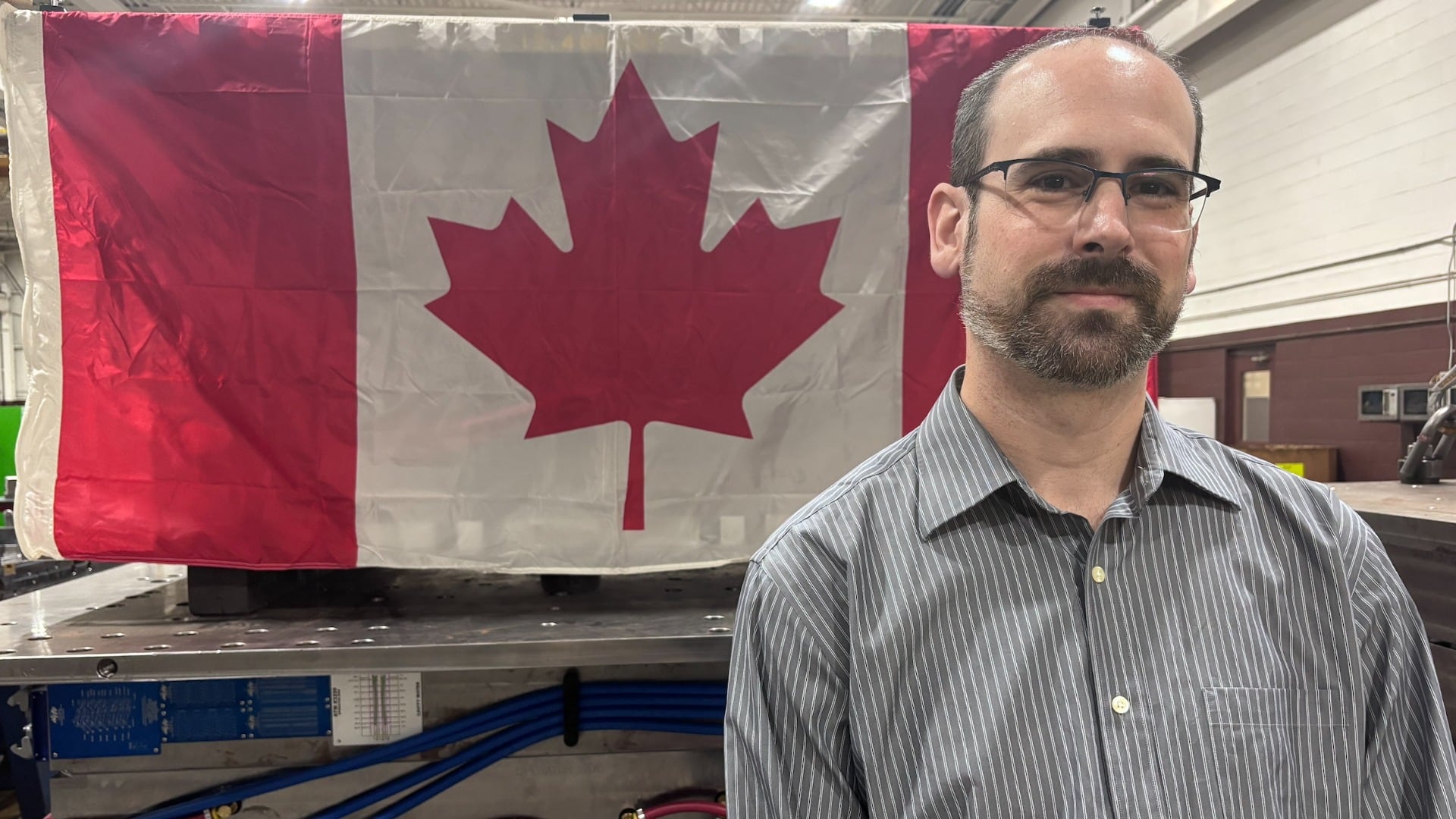
Changes to how U.S. tariffs impact Canadian mold makers have prompted calls for the federal government to provide immediate support.
In early April, the Trump administration announced tariffs would now apply to the “full customs value” of imports containing steel, aluminum and copper, rather than only applying tariffs to the metal portion.
The move, under Section 232 of the Trade Expansion Act, is stated to place a “flat 50 per cent” fee on the total value of articles “made entirely or almost entirely of aluminum, steel, or copper.”
At Aalbers Tool & Mold in Oldcastle, President Aaron Aalbers said the change “immediately altered” contracts that were negotiated with American customers many months ago.
In some cases, Aalbers said customers have helped split the added fees, but most have delayed their shipments until there’s more certainty.
“In the meantime, we’re not getting paid for the product until that occurs. So, I’m left holding the interest payments and the full cost of the tool until we actually do ship it to the customer,” he explained.
Many shops don’t receive payment until a tool is in its new plant in production in the U.S., Aalbers added.
“So, you’re talking, you know, millions of dollars for shops that their total sales in a year might be 45 million, and if you’re cutting out 10 or 15 million of that they’re holding on to, that’s not a sustainable situation,” he added.
Calls for aid
Understanding of trade instability between Canada and the U.S., Aalbers said, there’s a need for the federal government to provide financial assistance to affected businesses.
On Saturday morning, members of parliament, spanning Windsor to Chatham-Kent, called on Prime Minister Mark Carney to resume trade talks with the U.S.
Conservative MP’s Chris Lewis, Kathy Borrelli, Harb Gill and Dave Epp held a press conference on the factory floor of Aalbers Tool & Mold.
The MPs, along with mold makers, recently met with U.S. Ambassador Pete Hoekstra, who reiterated there are some “trade irritants,” particularly around the removal of American liquor from LCBO shelves, Lewis said.
“They’re looking to get a deal done, too. I don’t believe we should have to give everything up. Remember, a deal is only a good deal if it’s a good deal for both sides,” said Lewis, the representative for Essex.
The Tory MPs signaled support for financial help to soften the blow of the latest American levies.
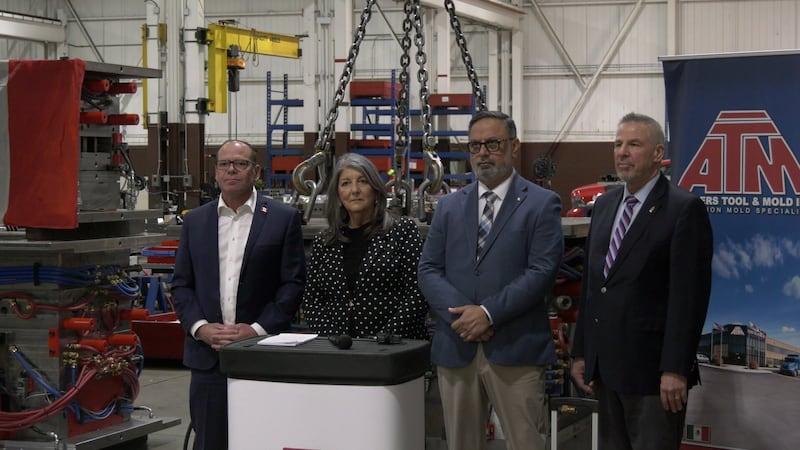
“If you’ve got a plan, give the industry a plan. Otherwise, they’re going to pick up shop, they’re going to move to the United States or to Mexico or sourcing in from China,” Lewis added. “Once those jobs are gone and once that industry is gone, it’s gone forever.”
Mold makers and local politicians want to see Carney tour Canadian tool and mold facilities to better understand their community impact.
Over the long term, they said only a new trade pact can provide the certainty needed for businesses to survive.
“Those [tariff rules] are time limited. He’s got 90 days,” said Epp. “We don’t know what’s coming after that, hence the longer-term call for a deal. Right now, to get through these 90 days, this industry needs to be addressed by the prime minister.”
Industry impact
Mold makers contribute to the manufacturing of automotive parts, hygiene products, and medical components, among other regularly used items.
The Trump administration has repeatedly applied tariffs to strong-arm businesses to move stateside, where they won’t be subject to the same fees.
Without a renewed trade agreement to protect the industry, Nicole Vlanich, executive director of the Canadian Association of Mold Makers, said it’s become a consideration for some manufacturers.
“That’s been something that they’re talking about that if tariffs continue, if there’s no agreement made, that they’re going to have to start making those tough decisions about moving across the border,” Vlanich said.
“If we don’t come to a resolution, there will be no more making industry, which means there will be no Canadian manufacturer,” she added.
For now, business have largely been left footing the bill, which Vlanich said, is more reason for the government to step in before owners are forced to close their doors.
“So, it’s I think the bigger ones can [survive for] three to six months, but the smaller ones are going to be three months, maybe less,” she said.
During a recent trip to Ottawa, Vlanich said there were some minor discussions about the industry’s need for aid, but she’s hopeful to secure a meeting with MPs and ministers in the coming weeks.

