


TOKYO - International Trade Minister Maninder Sidhu says more relief from Beijing’s tariffs that remain on Canadian canola, peas and seafood will be on the negotiating table when he meets with his Chinese counterpart in the fall.
The meeting will likely take place in November in Shenzhen, GD. the site of this year’s Asia-Pacific Economic Cooperation Summit (APEC) hosted by China.
Earlier this year, Prime Minister Mark Carney was able to secure lower tariffs on agriculture and food products, in exchange for slashing Canadian duties on Chinese EVs and allowing an annual quota of 49,000 electric vehicles into the domestic market. While the EV deal lasts five years with quotas increasing annually reaching 73,000 vehicles by 2030, the reduction of duties on canola products only lasts until the end of 2026.
Sidhu says the government wants to “present certainty to our farmers,” and that he will be sitting down with his Chinese counterpart and his deputy minister to discuss the issue.
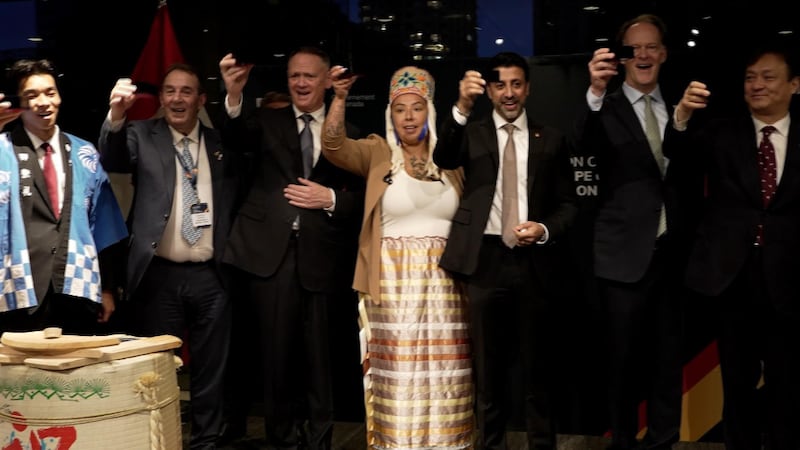
The minister made the remarks during a 15-minute interview with CTV News in Tokyo, where Sidhu is hosting a Team Canada Trade Mission to Japan.
Sidhu was asked if the Chinese wanted more access for their EVs, in exchange for better terms for Canadian canola.
“I would say that’s a conversation that I’m not going to probably have through the media,” he said. “But I mean, we’re going to continue to have conversations with the Chinese on what more we can do economically together.”
Sidhu says the Chinese want “clarity” on how the EV sales process will work, as they are still going through Transport Canada’s certification process and have not yet been able to sell vehicles in Canada.
Earlier in the week, Industry Minister Melanie Joly, fresh off a visit to four Chinese automakers, also passed through Tokyo to meet with Honda officials to discuss their concerns about EVs.
As trade minister, Sidhu is responsible for setting the quotas on EVs and determining which manufacturers get it.
He says as he continues to have conversations with Chinese EV manufacturers such as BYD and Chery, he’s remained “upfront” about wanting them to build their cars in Canada. Sidhu says this would entail the use of data protection, as well as the use of Canadian suppliers and workers.
The minister says he’s also been in discussion with the Chinese about access to the e-commerce site Alibaba. Alibaba has more than 1 billion potential consumers in China.
“It would be nice to see more Canadians selling on (Alibaba’s) platform,” he added.
At the same time that he’s been speaking with Chinese officials, Sidhu says he has also been clear with Canadian agricultural producers that they need to explore opportunities in places where there is less familiarity with canola oil, like Bangladesh, Pakistan and India.
“Businesses know that we have their backs,” Sidhu says.
Just a week before the CUSMA review is set to begin, Sidhu insists that Canada’s trade diversification policies are working.
“If you dig deep into the number, non-U.S. trade has grown by 17 per cent or $33 billion last year alone.”
The mission Sidhu led to Japan has set a record for Indo-Pacific trade ventures, attracting 300 participants from 175 companies. The minister said at least 12 commercial investment deals will be signed between Canadian and Japanese partners worth more than $1 billion.
“We’re coming home with commercial success from this great mission and there will be many more to come,” Sidhu said. He added that there is building excitement for the next trade mission to India in October, where he hopes there will be record participation again.

