


The U.S. says it will charge a 50 per cent tariff on an array of Canadian goods, including some that are covered under the countries’ free trade agreement, in one month.
The White House claimed Monday the move is a response to unfair Canadian trade practices, including provincial bans on U.S. booze that various premiers imposed months ago in response to American tariffs. The Trump administration said it planned to implement steep tariffs on Canadian beer, wine and spirits.
But on Tuesday, nine premiers agreed to remove a major barrier to interprovincial alcohol sales, allowing brewers and distillers to sell directly to consumers outside their home province.
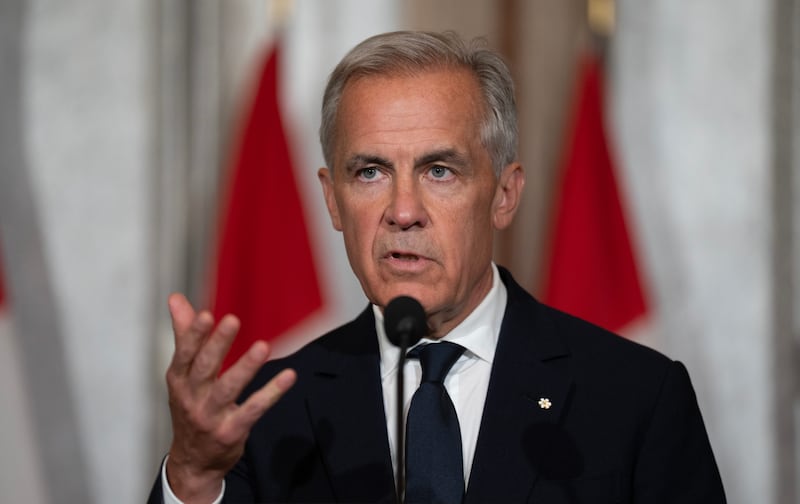
Meanwhile, Prime Minister Mark Carney says the 50 per cent tariffs violate the Canada-United States-Mexico Agreement (CUSMA).
Here’s everything that happened on July 21, 2026:
9 premiers say they have removed a major barrier to interprovincial sales of alcohol
Canadian premiers say they have removed a major barrier to interprovincial sales of alcohol.
Under a new deal, nine premiers say they are updating rules to allow more Canadian brewers and distillers to sell alcohol directly to Canadian consumers outside of their home provinces.
This would lift barriers that make it more difficult or costly for manufacturers to sell alcohol outside their home provinces.
Some jurisdictions such as New Brunswick and Manitoba have already reached deals to permit more interprovincial sales of certain types of alcohol.
All the provinces and the Yukon signed a memorandum last year committing to open their borders to direct consumer sales by May 2026.
In a statement, the premiers said that Quebec and Yukon were aiming to sign on to the agreement in the near future, while B.C. said it would allow companies to sell directly to consumers by February 2027.
The push for direct to consumer sales is part of a larger effort to address interprovincial trade barriers across Canada.
The new deal also comes after U.S. President Donald Trump announced plans to implement steep tariffs on Canadian beer, wine and spirits.
The Canadian Press. You can read the full story here.
Tit-for-tat measures unnecessary: U.S. liquor stores
At Calvert and Woodley Fine Wines and Spirits in Washington, shelves are stocked with bottles from around the world, including some Canadian favourites. The 44-year-old family-run business says Canadian whiskies are popular sellers, including Crown Royal, Canadian Club and several Niagara ice wines.
“They make nice presents,” Will Murck, the store’s director of operations, told CTV News.
Murck shakes his head when asked about U.S. President Donald Trump’s latest threat to impose a 50 per cent tariff on Canadian alcohol.
“We dealt with the same problem with French wine. It’s just a game of chicken to see who’s going to blink first,” Murck said. “We ended up eating a big chunk of the tariffs ourselves because we didn’t want to pass that along to our loyal customer base.”
Murck said about 10 to 15 per cent of the store’s spirits sales are Canadian whiskies. Like many Americans, he is skeptical of the president’s use of tariffs as an economic tool. A recent Pew Research Center poll found 60 per cent of Americans disapprove of Trump’s tariffs.
Murck called the tit-for-tat measures unnecessary.
“We’re neighbours. We should get along,” he said. “It doesn’t make us look great. It just makes us seem a bit like a bully, but that’s my personal take on it.”
Joy Malbon, Washington bureau chief, CTV National News
PM Carney pledges support for workers, businesses
Carney says Canada is prepared to respond to the latest U.S. trade measures and will continue supporting workers and businesses affected by the dispute.
In a post on X, Carney said he spoke with the nation’s premiers on Tuesday to discuss “the latest in a series of unilateral United States trade actions.”
“We are bigger, stronger, and more prosperous when we are united,” Carney wrote. “Canada will work relentlessly and take any measures necessary to build our strength at home and to support Canadian workers, farmers, businesses, and families.”
Tammy Ibrahimpoor, CTVNews.ca journalist
Canada won’t celebrate bridge opening with U.S.
Officials from the Canadian and American governments will no longer be celebrating together on Friday to mark the opening of the long-delayed Gordie Howe International Bridge.
“In light of trade action threatened by the United States earlier this week, it would be inappropriate to proceed with a celebratory event between the two countries,” Jenna Ghassabeh, who is the director of communications for Housing Minister Gregor Robertson, said in a statement on Tuesday.
A senior government source also confirms to CTV News that U.S. Ambassador to Canada Pete Hoekstra and U.S. Commerce Secretary Howard Lutnick were expected to attend. But now, the source says there will be a Canadian-only celebration.
Mike Le Couteur, Stephanie Ha, CTV News journalists
‘I’m as confident as I can be’: Windsor mayor on Gordie Howe Bridge
Despite the U.S. charging a 50 per cent tariff on Canadian goods, a positive development in Canada-U.S. trade talks is the opening of the Gordie Howe International Bridge, set to take place on Monday.
Windsor, Ont., Mayor Drew Dilkens says recent developments have not discouraged him from believing the bridge, which connects Windsor and Detroit, Mich., will open as planned.
“I’m as confident as I can be,” Dilkens told CTV News Channel on Tuesday.
He acknowledged the “twists and turns and trials and tribulations” with the bridge project over the course of 25 years, but said posts from both U.S. President Donald Trump and Prime Minister Mark Carney indicate that they are both moving forward with its opening, which comes after a delay.
“And you’ve got two ambassadors coming, so it’s a pretty good sign that things will move forward and the bridge will be able to open on Monday as scheduled,” he added.
Kayla Thompson, CTV News journalist
Ford tells NBC ‘we have to work together’
Ontario Premier Doug Ford says Canada has an important economic relationship with the United States and the two countries must continue to work together amid ongoing tariff disputes.
Speaking with Meet the Press’ Kelly O’Donnell on Tuesday afternoon, Ford reiterated Canada’s affinity for the U.S, saying that president Trump “started this economic war against their closest friend and ally.”
Ford said Canada is the United States’ “Number One customer,” pointing to Canada purchasing 400 per cent more vehicles from the U.S. than any country in the world.
the premier said Ontario could once again look at imposing retaliatory tariffs on energy, saying “everything’s on the table,” although he noted, that is not what we necessarily want to do.
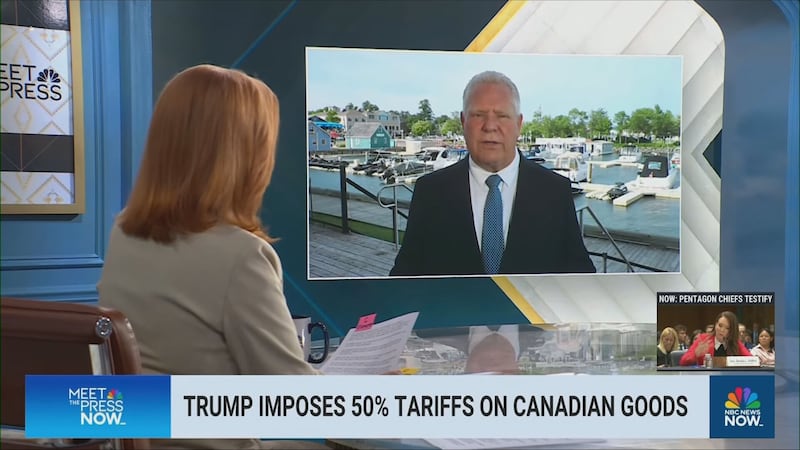
He added that if the tariff disputes are settled American alcohol could be put back on Canadian shelves.
“Canada needs America, absolutely we need America, but guess what, America needs Canada,” the premier said, pointing to Canadian electricity, oil, potash, high-grade nickel, and uranium purchased by the United States.
“So I guess president Trump has a choice: either deal with China and Russia for those goods, or you deal with your closest ally, your Number One customer in the world. And yes, the U.S. is our number one customer. This just does not make sense“ Ford said.
“I have a recommendation for president Trump: start focusing on China and start focusing on Russia, not your closest friend that fought forward shoulder to shoulder with our great American allies.”
Joanna Lavoie, CP24.com journalist
‘I don’t think it’s a surprise’: O’Toole
Former Conservative leader Erin O’Toole says Trump’s latest tariff threat is consistent with his negotiating style and could be a sign trade talks are about to intensify.
“I don’t think it’s a surprise,” O’Toole said in an interview with CTV News Channel Tuesday. “Anyone who’s followed President Trump in his first term, or in this term, knows that he doesn’t extend courtesies to other countries.”
O’Toole, who now sits on the prime minister’s advisory council on Canada-U.S. relations, called the timing “unfortunate,” but said Canada expected pressure ahead of serious negotiations.
He said the use of an “obscure” piece of legislation to apply tariffs is part of a wider negotiation to push for a deal.
“The American economy needs a deal just as much as the Canadian one does,” he said. “In many ways, this could be the president indicating he’s ready to talk turkey, and I think Canada is as well.”
Tammy Ibrahimpoor, CTVNews.ca journalist
‘They need us to survive,’ Trump says
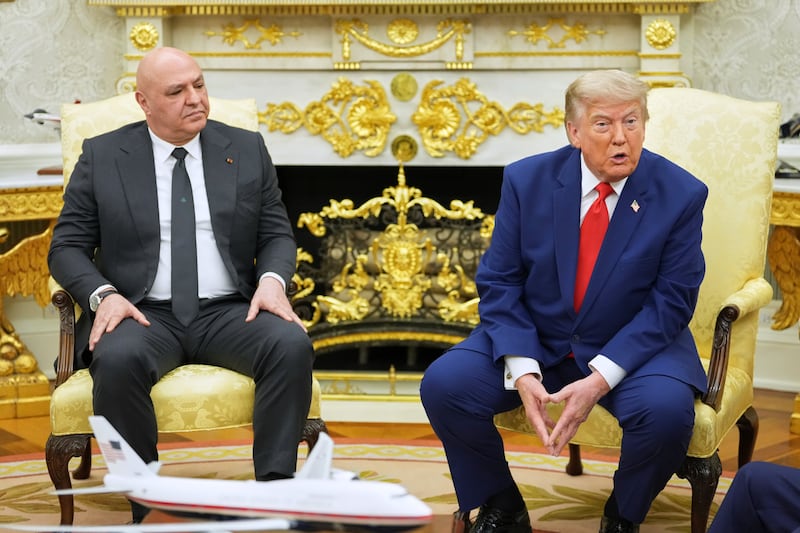
“I love Canada, I love the people of Canada,” said Trump from the Oval Office on Tuesday. “They need us to survive.
“Without us there’s no way they can survive.”
Reporters asked him to clarify whether the new 50 per cent tariffs are related to wildfire smoke drifting south of the border. Trump said “We’re looking at that separately.”
Luca Caruso-Moro, CTV News journalist
Trump’s wildfire tariffs
Trump said he is looking at separate tariffs to impose on Canada over wildfire smoke.
“A lot of damage has been done. They’re not managing their forests properly,” the president said.
Last week, Trump threatened to impose additional tariffs on Canada over wildfire smoke coming into the U.S.
In a background briefing on Monday, a senior Trump administration official confirmed that the president has “asked for options” when it comes to wildfire-related tariffs and “options are being shared with him.”
Stephanie Ha, CTV News journalist
The household cost of tariffs
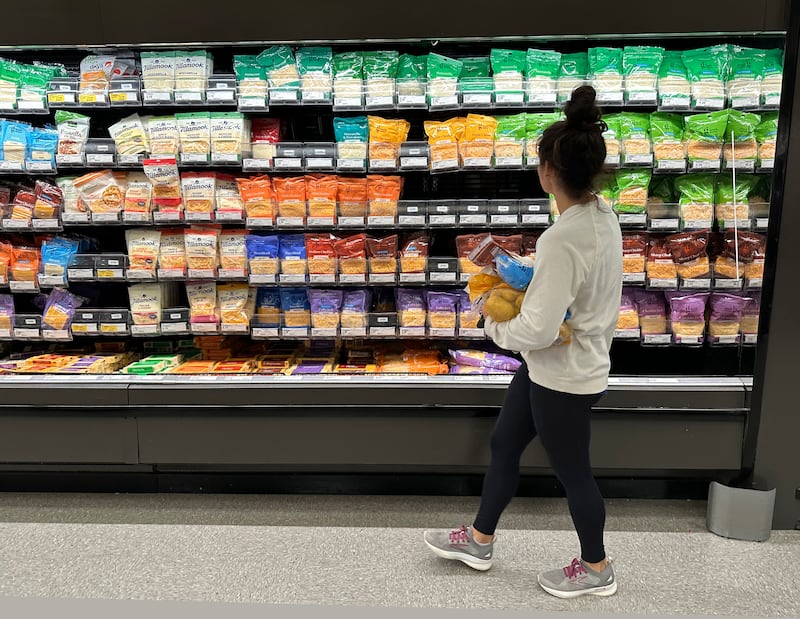
Multiple economists tell CTV News Trump’s latest tariffs will increase the cost of living for Americans, while consumers on both sides of the border feel the pinch.
“Probably the one that’s going to have the biggest impact is cereal and dairy. This is going to drive up grocery prices even further, it’s really going to hurt American families,” said McMaster University economist Colin Mang.
Trump’s tariff campaign has upended North America’s integrated trade relationship and rocked the once-reliable supply chains. According to the Democrats’ Joint Economic Committee, since Trump began using tariffs, the average household in the United States is paying an additional C$1,400 to C$2,400 annually.
The cost of living has also increased for those living north of the border. According to RBC, Canadian households are absorbing an estimated $2,300 to $2,700 in annual costs since tariffs came into effect in early 2025.
Economists are estimating a reduction in Canada’s GDP by 1.5 per cent to two per cent. And since January 2025, Canada has also lost roughly 61,000 manufacturing jobs.
“There’s a reason why we need to hold our breath here; a reason why we need to take this seriously. I can imagine the pain that so many of the exporters are feeling right now, the supply chains are suffering,” said Gowling WLG trade specialist Jacques Shores.
Adrian Ghobrial, CTV News senior correspondent
‘We’ve been waiting’: Canadian dairy producer on new tariffs
Quebec dairy producer Angus MacKinnon had been wondering when the neighbours to the south would target the industry.
“We’ve been waiting on Donald Trump to come down on dairy for two years,” said MacKinnon, a seventh-generation farmer in Coaticook, Que., just a few kilometres from the U.S. border.
The U.S. president has long lashed out at Canada’s supply management system, which restricts the import of dairy from the U.S. and other countries. He says it is a protectionist measure that treats American farmers unfairly.
The Trump administration announced milk, whey and lactose are on the 50 per cent tariff hit list. MacKinnon says this will have little impact on producers themselves in the current system.
“We are paid at the farm gate,” he said.
The production is handed over to the milk producers’ federation and to distributors, which may take a hit from the tariffs. But what has long concerned dairy producers is that Ottawa may sacrifice the supply management system to appease the U.S.
Some critics have said the system should not be a sacred cow and that the cost of keeping it in place may be too high. But dairy producers say Ottawa has promised that the Canadian market would not be opened any further.
“Prime Minister Mark Carney has reiterated the same scenario, and last night he said how he is there to support the farmers and the auto workers and all Canadians from coast to coast,” said MacKinnon.
“We’re holding strong that he is going to stick to his word.”
MacKinnon said the state of Wisconsin produces as much milk as Canada as a whole and that supply management allows farmers in this country to have economic stability as they get a guaranteed price for their milk.
He said Canada as a nation cannot be at the mercy of any other country for its food supply, adding that Trump has a clear motive to target dairy now.
“He is positioning himself because, keep in mind, middle America elected Donald Trump,” MacKinnon added.
“Middle America is agriculture.”
Genevieve Beauchemin, CTV News Quebec bureau chief
Trump fighting terms he agreed to: trade lawyer
Robert A. Glasgow, an international trade lawyer with McCarthy Tetrault, accused Trump of calling foul on trade mechanisms he negotiated.
In Trump’s proclamation, he argues Canada has inequal eligibility requirements defining who can access tariff quotas on cheese. CUSMA has different eligibility criteria than Canada’s agreement with the EU, known colloquially as CETA. That disadvantages the U.S., according to Trump.
“He talks about differential treatment on dairy quotas despite the fact that this is preferential treatment that his administration agreed to,” he said. “Because CETA, which is what he’s complaining about, was pre-existing when he negotiated the CUSMA trade agreement.”
Dairy Farmers of Canada, an organization representing dairy producers, said in a release that it’s still assessing the potential impact of Trump’s latest tariffs. It also argues that the U.S. has had “successful” access to the Canadian market under CUSMA.
“In fact, between 2019 and 2025, exports of U.S. dairy products to Canada increased significantly, rising from C$423 million in 2019 to C$1.06 billion in 2025. This represents a 150 per cent increase in value over the period.”
Luca Caruso-Moro, CTV News journalist
Booze bans up to premiers: Carney
Asked whether provinces should put U.S. booze back on the shelves, in light of Trump’s persistent complaints, Carney said that’s up to premiers.
“The provinces individually took those decisions in response to a series of tariffs that were put in place, and also threats to our sovereignty,” Carney said.
He added people in provinces with booze bans appear to support the measure, and pointed to their “other consumption habits,” namely reducing visits to the U.S. and buying Canadian.
“The decision to change that, first and foremost, would be taken themselves, each individually, and should only be taken, in my judgment, as part of an overall agreement,” Carney added.
Spencer Van Dyk, CTV News journalist
Ford says Ontario won’t lift booze ban
Ontario Premier Doug Ford said Canada has to go on “the offence” when it comes to U.S. President Donald Trump’s tariffs.
“We need a plan from the prime minister,” he said during a media availability in P.E.I. on Tuesday afternoon, where is attending meetings with fellow premiers.
“I’m tired of the bully trying to take our lunch money all the time… We can’t keep rolling over. We can’t keep backing down. We have to go full tilt.”
He added that the province will not be lifting the ban on U.S. booze on LCBO shelves.
“We have to negotiate through strength not weakness and we need to throw everything on the table,” Ford said.
“I want to emphasize one more time. It can’t always be Ontario. It has to be a Team Canada approach… We have to be united.”
Codi Wilson, CP24 journalist. Read the full story here.
Ontario wine impact would be ‘small’: CEO
The president and CEO of Ontario Craft Wineries is brushing off any potentially negative effect of Trump’s tariffs.
“For Ontario’s craft wine producers, the impact of announced tariffs on Canadian import wines would be small if implemented,” Kris Barnier said in a statement to CTV News Toronto on Tuesday.
Barnier went on to say that the OCW, which represents more than 115 wine producers across the province, continues to support Premier Ford’s efforts to protect the sector.
In 2025, Premier Ford ordered the Liquor Control Board of Ontario (LCBO) to remove all American-made alcohol from its shelves in response to the trade war.
Since then, Ontario VQA (Vintners Quality Alliance) wine sales have jumped 44 per cent across the board, a spokesperson for the Crown-operated retailer told CTV News earlier this month.
The LCBO revealed last week that it has spent $8 million so far to store the U.S. booze in its facilities, in line with the province’s direction. Ford has said that the province has no plans to restock LCBO shelves with U.S. products so long as the trade war continues.
Phil Tsekouras, CTVNewsToronto.ca and CP24.com journalist
Will B.C. stock U.S. booze? ‘Not a chance in hell’
“There is not a chance in hell that U.S. alcohol is going back on the shelf in British Columbia,” Premier David Eby told reporters Tuesday morning.
Most provinces in Canada, excluding Alberta and Saskatchewan, have stopped stocking U.S. booze – a retaliation measure specifically mentioned as justification for Trump’s latest round of tariffs.
Speaking from P.E.I. ahead of a premiers meeting, Eby characterized Trump’s new levies as part of “an increasingly desperate and flailing approach to relationships with our country.” But, the move will hurt British Columbian families, he said. Especially those who make their living in wood manufacturing and distilling.
With that in mind, he added, “I can’t help but feel prouder to be a Canadian right now that our integrity is intact.
“We know who our friends are.”
Luca Caruso-Moro, CTV News journalist
Americans in ‘a very lonely place:’ Eby
“I feel sorry for Americans,” said B.C. Premier David Eby.
“If you can’t be friends with Canada, then you almost certainly do not have a friend anywhere in the world.
“And that is a very lonely place to be.”
Luca Caruso-Moro, CTV News journalist
‘Agreed to intensify negotiations’: Carney on talk with Trump
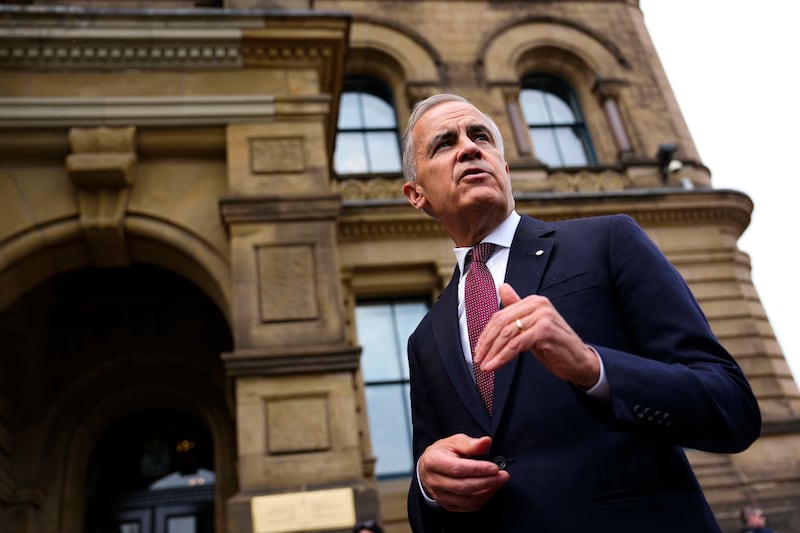
Speaking to reporters in Ottawa on Tuesday, Carney said he spoke with the U.S. president this morning, and that the two “agreed to intensify negotiations in the coming weeks.”
The prime minister categorized Trump’s latest tariff threat as “a series of trade actions against Canada in violation of our agreement, CUSMA, with the United States and Mexico.”
He also reiterated that Canada’s primary goal is to “focus on what we can control, building strength here at home, supporting each other, buying Canadian, and diversifying partnerships abroad.”
Spencer Van Dyk, CTV News journalist
Canada likes to talk, ‘not to actually change’ things: Greer
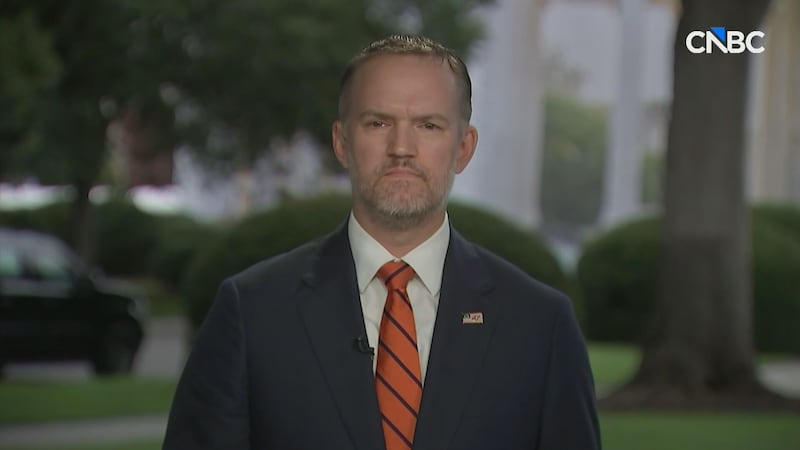
“The Canadians have always been ready to engage, if engagement means ‘talking’ and ‘meeting,’” said U.S. Trade Representative Jamieson Greer on CNBC this morning.
“Not to actually change these things,” he added, accusing Canada of dragging its feet to address U.S. trade concerns.
Earlier this month, Greer refused to give Canada “credit” for dropping its digital services tax in a bid to resume suspended trade talks.
During his Tuesday interview, Greer took note of Carney’s “firm but moderate” letter and reiterated American negotiators want to bring more manufacturing to the U.S., even if that means companies relocate from Canada.
“I think you have to understand that the American people don’t want offshoring,” he said.
Luca Caruso-Moro, CTV News journalist
Tariffs to impact $28B in Canadian goods
Economists weighing in on U.S. President Donald Trump’s latest round of tariffs suggest the new duties will hit around five per cent of Canada’s exports to the United States.
Trump signed a series of executive orders Monday that would impose a 50 per cent tariff on a range of goods, from honey to hockey sticks, with no exemptions under the North American free trade pact.
BMO senior economist Robert Kavcic says in a note to clients that the proposed tariffs would cover roughly $28-billion worth of annual Canadian exports to the United States.
He says that number is digestible for the entire economy but some specific businesses and industries will be hit extremely hard if the tariffs come into effect as planned on Aug. 19.
CIBC deputy chief economist Benjamin Tal also says in a note that he sees the new tariffs as a sector-specific story for the economy, not a sweeping threat.
The Canadian Press
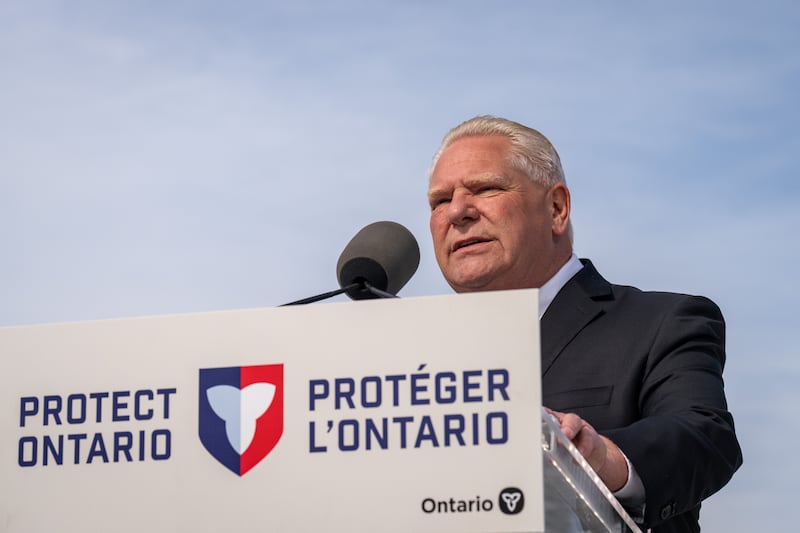
Ford: ‘We’ll never back down’
Ontario Premier Doug Ford, who has called on Canada to retaliate again with dollar-for-dollar tariffs, promised he and other premiers won’t “roll over.”
“As premiers assemble in P.E.I. this week, Team Canada is coming together and there’s never been a better time to do so. Together, we’ll stand united. We’ll never back down. We’ll never roll over,” he said in a statement posted on X.
Luca Caruso-Moro, CTV News journalist
Toronto reconvenes action team
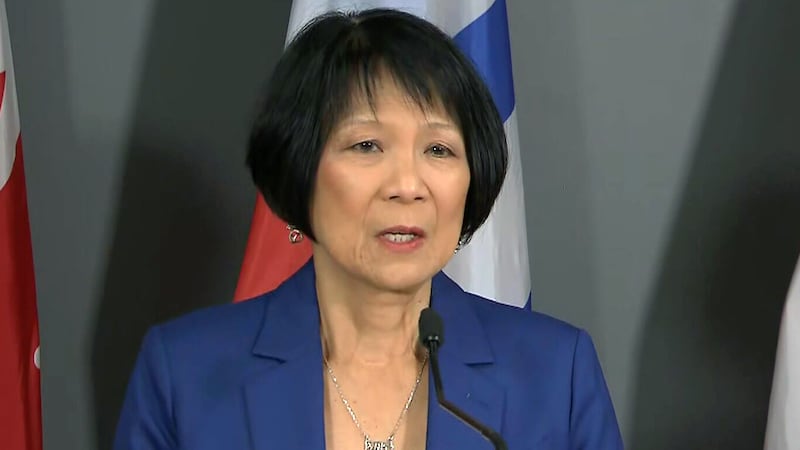
Toronto Mayor Olivia Chow says she has reassembled her economic action team, which she initially introduced last year when the trade war began.
The team, composed of leaders in business and labour, produced a 10-point action plan to combat Trump’s tariffs. The tentpoles of that plan include changes to the city’s procurement practices, property tax deferrals for affected businesses, and a push to shop locally.
“I will call them back together and look at what else we can do,” Chow said at an unrelated news conference Tuesday.
Beyond reuniting the economic action team, Chow said she will take a wait-and-see approach before the tariffs are brought into effect in 30 days.
Phil Tsekouras, CTVNewsToronto.ca and CP24.com journalist
Moe expects Carney to call for U.S. booze return
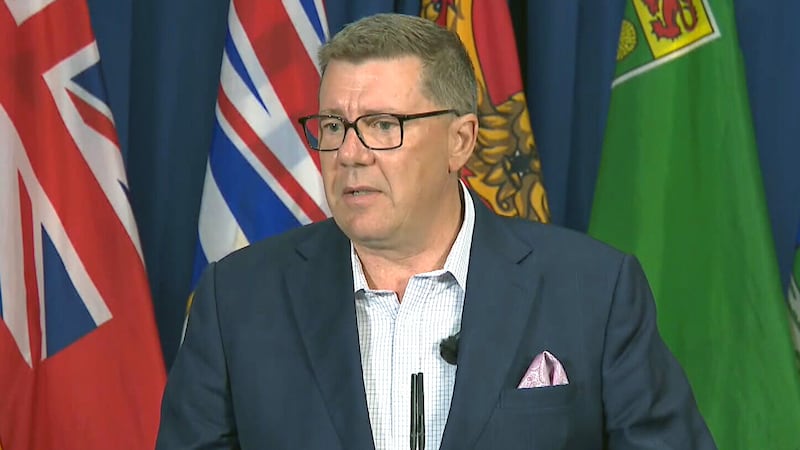
Saskatchewan Premier Scott Moe says he expects the federal government to ask premiers to return U.S. alcohol products to provincial liquor store shelves.
“I expect that ask to be coming,” he said during a scrum with reporters ahead of a meeting with other premiers.
Luca Caruso-Moro, CTV News journalist
‘Illegal’ and ‘desperate’: Reid
CTV News political commentator Scott Reid called Washington’s move “irrational, illegal and obviously desperate.”
“This is a political play. And it becomes for Canada a step-up or stand-down moment,” said Reid, who also served as director of communications for former Liberal prime minister Paul Martin.
Reid added Ontario Premier Doug Ford’s statement, calling on Ottawa to impose dollar-for-dollar tariffs in response, struck the right tone.
“This is ridiculous and we’re not going to be treated this way,” Reid said.
Luca Caruso-Moro, CTV News journalist
‘Real friends do not threaten you’
Nova Scotia Premier Tim Houston is criticizing U.S. President Donald Trump for his comments about Canada’s wildfires and latest tariff threats.
Houston called out Trump in a statement and video posted on Facebook Monday evening.
“As our province and country work together to fight wildfires, President Trump responds with more threats and punishing tariffs. At this point, we should not be surprised,” said Houston.
“Real friends do not threaten you when you are in trouble,” he added. “They step up and help.”
Andrea Jerrett, CTVNewsAtlantic.ca journalist
What Canadian goods will be tariffed?
The White House published three separate lists of Canadian products that will face the new 50 per cent tariff in 30 days.
With most provinces in Canada, excluding Alberta and Saskatchewan, currently banning U.S. alcohol on store shelves, the Trump administration now says it will retaliate against a wide range of alcohol products, such as beer made from malt and sparkling wine.
READ MORE:
- From wine to wigs: Here are all the Canadian goods included in new U.S. tariffs
- Pete Hoekstra on U.S.-Canada tariffs and trade
U.S. President Donald Trump has long pushed back against Canada’s supply management system, which co-ordinates production and maintains import controls for dairy, poultry and eggs to set stable prices for both farmers and consumers.
In response, the U.S. says it will now impose new tariffs on a variety of dairy products, some blended syrup and molasses products, and non-alcoholic beer.
The U.S. is also retaliating against Canada’s 25 per cent tariff on all U.S.-made vehicles entering Canada that are non-compliant with CUSMA. Those tariffs, which came into effect in April 2025, were in response to the Americans imposing a global 25 per cent tariff on automobiles and key auto parts imported into the U.S.
Now, the Trump administration says it will impose those new 50 per cent levies on items like plywood, golf equipment, ice skates, video game consoles, cement, clothing and even toilet paper. The list also includes some wood items.
Stephanie Ha, CTV News journalist. Read the full story here.
Canada’s tariff response needs be ‘measured,’ expert warns
Canada needs to take a “measured” approach to retaliating against the latest tariffs announced by the Trump administration, according to Western University Ivey Business School fellow Mahmood Nanji.
“We’ve seen a number of premiers come out, including [Ontario] Premier [Doug] Ford, who says we should have more retaliatory measures dollar-for-dollar,” Nanji told CTV’s Your Morning from P.E.I. Tuesday. “I’m not quite sure that’s the right policy at the moment.”
Such retaliation, Nanji says, would just lead to further tariff action from the U.S. administration.
“I think that every time you increase one, and he increases another, that just damages your economy even further,” explained Nanji, who previously served as Ontario’s associate deputy minister of finance.
“I think there’s a limit to how far you can go. I’m not suggesting that you don’t retaliate, I’m just saying that I think you need to be very measured about this.”
Daniel Otis, CTVNews.ca journalist
A turning point in negotiations: economist
In an interview with CP24 Tuesday morning, Carleton University business Prof. Ian Lee said he believes this latest salvo in Trump’s trade war represents a turning point for Canadian negotiations.
“He’s really putting a squeeze on us,” Lee said, suggesting that previous efforts to “somehow defeat” the largest economy on earth should be replaced by concessions.
“We have to decide what do we want to give up to get a deal.”
Lee said that Canada’s supply management in the dairy and egg sector may be the best place to start, given Trump’s previous criticisms of the industry.
“That should be at the top of the list that we are willing to throw under the bus because the Americans hate supply management. So that’s we’ve got to compromise and give up some things to get what we want from Trump,” he said.
Prime Minister Mark Carney’s government has been adamant that Canada’s supply management will not be on the negotiating table.
Phil Tsekouras, CTVNewsToronto.ca and CP24.com journalist
Canadians don’t trust U.S. on trade
Polling suggests Canadians do not view the U.S. as a reliable trading partner. A recent poll found only 35 per cent of Canadians said the U.S. is a reliable partner, down from 83 per cent from a similar poll conducted in 2022.
Luca Caruso-Moro, CTV News journalist
Read Carney’s response
Shortly after the White House revealed its plans to tariff even more Canadian goods, Carney published the following letter on X:
“Today, the United States administration announced its intention to impose a new 50% tariff on a significant number of Canadian goods.
“This is the latest in a series of unilateral U.S. trade actions that began with the U.S. imposing a series of tariffs in direct violation of the Canada-United States-Mexico Agreement (CUSMA), the free trade agreement between Canada, the United States, and Mexico.
“These include tariffs on the Canadian auto sector, in violation of CUSMA. Canada, as is its right, has merely matched those measures.
“More broadly, in response to these measures and threats to Canadian sovereignty, provinces, territories, and Canadians from coast to coast have stood together, taking the necessary actions to support our economy and defend our workers, farmers, businesses, and families.
“Recognizing that the U.S. has been transforming all of its trade relationships, including those covered under CUSMA, over the past 18 months, Canada has made a series of detailed and comprehensive proposals to resolve this dispute and to modernise CUSMA. We stand ready to intensify those discussions in the coming weeks.
“Canada believes in the benefits of free and fair trade, as evidenced by our new government signing more than 20 new economic and security partnerships. This trade dispute has raised costs for families, particularly in the U.S. Canada stands ready to engage intensively to address outstanding issues with the U.S. to the mutual benefit of our citizens.
“In all circumstances, Canada will work relentlessly and take any measures necessary to build our strength at home and to support Canadian workers, farmers, businesses, and families.”

