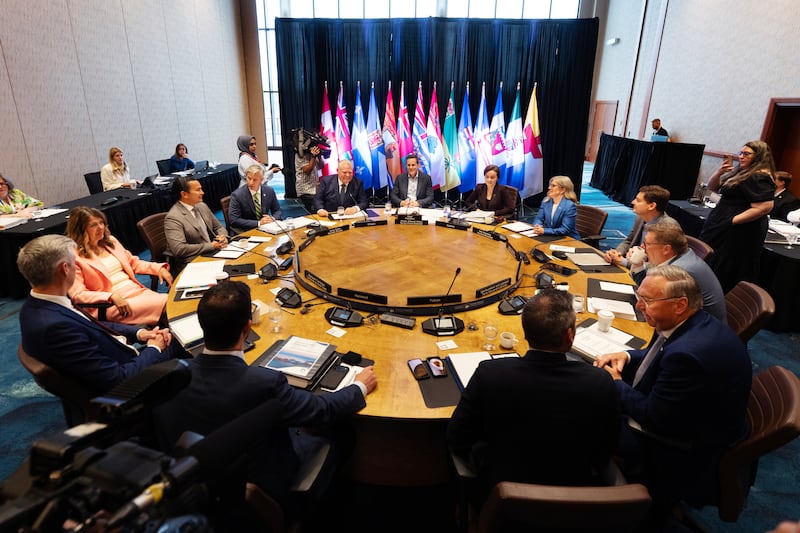
CHARLOTTETOWN - All 13 of Canada’s premiers spent most of Wednesday around one table in Charlottetown, with the threat of new U.S. tariffs looming over talks that ranged across a long list of domestic priorities.
Much of the conversation stayed in the room, but in a joint statement, premiers called for more predictable federal health-care funding, investments in energy and trade corridors, as well as clear consultation as Canada negotiates with its neighbour south of the border.
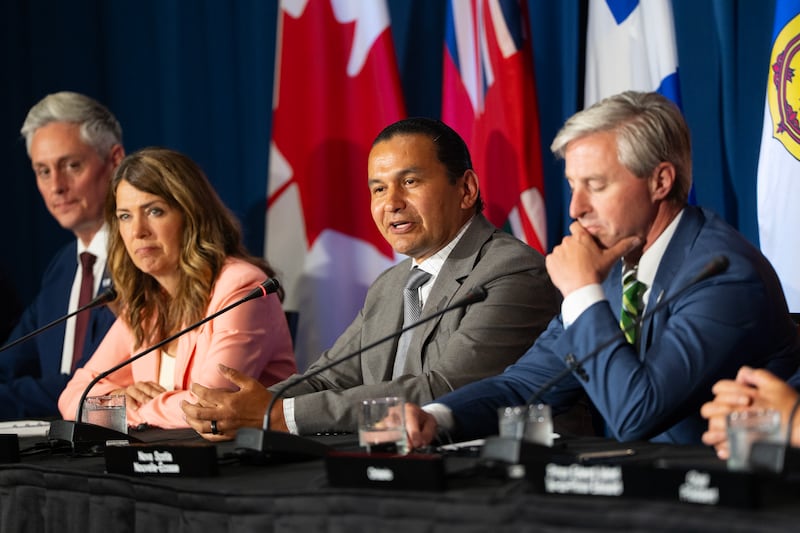
Manitoba Premier Wab Kinew put the broader political moment more plainly.
“Nothing unites like a common opponent, and there’s no more popular opponent in Canada right now than (U.S. President) Donald Trump,” Kinew said.
Health care
Health care was one area where premiers found common ground, warning that mounting costs and spending pressures are outpacing provincial and territorial revenue growth.
They said some federal health-care funding is set to expire as early as March 2027, creating what they described as a potential “fiscal cliff.” They called on Ottawa to renew those agreements and maintain an annual Canada Health Transfer growth rate of at least five per cent after March 31, 2028.
Some premiers said Ottawa should shoulder more of the burden, advocating for a move closer to a 50-50 cost-sharing model.
“Today, the country’s portion is down to 21 per cent, so we need to see that come back up, because the needs are greater,” New Brunswick Premier Susan Holt said.
Energy
Energy needs differ across the country, but premiers agreed reliable and affordable electricity will be critical to economic growth, particularly in remote and northern regions, as well as smaller jurisdictions.
“One of the key things holding us back is our lack of connection to southern power grids,” said John Main, Nunavut’s premier.
He pointed to proposals including the Inuit-led Iqaluit Nukkiksautiit Hydro Project and the Kivalliq Hydro-Fibre Link.
Yukon Premier Currie Dixon said the territory’s isolated electricity system was pushed close to its limit during a prolonged cold snap last winter.
“We found ourselves in a very dangerous situation … where we almost couldn’t meet the demand,” Dixon said. “We didn’t have enough generation capacity.”
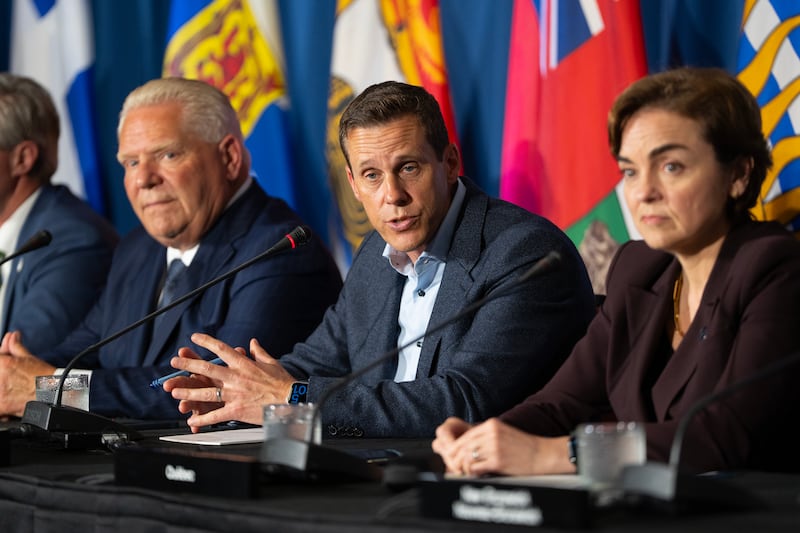
In P.E.I., Premier Rob Lantz said the province’s economy is “bumping against limits,” despite recording real GDP growth of 2.8 per cent in 2025, the second-highest rate among provinces and territories.
“There’s threats of rolling blackouts,” Lantz said.
Replacing two aging subsea cables between P.E.I. and New Brunswick is a top provincial priority. Lantz said predevelopment design and planning are underway, but the cost will not be clear until the next stage of work.
The federal government identified the P.E.I.-New Brunswick Interconnection Expansion Project as a priority for financial and regulatory support in June.
Manitoba also signalled it’s open to a pipeline running from Alberta to Sarnia, Ont., with a possible offshoot to Churchill.
“We’ll entertain the idea,” Kinew said. “But of course, we want to see things done the right way. We want Indigenous governments onside, we want workers taken care of, the environmental concerns looked after.”
Looking ahead
At a news conference later in the day, Lantz, who is chairing the Council of the Federation, said his counterparts remain committed to a united country.
“We have far more in common than what divides us,” Lantz said.
The premiers are scheduled to meet with Prime Minister Mark Carney on Thursday, with U.S. trade threats and the Canada-United States-Mexico Agreement expected to return to the forefront.

