
While Prime Minister Mark Carney says “everything is on the table” if Canada can’t come to an agreement with the U.S. before an August deadline imposed by President Donald Trump triggers a steep hike in tariffs, Premier Danielle Smith said Thursday that using oil as a bargaining chip won’t work for Alberta.
Smith made the comment as a meeting between Carney and all 13 provincial and territorial leaders wrapped up a three-day conference of premiers in Charlottetown.
She and Saskatchewan Premier Scott Moe have refused the idea of using their provinces’ exports to the U.S. in negotiation tactics.
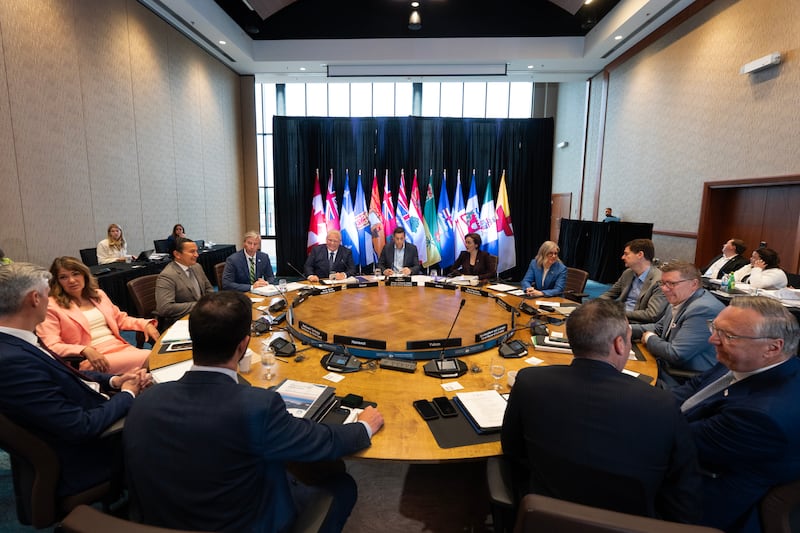
Smith says she’s confident in Carney’s strategy for dealing with Trump and that the premiers want a comprehensive deal removing all of his tariffs, and says she believes Alberta’s diplomacy has helped.
“Part of our success has been that we’ve gone directly to the American businesses and consumers, and they’ve become our advocates,” she told reporters. “They know how valuable it is to have a free flow of energy across the border, how it keeps their consumer prices low, how it makes sure that they don’t have gasoline or aviation fuel or diesel shortages.”
Smith said finding those voices is the strongest argument for Canadian interests, adding that Canada has enjoyed a “great trade relationship” with the U.S. over energy, critical minerals, uranium and food products.
The idea of cutting the U.S. off from Canadian oil is something that should be treated with great caution, said Heather Exner-Pirot, the director of natural resources, energy and environment at the Ottawa-based think-tank Macdonald-Laurier Institute.
Exner-Pirot told CTV News Edmonton on Thursday that Canada and the U.S. “are interdependent on oil,” which happens to be Canada’s “biggest source of foreign exchange and exports, source of revenue, jobs.”
“As much as the Americans need to buy it from us, we need to sell it to them,” she said. “We are connected by a series of pipelines ... We do not have, in Canada, the ability to get a big amount of oil to our partners, so not selling oil to the United States simply means that we stop producing it ... Stopping oil production in Canada would almost certainly put us into a recession.”
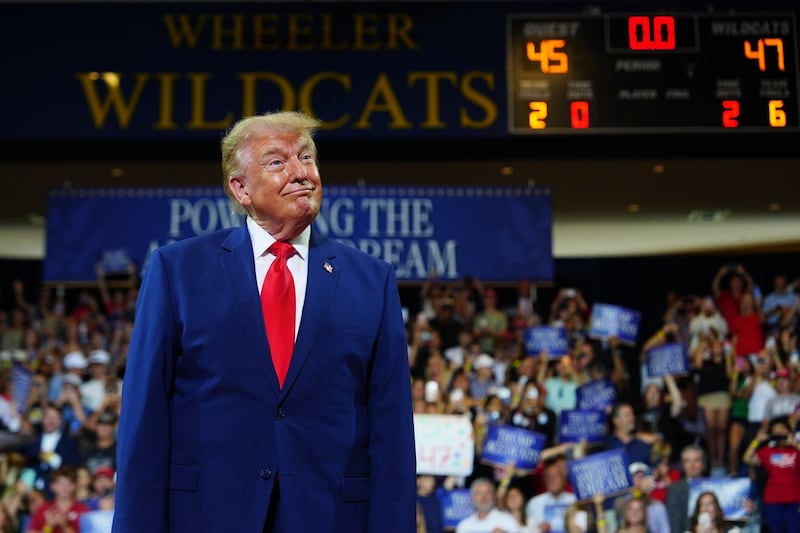
While Carney said Canada has a “full range” of options for retaliation, he refused to identify specific measures Ottawa could take if Trump makes good on his threat to apply 50-per-cent tariffs on several Canadian goods on Aug. 19.
“It would be counterproductive at this stage to respond in advance, but it’s important to know what your options are, to have worked it through,” Carney said.
With files from CTV News Edmonton’s Connor Hogg

