


The Conservatives are calling on the government to release the full details of the proposed U.S. trade offer that Canada rejected.
Party members say they support the government’s decision to reject the offer but are unclear about what was on the table.
On Saturday, U.S. President Donald Trump imposed 50 per cent tariffs on a wide range of Canadian goods, including some that fall within Canada’s free trade deal with the U.S. and Mexico.
Here’s how things unfolded:
‘In this together’: former Conservative deputy leader
A former Conservative cabinet minister says she hopes Prime Minister Mark Carney will brief opposition members on the proposed trade deal and next steps.
“Having other folks leak and talk to reporters, it’s not helpful,” Lisa Raitt, who is also a member of the advisory committee on Canada-U.S. economic relations, told CTV News Channel on Sunday.
She added that she hopes Carney will set up a briefing in response to the Conservative leader’s request.
“It’s openness that’s needed,” she said.
“They want to know what’s in the deal that isn’t a deal and they want to know what programs are going to go forward for Canadians who are unfairly impacted by the 50 per cent tariff.”
Devika Desai, CTVNews.ca Journalist
Release U.S. trade offer details: Conservatives
Federal conservatives are calling on the government to release the full details of the trade offer from the United States that Canada rejected this week.
In a letter to Trade Minister Dominic LeBlanc, Canada-U.S. relations critic Shuvaloy Majumdar said while his party supports the government’s decision to reject the deal, Parliament is in the dark on what was on the table.
“If there was a draft text of any agreement that both governments have seen, please release it. The U.S. administration has seen it. Your government has seen it. Canadians deserve to see it,” Majumdar wrote.
A spokesperson for the Bloc Québécois wouldn’t say whether they support the calls for the government to detail what the Americans were offering.
But the party reiterated calls for a meeting between the “recognized” party leaders in the House of Commons to get a briefing on the situation.
Green Party Leader Elizabeth May also said the party leaders should be briefed, but stopped short of demanding the trade details be made public.
“I think we should have at least a Zoom call or Teams meeting as we used to do under the former prime minister to make sure that we are all updated,” May said.
The Canadian Press
‘Job loss is inevitable’: B.C. Chamber of Commerce reacts to Trump tariffs
The head of the B.C. Chamber of Commerce said job losses are “inevitable” and the future of small and medium businesses is in peril after U.S. President Donald Trump imposed punishing new tariffs on Canadian goods.
“I think this is par for the course. We’re back on the merry-go-round. We did the math and counted 15 changes over the last 21 months. So, I think we just continue to live in this world of uncertainty,” Jen Riley, the chamber of commerce’s president and CEO, told CTV News Sunday.
In Riley’s estimation, small and medium sized businesses in British Columbia are set to bear a disproportionate burden.
“The exports we have to the United States are now going to have a 50 per cent tariff. And a lot of those that are going to get hit are small and medium businesses—and that level of tariffs is generally not something they can absorb,” Riley said.
“So, we are very worried here in British Columbia that small and medium businesses are not going to be able to make it out of this.”
Lisa Steacy, CTVNewsVancouver.ca Journalist
Eastern Canadian premiers renew pleas to buy local
Premiers in Eastern Canada are once again calling on residents to buy local as Canada squares off against the United States in an escalating trade war.
“Every dollar spent on an Island or Canadian product supports the worker who made it, the farmer who grew it, the fisher who caught it, the producer who processed it and the business that put it on the shelf,” said Rob Lantz, premier of P.E.I., in a news release Sunday.
The U.S. tariffs have hit businesses and workers in New Brunswick, Premier Susan Holt said in a statement on Saturday. “Now, more than ever, we need to double down on buying local and supporting New Brunswick businesses and workers.”
The tariffs will affect about $7.7 billion of exports from Quebec, said Christine Frechette, the province’s premier. “To buy Quebec products is not an economic action, it is a nationalistic action. It’s an action of solidarity.”
The Canadian Press
Minnesota school faces $7K spike in price for mascot costume
Parents at a Minnesota school say they are rushing to get a Trojan-themed mascot across the Canada-U.S. border by the end of the week to avoid paying a higher price due to the tariffs.
Sarah Kallal said she and other community members had been inspired to procure a “professional-grade costume” for the school’s baseball team, in their hometown of Trojan
The community had raised $14,000 for the costume.
On Monday, Kallal said she got a call from the costume company that they had to pay an extra $7,000.
“Honestly, I kind of thought the dream died,” Kallal said. “I’m not going to absorb that cost and I’m certainly not going to go back to our community to say, ‘Oh, by the way, can I get seven more thousand dollars?’”
She was floored to learn that President Trump’s proposal to place a 50 per cent tariff on Canadian imports was to blame. She never expected that kind of economic policy to hit home so directly in a smaller community like New Prague.“
It brings awareness to how it’s not going to just affect corporations and government,” Kallal said.
WCCO
Trade war ‘devastating’ for Canada: Trump admin
The Trump administration on Sunday warned that Canada would be “foolish” to think it could win a trade war with the United States.
U.S. Transportation Secretary Sean Duffy told “Fox News Sunday” talk show that Prime Minister Carney will return to negotiations “very very quickly, because it’s going to be devastating for his country.”
“We’re great trading partners, right? But Canada gets the benefit of trading with the U.S. way more than the U.S. gets the benefit of trading with Canada,” he said on the show.
“To think that they’re going to go to war with Donald Trump and actually win that war with the U.S., I think it’s foolish on their part.”
AFP
U.S. customers ‘paying the full brunt’
President and Chief Executive Officer of the Aluminium Association of Canada Jean Simard expressed his concern for the future of the aluminium industry following the collapse of the trade talks between Canada and the United States.
To put things into perspective, he said Canada produces 3.3 million tonnes of aluminium per year of which 90 per cent is exported.
He added, “90 per cent of the exported product goes to the U.S.”
Simard said in the U.S., “customers are paying the full brunt of the tariffs,” paying $1500 to $2000 more per ton than what Europe pays for the same amount.
However, he noted not reaching a deal with the U.S. was not “a bad thing” as the talks had increasingly shifted toward a “U.S.-based advantage to the detriment of Canada.”
Archie Niari, CTVNews.ca Journalist
U.S. after ‘fortress North America’
International trade lawyer at Mccarthy Tétrault Ljiljana Stanić says the collapse of the tariff talks with the U.S. was “unexpected”.
“I think most people expected another extension was forthcoming,” she told CTV News Channel on Sunday.
On the issue of U.S. asking Canada to match Washington’s tariffs on other countries Stanić said, “it seemed like the United States was trying to build fortress North America.”
The trade lawyer said she believes “that was a lot to ask from Canada without having free trade with the United States.”
Stanić also noted that “trade disputes are easy to start but difficult to contain,” and added that the situation is now at a tipping point where trade tensions between the two sides can quickly escalate.
Archie Niari, CTVNews.ca Journalist
Trump: Canada wants benefits of statehood
In his Truth Social Post, Trump also claimed that Canada has charged U.S. farmers “massive amounts of tariffs” for many years.
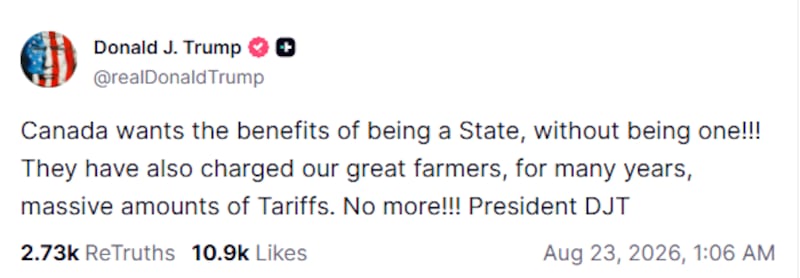
Canada only imposes high tariffs on U.S. dairy exports if they exceed quota amounts.
“In reality, however, the countries exporting products to Canada will not pay the high tariff because they will simply not export more than was negotiated in the trade agreement under which they have access,” states the Dairy Farmers of Canada, a national lobby representing Canadian dairy producers.
Trump’s comments come after Prime Minister Carney delivered his own address on the trade dispute in which he said Canada is at economic “war” with the U.S.
In Carney’s address, he said last-minute changes by the U.S. to the deal lead to a breakdown negotiations.
Devika Desai, CTVNews.ca Journalist
We want to hear from you
Are you worried about how tariffs might affect your work? Have trade disruptions already impacted your job?
Share your story by emailing us at dotcom@bellmedia.ca with your name, general location and phone number in case we want to follow up.
Your comments may be used in a CTV News story.
Canada ‘at war?’
Carney was asked: “Why does it feel like, today, Mark Carney is going to war, trade war?”
“You’re at war when you get attacked. We got attacked,” he responded.
He said Canada had waited for the U.S. to implement tariffs to respond this way, and now that they have, “we’ve got the reserves. We’ve got the resilience”
“We’ve got the plan, we’ve got the focus,” he continued. “We’re going to focus on what we can control. We’re going to build.”
Luca Caruso-Moro, CTVNews.ca journalist
PM: Retaliatory tariffs to come after Labour Day
Carney said retaliatory tariffs, in response to Trump’s new levies, will come into force on Sept. 8.
In his address on Saturday, Carney acknowledged that the tariffs will “raise costs and reduce choice” for Canadians.
But at the same time, we take this step confident that it is in the best interest of Canada, and that by rejecting a bad deal by standing up for Canada, (we focus) on what we can control,” he said.
Devika Desai, CTVNews.ca journalist
Kinew stands with Carney, vows to fight back
Manitoba Premier Wab Kinew says he fully supports Prime Minister Mark Carney and the federal government’s decision to walk away from trade talks with the United States.
Speaking Saturday afternoon, Kinew commended the prime minister for standing up for Canadians and that all premiers are united with Carney.
“History will not be kind to Donald Trump. So we should never appease him and we should fight back, which is what Canada is doing today,” said Kinew. “We can fight back against Donald Trump by buying from Canadian businesses, by supporting Canadian workers and most importantly, by living up to our Canadian values.”
Devon McKendrick, CTV News Winnipeg Editorial Producer
U.S. tariffs are violation of CUSMA deal, Sask. premier says
Saskatchewan Premier Scott Moe is calling new U.S. tariffs a violation of the CUSMA trade deal.
“Last minute changes by U.S. negotiators undermined the fairness and reliability of the deal,” Moe said in an X post on Saturday.
Moe says over the past few days, the Canadian government was working toward a deal that would have avoided new tariffs and reduced some tariffs that were previously imposed by the U.S.
“The new 50 per cent U.S. tariffs on some Canadian goods are a clear violation of CUSMA and a clear indication that the current U.S. administration cannot be trusted to live up to its own trade deals,” Moe’s statement read.
Caitlin Brezinski, Digital Journalist, CTV News Regina
U.S. proposals would turn Canada into 51st state: Eby
B.C. Premier David Eby says a request from U.S. negotiators would have effectively reduced Canada to America’s 51st state.
“The suggestion that Canada would not trade with other countries or reduce our trade with other countries because the Americans tell us to would reduce us to the economic equivalent of the 51st state,” said Eby, fresh from a meeting with Carney, Canada-U.S. Trade Minister Dominic LeBlanc and other premiers.
Earlier today, Carney was asked for specifics on what he called new and “economically unfair” terms proposed by American negotiators.
He said the U.S. had made efforts to “restrict our ability to have other trade deals” in the last hours of trade talks.
“The prime minister and his team rightly walked away from any suggestion that we would agree to that,” said Eby.
Luca Caruso-Moro, CTVNews.ca journalist
North ready to create jobs: NWT premier
The premier of Northwest Territories says the North is ready to create jobs, strengthen Canadian supply chains, open new markets and make Canada more self-reliant.
R.J. Simpson says Canada tried to negotiate with the U.S. government in good faith, and the prime minister was right to walk away from trade talks rather than accept a deal at any cost.
Simpson says Canada can build its economic strength at home and N.W.T. is a big part of the nation-building work that’s coming.
The Canadian Press
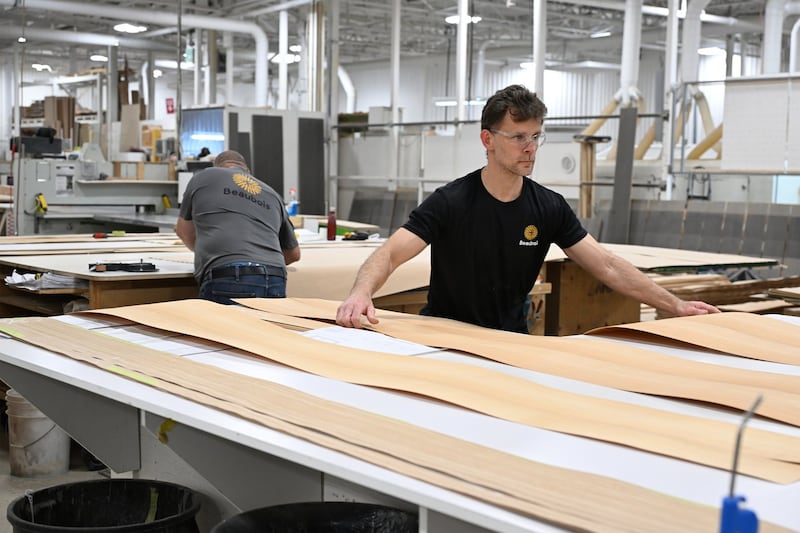
Canada after ‘win-win’ partnership
Executive Director of the Independent Wood Processors Association in B.C. Brian Menzies says he is “concerned” about the 50 per cent tariffs on the wood industry.
Speaking to CTV News Channel Saturday, he said companies will shortly have to make decisions about continuing their operations and keeping people employed.
Menzies said Canada is a country that wants a “win-win” relationship with its trade partners, adding that if our customers and partners in the United States don’t win, “we don’t win.”
He said Canada is on the “right track” by keeping that principle in mind, and that the wood industry must now transition to other markets and will need some help adjusting to that.
Archie Niari, CTVNews.ca journalist
Wine industry benefiting from tariffs a ‘myth’
President of Wine Growers Canada Dan Paszkowski says the tariff war is destroying markets that have taken the Canadian wine industry decades to make.
In an interview with CTV News Channel, he said Canada cannot “control what Washington does but we can strengthen the Canadian wine industry” through federal investment programs.
Paszkowski said that “would provide us with a lot of certainty.”
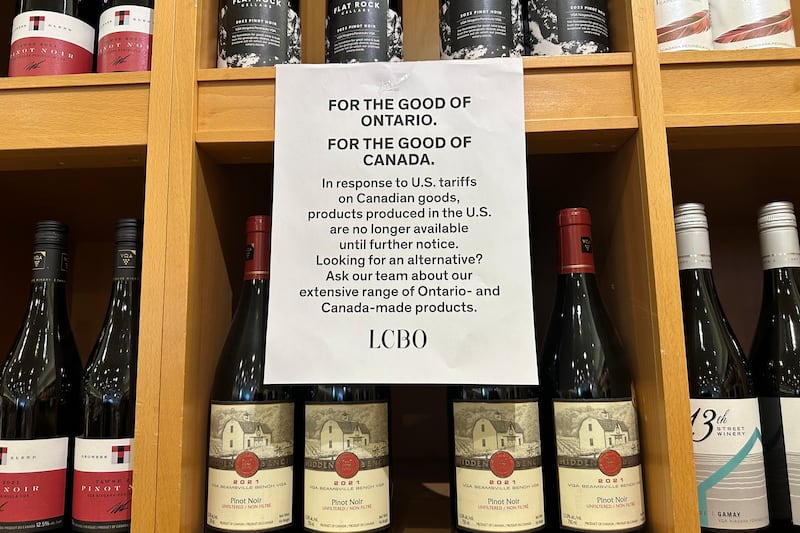
He noted that investment is especially important because in three to four weeks, wine growers will start harvesting for this year, but added there is currently no support for that.
Paszkowski highlighted that it would be helpful if provincial and federal officials made it easy for “Canadians to find Canadian wine.”
He also said the Canadian wine industry benefiting from the tariffs is a “myth.”
Archie Niari, CTVNews.ca journalist
Mark Carney chairs first ministers’ meeting
The Prime Minister’s Office says Mark Carney met virtually with provincial and territorial premiers Saturday to discuss the suspension of trade negotiations with the United States.
The PMO says Carney outlined next steps to protect Canadian interests, including dollar-for-dollar counter-tariffs that will take effect on the Tuesday after Labour Day, along with additional measures to support Canadian workers and businesses affected by U.S. tariffs.
Carney also emphasized the importance of a united “Team Canada” approach, with continued collaboration between the federal, provincial and territorial governments on nation-building projects, diversifying export markets and removing internal trade barriers.
Tammy Ibrahimpour, CTV News National Digital Producer
Canada avoided a ‘chokehold’
International trade analyst and government affairs specialist at Gowling WLG Jacques Shore says by walking away from the tariff talks, Canada has avoided a “chokehold.”
In an interview with CTV News Channel, Shore described the situation as a “missed opportunity” for the United States.
He said the last-minute conditions put forward in the talks by the U.S. were “surprising.”
Shore highlighted that it would be hard to imagine that “we would be restricted from engaging with other countries” and making decisions that are only Canada’s to make.
He said despite these “trade tensions,” Canada and the U.S. are integrated and will be working together.
Shore added that, at this point, there are “Americans who are scratching their heads wondering how this could have happened to Canada.”He said this will “harm the American economy,” but Canada alsohas to brace itself.
Archie Niari, CTVNews.ca journalist
F bombs in a trade war
California Governor Gavin Newsom made his feelings clear on social media Saturday morning.
“Our closest ally. Our critical trading partner. And Trump is hitting Canada with 50% tariffs,” wrote Newsom on X. “What the actual f--- are we doing?”
Luca Caruso-Moro, CTVNews.ca journalist
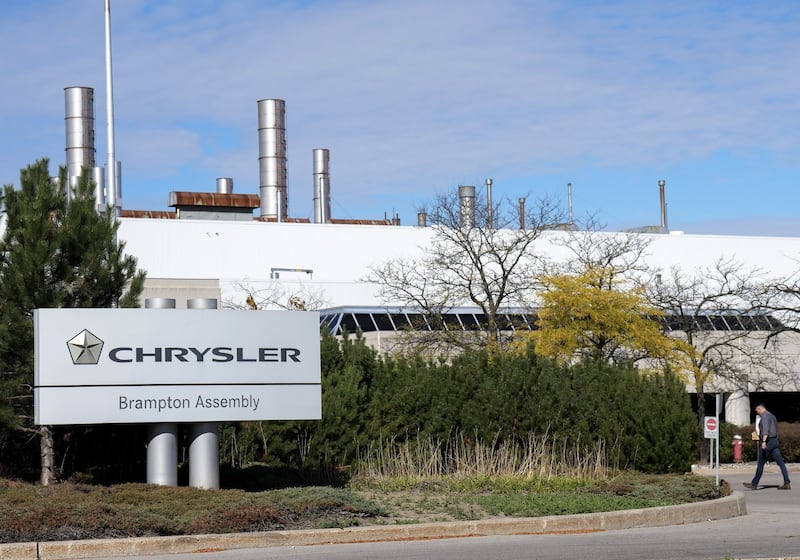
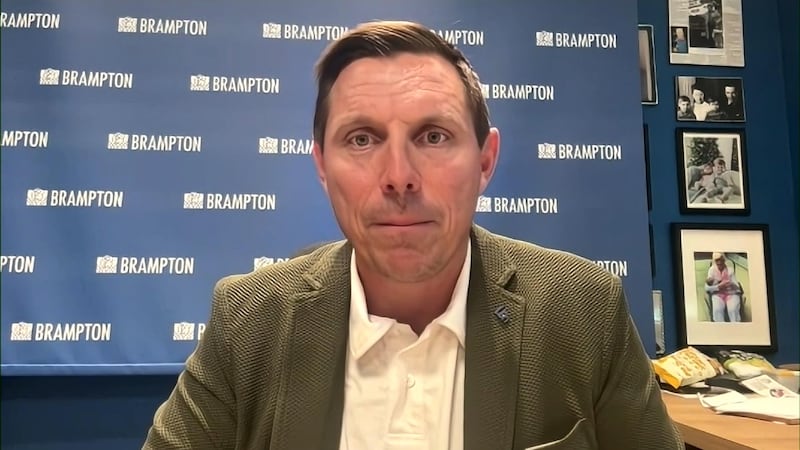
Deal would have not brought back auto jobs to Brampton: mayor
Patrick Brown, the mayor of Brampton, Ont., also commended the prime minister’s decision not to accept a bad deal and to match the new U.S. tariffs.
“This is not a trade war that we have asked for. Unfortunately, we’re in it because of the misguided policies of Donald Trump. But it doesn’t mean we should take it lying down,” Brown said in an interview with CP24 on Saturday afternoon.
“When I hear the premier and the prime minister say tariff for tariff, it’s our only recourse. We can’t continue to be bullied by this president.”
He noted that the reported terms of the deal that included permanent tariffs on the auto sector wouldn’t have brought the jobs at the Stellantis Brampton Assembly Plant, which has been idling since 2023.
Last week, Unifor claimed that Stellantis was seriously considering closing and selling the plant.
“Stellantis made it clear to me that as long as there are tariffs, there was no business case for auto production in Canada, and they were leaving until tariffs were lifted. So, I’m glad the prime minister didn’t accept a bad deal,” Brown said.
“It would not have salvaged the auto sector in Canada.”
Bryann Aguilar, CP24.com/CTVNews.ca journalist
‘Uncertainty better than certainty around a bad deal’
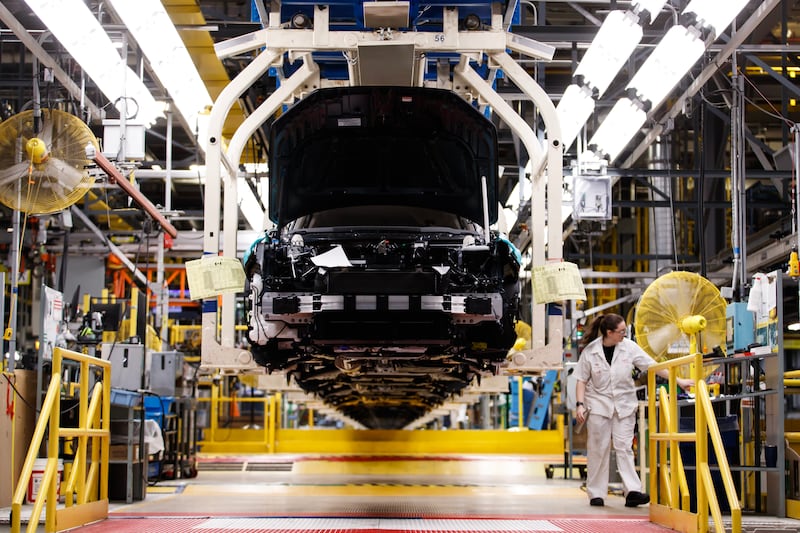
President and CEO of Global Automakers of Canada Lucas Malinowski believes it’s “unfortunate” that the U.S. and Canada couldn’t come to an agreement regarding the auto industry.
In an interview with CTV News Channel, he said the North American auto sector has incurred $110 billion in tariff-related costs over the past year and a half, making the industry “less competitive” and cars “more expensive” for consumers.
Yet, he admitted that, at the end of the day, “uncertainty is still better than certainty around a bad deal.”
Malinowski also said the deal on the table was “untenable,” based on Prime Minister Carney’s remarks and what the government has said.
Archie Niari, CTVNews.ca journalist
‘Two-year root canal’ ahead for Canadians, Sarnia mayor says
Sarnia, Ont., Mayor Mike Bradley says Prime Minister Mark Carney’s decision regarding the tariff talks was “100 per cent” correct but admits “the tough stuff” will now start.
U.S. President Donald Trump’s administration will “search and destroy” every relationship it has around the world in the next two years, including ties with Canada, he said in an interview with CTV News Channel. “Canadians need to stand together.”
Bradley said the situation for Canadians will be like a “permanent root canal for the next year or two,” but added that “it will be worth it.”
Archie Niari, CTVNews.ca journalist
‘There are no deals’ with Trump: Former Harper aide
Former Director of Communications to Stephen Harper Kory Teneycke believes Prime Minister Mark Carney should prepare the nation for an “incredibly difficult period of time,” but supports Canada’s approach in the tariff talks.
In an interview with Vassy Kapelos on CTV News Channel, he said that if there is one thing we’ve learned from U.S. President Donald Trump, it’s that “there are no deals.”
Teneycke described Trump as a president who “has broken every agreement he has made on every topic” since he took office.
“He is the kind of guy who starts bombing you when you’re in peace talks,” he said, adding that Canada didn’t start this war, but “we’re going to be there to finish it.”
Archie Niari, CTVNews.ca journalist
No deal was ‘surprising’: trade lawyer
Greg Kanargelidis, an international trade lawyer, said not reaching an agreement with the U.S. over the tariffs was “surprising”.
In an interview with CTV News Channel on Saturday, he said, “it was surprising to hear… about talks collapsing.”He said Canadian importers will be impacted by tariffs, but they could, in part, be compensated for through remissions orders.
The trade lawyer added that the tariffs will also impact a wide range of goods, including agricultural products, wood products, electronics, sporting goods, dairy and alcohol.
He noted the impact for companies in those industries will be “perhaps impossible to withstand.”.
Kanargelidis said the discussions could also serve as a “base” for CUSMA negotiations but admitted they may be at a “standstill” for the time being.
Archie Niari, CTVNews.ca journalist
Trump ‘can’t be trusted’: Ford
Ontario Premier Doug Ford criticized U.S. President Donald Trump, portraying him as an untrustworthy bully whose tariff strategy harms both Canadians and Americans.
He says Trump “can’t be trusted” because “he changes the deal” and “keeps moving the goalpost.”
Speaking to reporters, Ford added that Trump is “the type of person that would steal your lunch money the first day, he’d steal the toque off your head the second day, and the third day he’d steal your running shoes.”
Devika Desai, CTVNews.ca journalist
‘No deal is better than a bad deal’: Ford told Carney in letter
In a newly released letter to Prime Minister Mark Carney, Ontario Premier Doug Ford urged Ottawa to stand firm against the United States after President Donald Trump’s latest tariffs took effect following the collapse of last-minute trade talks.
The premier had largely remained quiet in recent days as negotiations continued.
However, in the letter, Ford told Carney that “no deal is better than a bad deal” that could encourage the United States to seek further concessions from Canada.
“We cannot allow arbitrary deadlines, shifting justifications or escalating tariff threats to weaken our resolve,” Ford wrote.
He said Ontario would not support removing its existing retaliatory measures without a deal that provides “significant relief” for Ontario workers, businesses and key sectors
Jermaine Wilson, CTVNews.ca Journalist
PM: U.S. proposed new ‘unfair’ terms
Carney said that progress was being made on negotiations towards a “mutually beneficial deal.” But in recent days, American negotiators proposed “new terms that were economically unfair.”
The terms “undermined net benefits for Canadians and called into question the reliability of any deal,” he said.
Devika Desai, CTVNews.ca journalist
Last-minute changes
Carney was asked to specify what the U.S. sought to change in the final hours of negotiations.
Among those changes, he said the Americans had proposed a treatment of auto trade that was unacceptable to the Canadian team.
He also said the U.S. had taken “efforts to restrict our ability to have other trade deals,” and that “we believe in free trade.”
Carney was asked later if Canada had any of its own last-minute requests.
“’No’ is the short answer,” he responded.
Luca Caruso-Moro, CTVNews.ca journalist
Changes included auto, trade restrictions
The U.S. made “last-minute” requests to change the deal regarding the auto sector and Canada’s capacity to have other trade accords, according to Carney.
“The Americans wanted to limit it to autos only, not include medium and heavy duty trucks which is a big change, obviously,” he said.
Negotiators also introduced “at the last hour” efforts to restrict Canada’s ability to have other trade deals, he added.
Devika Desai, CTVNews.ca journalist
Would Canada tariff other countries in co-ordination with U.S.?
When asked by a reporter if the U.S. expected Canada to tariff other countries as part of a trade deal, Carney responded, “there were elements of that.”
Canada could agree to that as part of an “integrated” market system with the U.S., Carney added.
But if that’s what the Americans are after, Carney said American tariffs on Canadian exports should be “clearly the lowest” among trading partners.
Asked why he thought the U.S. was interested in influencing Canadian foreign trade policy, Carney said “it’s a power play.”
Devika Desai and Luca Caruso-Moro,, CTVNews.ca journalist
B.C. Premier to address trade talks at 3 p.m. EDT
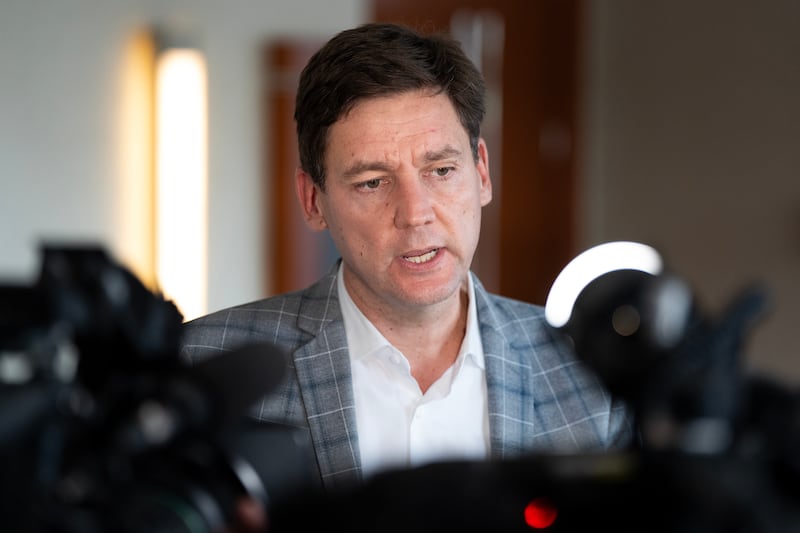
B.C. Premier David Eby will address the breakdown in trade talks in Vancouver at 3 p.m. EDT.
This follows the prime minister’s own remarks earlier today on the breakdown in negotiations between Canada and U.S. trade representatives shortly before the Trump’s tariff deadline expired.
In a social media post earlier today, Eby stated that “British Columbians will always stand with Canada.”
“We didn’t ask for this, but we’ll keep fighting for as long as it takes,” his post reads.
Follow along for more information here.
Devika Desai, CTVNews.ca journalist
‘Mastering energy is mastering destiny’
Carney said Canada has been putting efforts towards ‘mastering energy’ and becoming an independent superpower.
“We’ve doubled the capacity of our electrical network from (now) to 2050,” he said.
He referred to an announcement made on Monday by federal government, Quebec and Newfoundland and Labrador, to update and expand the Churchills Falls generating station, as well as develop the Gull island project and transmissions.
He described it as the “single largest investment in Canada’s history to build the largest clean energy project.”
Devika Desai, CTVNews.ca journalist
PM: Canada investing local
Canada will invest $25 billion to protect workers and businesses affected by the tariffs, Carney said.
This will include investments in “equipment, productivity and supply chain resilience,” as well as financing large companies to keep employers “afloat,” he added.
“We’re helping those hardest hit industries retool and pivot to those new international markets, and we’re being our own best customers,” he said.
Devika Desai, CTVNews.ca journalist
PM: Tariffs will hit U.S. steel and dairy
Carney said the retaliatory tariffs will hit sectors such as steel, dairy, appliances, agriculture, electronics.
“Also include products that are currently subject to unjustified Section 232 tariffs. This is a focused response to protect and defend our industries and allow them to compete with U.S. products in the Canadian market,” he said.
Devika Desai, CTVNews.ca journalist
Premier pushback did not ‘factor’ in negotiations
Pushback from premiers in recent days over returning U.S. booze to stores did not factor into suspending trade negotiations, Carney said.
“The essence of (Wednesday’s meeting) was ... that we were on a path to a potential deal that would give Canadians ... the best deal in all our strategic sectors,” he said.
The price for that deal was “worth paying,” he added.
Last-minute changes by the Americans made the deal ‘uneconomic’, he added. “So we’re not asking the premiers to do anything.”
Devika Desai, CTVNews.ca journalist
Tariff protection for Canadians on its way
Carney said that tariff protection will be provided to business affected by the U.S. tariffs.
“Many of them are small, medium-sized businesses,” he said. “They’re in a wide range of industries spread across the country, concentrated (in) Ontario, Quebec, British Columbia.”
He did not say when the protections will be announced but added that it will be released “in a few days.”
Devika Desai, CTVNews.ca journalist
Trump tariffs ‘deeply troubling’: Business CEO
The CEO of a national business non-profit called the tariffs “deeply troubling” for thousands of small Canada businesses.
“A full 40 per cent of small exporters sell items on the new 10+ page list of items facing 50 per cent tariffs. Many CFIB members have said this will end their U.S. sales, and some have reported this will kill their businesses,” Dan Kelly, president and CEO of the Canadian Federation of Independent Businesses said.
“I hope that discussions continue and an interim deal can be quickly found.”
Read more here on how people are responding after the U.S. tariffs came into effect on Saturday.
Devika Desai CTVNews.ca journalist
Diversifying trade is ‘Plan A’
Carney said he will continue to focus on “building at home and diversifying trade abroad.”
“It has been our Plan A from the start,” he said.“Canada will continue to pursue this path to build Canada strong because it’s right and because it’s working,” he said.
Devika Desai, CTVNews.ca journalist
Trouble in Steel City
Andrea Horwath, mayor of Hamilton, Ont., says the breakdown of tariff negotiations is extremely concerning.
She says Hamilton is a steel and manufacturing city with a large agricultural sector, and the uncertainty ahead will be stressful for many of its residents.
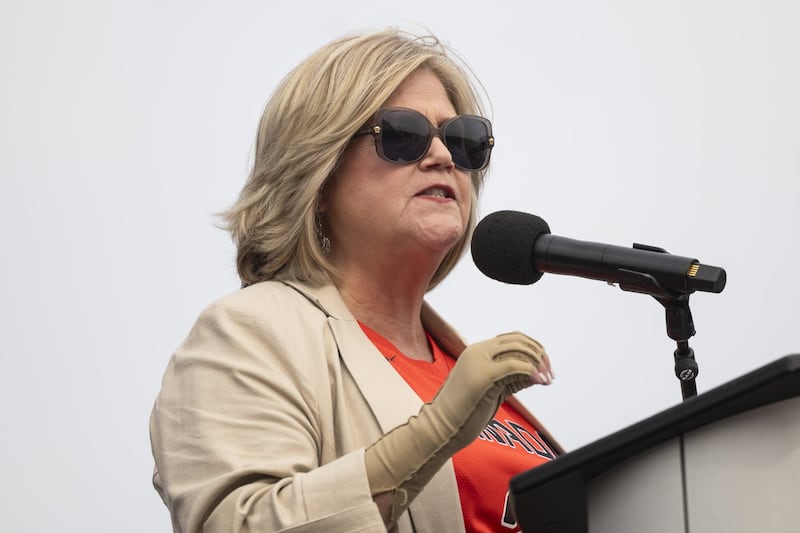
Horwath called on federal and provincial leaders to stand behind Canadian workers and industries.
Hamilton is responsible for approximately 60 per cent of Canada’s steel output.
The Canadian Press
Poilievre: Canada can’t accept one-way tariffs
“Canada cannot accept one-sided tariffs that will deindustrialize our country. Nor can we accept a bad deal,” reads a statement from Conservative Leader Pierre Poilievre Saturday morning.
He said his party is disappointed with the Americans’ move to impose new tariffs, calling them “unjustified” and adding they “threaten the jobs and livelihoods of families right across our country.”
He also called on the Liberal government to end its industrial carbon levy and enact “major tax reforms” to spur investment, among other measures.
Luca Caruso-Moro, CTVNews.ca Journalist
Premiers respond to failed trade talks
Ontario Premier Doug Ford said the “prime minister has my full support for a strong response—tariff for tariff, dollar for dollar.”
B.C. Premier David Eby, who was advocating for relief on softwood lumber tariffs, said Canada’s “politeness should never be mistaken for weakness.”
There is frustration, however, from Alberta Premier Danielle Smith, who says she is “deeply disappointed” that no deal was reached and is “urging the federal government to restart negotiations as soon as possible.”
Stephanie Ha, CTV News’ Ottawa News Bureau manager. Read the full story here.
Here is everything that happened on Aug. 21:
PM Carney says Canada intends to match the U.S. tariffs ‘dollar for dollar’
Prime Minister Mark Carney’s office released a statement ahead of the deadline saying he suspended trade negotiations with the United States, setting in motion the 50 per cent tariffs on Canadian goods.
“I have decided to suspend trade negotiations with the U.S. and have directed Canada’s negotiators to return to Ottawa. They have worked hard, in good faith, to defend the interests of Canadians throughout these negotiations up until the very last minute,” the PMO said in the statement.
“However, last-minute changes in the U.S. proposed terms were unfair, uneconomic, and called into question the reliability of any deal.”
“At midnight tonight, the U.S. intends to impose a 50% tariff on roughly $28 billion of Canadian goods,” the statement read.
“Canada will match those tariffs dollar for dollar to protect our workers and businesses.”
Aarjavee Raaj, CTVNews.ca Journalist
Canada has declined to finalize the trade deal, ‘upended’ balance: Greer
In a statement released Friday night, U.S. Trade Representative Jamieson Greer said Canada has declined to finalize the deal and “upended” the balance reached during the negotiations.
“Despite the U.S. offer to Canada to receive the best treatment of any major exporter to our market, new demands and walkbacks of other commitments by Canada have upended the careful balance reached in the past days,” the statement said.
“In addition, Canada is continuing to maintain its prolonged retaliation against the United States, including, among other things, flat-out prohibitions on certain American goods and services.”
The statement went on to say that Canada declined the deal despite the U.S. offering Canada “better treatment” and “significant tariff reductions” on steel, aluminum, autos and lumber in exchange for concessions.
“The U.S. offer was also forward-looking and included a historic economic and national security partnership to cooperate on export controls, combat transshipment, enhance digital trade, and align certain external tariffs,” Greer said in the statement.
“This is a missed opportunity for Canada to partner with the United States, which is the fastest-growing economy in the G7.”
Aarjavee Raaj, CTVNews.ca Journalist
‘Tariff for tariff, dollar for dollar’: Ford extends support for prime minister
Ontario Premier Doug Ford extended his support for Prime Minister Mark Carney in a social media post, after the trade negotiations were suspended Friday night.
“Team Canada needs to stand together more united than ever before,” Ford said.
“The prime minister has my full support for a strong response—tariff for tariff, dollar for dollar. As we fight to protect Canadian sovereignty and economic security, everything needs to be on the table. Ontario is ready to do its part.”
Aarjavee Raaj, CTVNews.ca Journalist
‘We’ll keep fighting’: Eby
B.C. Premier David Eby, who was advocating for relief on softwood lumber tariffs, also responded to the news, saying Canada’s “politeness should never be mistaken for weakness.”
“We didn’t ask for this, but we’ll keep fighting for as long as it takes,” Eby added.
Stephanie Ha, CTV News’ Ottawa News Bureau manager
As tariff deadline approaches, dynamic ‘not going well:’ sources
With less than two hours until new 50 per cent tariffs are set to be imposed on a variety of Canadian goods, two sources close to the negotiations tell CTV News that there are some challenges with the dynamic in negotiations, particularly with Commerce Secretary Howard Lutnick who is involved in the final hours of talks.
According to the sources, the talks are focused on “just a couple” of outstanding issues, but some of the personal dynamics with Lutnick, who appears to have lingering feelings over recent issues with the Gordie Howe International Bridge, is a challenge. The opening of the bridge was delayed for weeks because of U.S. complaints over toll governance and revenue sharing, after which Canada agreed to share revenues earlier than planned.
Canada’s chief trade negotiator Janice Charette remains at the United States Representative’s office in Washington as of late Friday night as talks continue.
Stephanie Ha, CTV News’ Ottawa News Bureau manager
With files from CTV’s Chief Political Correspondent Vassy Kapelos and CTV’s Senior Political Correspondent Mike Le Couteur
‘Working up until the last minute’: LeBlanc
“We have more work to do,” LeBlanc told reporters as he exited the U.S. trade representatives office around 7:30 p.m. on Friday.
“We’re going to continue working up until the last minute. Our job is not finished. Canadian workers, Canadian businesses expect us to do all of this important work” he said.
Kayla Thompson, CTVNews.ca journalist
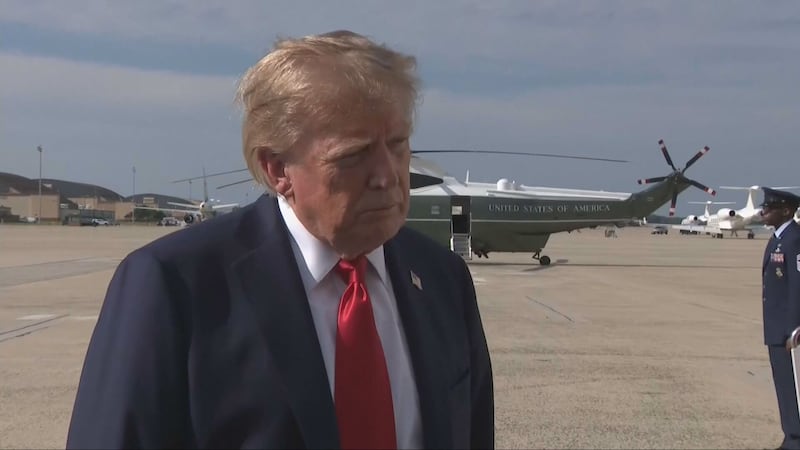
‘I only make good deals,’ Trump says
“I only make good deals,” Trump told reporters on the tarmac at Joint Base Andrews in Maryland.
He was asked about progress toward a deal with Canada. He said talks were “moving along,” and that his team has a “good relationship” with Carney.
He didn’t offer details on the prospective deal.
“We have to take care of our farmers.”
Luca Caruso-Moro, CTVNews.ca journalist
A ‘low-key horrible’ deal: trade policy expert
Some concern about the deal still persists, an international trade policy researcher told CTV News Channel.
“For some of the leaks we’ve seen, it doesn’t sound like it’s going to be a good deal,” Stuart Trew said hours before the deadline on Friday.
“In fact, as my niece might say, it sounds ‘pretty low-key horrible’” Trew said, referring to tariffs that will remain on steel exports to the U.S.
“Aluminum (and) the auto tariffs, at least according to the leaks, being at 15 per cent would be – in the short-to-medium term – pretty unsustainable for the industry.”
Trew said such a deal would inevitably “eat into the reason to make any vehicles in Canada whatsoever.”
He cautioned against putting Canada in a worse position than before the trade war started by accepting a deal that would put U.S. booze back on the shelves and letting go of our retaliatory tariffs.
“The legitimate question is why would we come to such a bad deal now, when all we’re getting out of this is some kind of barely noticeable reprieve, right?”

Kayla Thompson, CTVNews.ca journalist
‘Aiming to get the best agreement’: Alberta’s Smith
Alberta Premier Danielle Smith is optimistic for a new trade deal with the United States, telling CTV News Calgary the best deal for Canada would involve no additional tariffs.
“I know everybody hopes that we could get 100 per cent of all products going across the border tariff free,” Smith said in an interview.
“But I think where we’re at in the negotiations is that we’re aiming to get the best agreement in the world of any nation with the United States and a reduction in the current tariffs that we have.”
It’s the first time Smith has spoken on the intense negotiations between Ottawa and Washington during trade deadline week.
Cassidy McMackon, CTV News Calgary, Digital Producer
Compromise a ‘hallmark’ of any good deal: former U.S. ambassador to Canada
For any good deal, there need to be concessions on both sides, according to former U.S. ambassador to Canada David L. Cohen.
Cohen told CTV News Channel Friday night that he has been “optimistic,” throughout the process and that although it might take both, Canada and the U.S. some time to reach an agreement, there will ultimately be one.
However, he said the “hallmark” of a good deal is when there is “some unhappiness” on both sides.
“There’s a compromise here, and it’s a compromise where Canada is giving something up, but the U.S. is giving something up too,” Cohen said.
“Both sides giving something up, both sides being a little unhappy with the landing place, but both sides looking at the bigger picture and understanding that there are huge benefits to both Canada and the U.S. to a resolution of this dispute, which has not benefited either country.”
Aarjavee Raaj, CTVNews.ca Journalist
Trade deal is an ‘economic security negotiation’: analyst
Following Trump’s comment that trade talks are moving along, an international trade analyst says securing a deal is now effectively an “economic security negotiation.”
“I feel for the number of companies, the factories, and all those that are engaged in looking at this carefully to ensure that they can continue to do business,” Jacques Shore told CTV News Channel on Friday.
Canada needs to reach a trade agreement “right now,” to ensure goods currently protected under CUSMA with no tariffs on them “remain as they are without this potential of 50 per cent,” Shore added.
Kayla Thompson, CTVNews.ca journalist
Trump’s tariffs on autos ‘outrageous’: spokesperson
National spokesperson of the Canadian Automobile Dealers Association, Huw Williams believes that Canada and the U.S. should have completely automotive free trade as in the past 60 years but that must be viewed with a “dose of realism” that the other side is an unpredictable and “bombastic” administration.
“If the automotive industry remains competitive within the North American context, consumers will be the winner on both sides of the border,” he told CTV News Channel.
Williams described U.S. President Trump’s 25 per cent tariffs on autos as “outrageous” which he said is bad for consumers and dealers, both in the U.S and Canada.
Archie Niari, CTVNews.ca Journalist
Canadian importers need U.S. alcohol: executive
Stacy Kyle, executive director of the Import Vintners and Spirits Association, says she’s hoping premiers get American liquor back on store shelves, since is something she’s been asking for since the ban was put in place in March 2025.
“The importers are Canadian. They’re locals...and they’ve been impacted by this ban and unable to do business,” Kyle told CTV News Channel on Friday.
“So, it’s important for our members to have viable businesses and operations to maintain their relationships they’ve built with their suppliers.”
Elianna Lev, CTVNews.ca Journalist
We want to hear from you
Are you worried about how tariffs might affect your work? Have trade disruptions already impacted your job?
Share your story by emailing us at dotcom@bellmedia.ca with your name, general location and phone number in case we want to follow up.
Your comments may be used in a CTV News story.
Lumber industry needs certainty: expert
Executive director of the Independent Wood Processors Association of B.C. says that while he’s pleased softwood lumber has remained on the negotiating table, the industry needs certainty.
“Let’s keep in mind we’ve been at this for nine years. We had a tariff that started around eight per cent, now it’s up to 45 per cent and it could expand to 50 per cent,” Brian Menzies told CTV News Channel on Friday.
“I don’t think the outcome is going to be great, but at least there’ll be some certainty, and that’s what I want right now for our small businesses,” he said.
Menzies said about $11 billion in tariff deposits is currently being held at the border, and many small businesses have taken on significant financial risk, including using their homes as collateral to cover the required bonds.
“They want to see some resolution to this. They want to see some of those deposits returned to them as well because they have been paying it out of their own pocket to survive right now.”
Kayla Thompson, CTVNews.ca journalist
Canadian team takes ‘working lunch’: source
A source from the Canadian team tells CTV News LeBlanc, Charette, Blanchard and Wiseman are participating in a “working lunch.”
Mike Le Couteur, Senior Political Correspondent
LeBlanc returns
LeBlanc just passed news cameras on his way back into the U.S. Trade Representative’s office for the first time since departing for lunch at around 1:20 p.m. ET – more than two hours ago.
He did not stop to speak to media.
Luca Caruso-Moro, CTVNews.ca journalist
‘It’s tricky for Mark Carney’: Former Alberta premier
Jason Kenney, the former premier of Alberta, says while trade talks appear to be going “in a pretty good direction,” he has concerns.
“I just hope that our government hasn’t made all sorts of preliminary concessions, and I say preliminary because this is an appetizer for the main meal, which is the CUSMA negotiation or renewal,” he told CTV News Channel on Friday.
Although Carney is well-equipped to handle negotiations, he is ultimately in a tough position explains Kenney.
“It’s tricky for Mark Carney. It couldn’t be trickier,” he said.
Kenney said the prime minister is likely torn between his commitment to aggressively defend the interests of Canadians’ in sectors including auto, while also creating “a space of some stability, knowing full well that based on past actions, the Trump administration could just do a 180 all over again.”
Kayla Thompson, CTVNews.ca journalist
LeBlanc has entered the building
LeBlanc has entered the U.S. Trade Representatives office. He did not stop to take questions from reporters.
Luca Caruso-Moro, CTVNews.ca journalist
Negotiations may be ‘phased’
With hours left to deadline, a trade lawyer says Canadian and U.S. representatives may extended negotiations through the weekend and opt for a “phased approach.”
“There is going to be a good amount of negotiation left,” Robert Glasgow, international trade lawyer, told CTV News Channel on Friday.
“I think they’re almost certainly going to start segmenting it down ... but that’s probably going to take a few more days to negotiate,” he added.
The deal won’t eliminate tariffs entirely, Glasgow said, and Carney’s team is likely focused on preserving the CUSMA exemption and “drive tariffs as low as he can on as broad of a basis as he can get it.”
Under the CUSMA exemption, goods that comply with CUSMA rules of origin are generally exempt from U.S. blanket or general emergency tariffs.
While Carney has partially pivoted defence procurement to some European contractors, he will want to service “that segment with multinational and transnational participation of Canadian firms.”
“If we can focus on procuring from American companies that are producing domestically, we still retain that ... procurement base, while still potentially placating the demands of the American administration,” Glasgow said.
Devika Desai, CTVNews.ca journalist
Trade talks today
This morning’s meeting between Canadian and American negotiators is expected to take place at 11:30 a.m., according to a source close to the talks.
Canada-U.S. Trade Minister LeBlanc, Chief Trade Negotiator Janice Charette and Carney’s Chief of Staff Marc-Andre Blanchard, are expected to attend.
Mike Le Couteur, Senior Political Correspondent and Luca Caruso-Moro, CTVNews.ca journalist
Deadline could be extended: political analyst
A former Trudeau staff member says that while a deal is hopefully signed tonight, she would not be surprised if the tariff deadline was extended again.
“We’re seeing a level of diffusion come out,” Sharan Kaur, former deputy chief of staff to former finance minister Bill Morneau, told CTV News Channel on Friday.
The U.S. president, the now-CTV News political analyst added, is known for making “flippant comments” when things aren’t going his way.
She also pointed to issues discussed this week like returning U.S. alcohol to Canadian stores. “These concessions ... are leverage,” she said. “... We have to get used to the fact that tariffs are going to be around in one way, shape or form. This is actually a positive discussion taking place.”
Canadians aren’t the only ones impacted; Trump also needs the deal, Kaur said.
“The whole anti-everything American sentiment ... is impacting them,” she said. “...Let’s also keep in mind that he’s got midterms coming up.”
It’s difficult to say if the deal could be trusted, she said. “He is known to rip deals, left, right and centre.”
“The goal is to ensure that the temperature is brought down and that they get to a point where industry is not suffering.”
Devika Desai, CTVNews.ca journalist
This won’t be an ‘early night’
An international trade lawyer says he’s anticipating being up all night as he awaits final details from the Canadian government.
“Let’s put this way: I don’t think I’m going to have an early night,” Barry Appleton told CTV News on Friday. “But here’s the good part: they’re walking in the room. They’re still going to have more talks.”
Appleton said that the problem with the trade deal after Trump’s three-day reprieve is that it will likely leave numerous items unresolved.
“This is just a deal to get us talking again to have more of a deal, and what are we going to give up to have that? Right, that’s the question that we all want to know. And there’s so many different ideas circulating. That’s the part we got to figure out,” he said.
Kayla Thompson, CTVNews.ca journalist
Poilievre to Carney: ‘Don’t take a bad deal’
Conservative Leader Pierre Poilievre repeated his call Friday for Prime Minister Mark Carney not to “take a bad deal.”
“Mr. Carney promised in the last election that he would be elbows up. He promised that he would negotiate a win,” Poilievre said in a press conference in Kitchener, Ont. on Friday. “In his words, he promised, and I quote, that he could ‘handle Trump.’ He promised he would not accept a bad deal. Mr. Carney, keep your promise. Fight for Canada.”
Asked by reporters if it’s acceptable for Canada to agree to a reduced tariffs on steel and aluminum, Poilievre said “no, absolutely not.”
“One-sided tariffs on Canadian industry would be a bad deal,” he added.
Stephanie Ha, CTV News’ Ottawa News Bureau manager
Booze ban ‘had its time’: Raitt
The decision to reverse provincial bans on U.S. alcohol may be the reason Canada secures a deal tonight, says Lisa Raitt, member of the Advisory Committee on Canada-U.S. Economic Relations and former deputy leader of the Conservative Party of Canada.
She said Trump has made it very clear that he views the removal of American alcohol from Canadian store shelves as a discriminatory measure, and as a result, threatened 50 per cent tariffs on vulnerable industries.
“You have to do whatever you can to ensure that that didn’t happen, and that doesn’t happen tonight,” said Raitt.
“Asking the premiers to reverse their booze bans, I do believe, is an important part of the entire deal.”
She says while the alcohol ban was effective in getting U.S. attention, “it had its time.”
“The reality is that the leverage on this negotiation going around really did come from the U.S.,” says Raitt.
She says tariff pressure forced the two countries into important negotiations that have likely yielded results and “hopefully a deal that both sides can live with and can prosper with going forward.”
Anam Khan, BNN Bloomberg journalist
The ‘best deal’ for autos
Canada is in a position to get “the best deal” for its auto industry compared to the rest of the world, according to an industry representative.
Huw Williams, spokesperson for the Canadian Automobile Dealers Association, told CTV News Channel on Thursday that there is opportunity to get “a good short term deal that hopefully rolls into the CUSMA negotiations in the future.”
Canada is the biggest customer of U.S.-made vehicles, he said. “It doesn’t do well to attack your customer.”
Williams said they have asked their U.S. counterparts to communicate that the tariffs hurt the economy on both sides.
Devika Desai, CTVNews.ca journalist
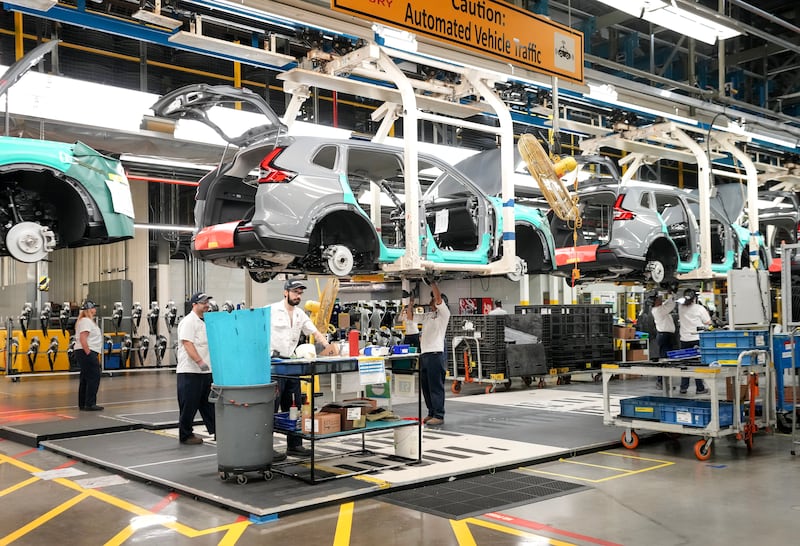
TSX shows gains
The S&P/TSX composite was up nearly a point (36,694, up 0.88 per cent) in Friday morning trading.
Energy and mining stocks showed the largest gains.
Luca Caruso-Moro, CTVNews.ca journalist
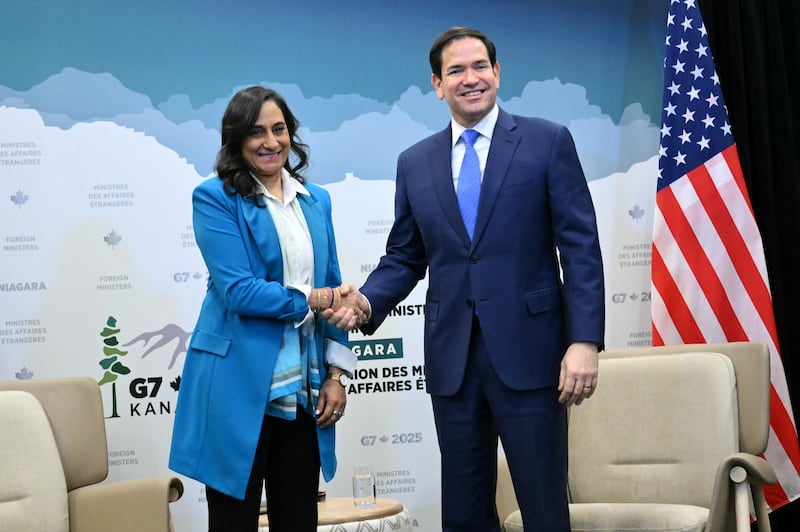
Anand talks Arctic, NATO with Rubio
While Canadian and U.S. negotiators hammer out the details of a deal, Foreign Affairs Minister Anita Anand met with her American counterpart, Marco Rubio, for security talks today.
A readout from Anand’s office reports the two discussed “transnational fraudulent activity including scam centres,” Arctic foreign policy and NATO investments.
“Minister Anand highlighted that Canada will continue to engage constructively with the United States on trade and to strengthen our economic relationship,” the statement added.
Canada recently committed to spend five per cent of its GDP on defence by 2035. U.S. President Donald Trump has long pushed allied countries to increase their military investments.
Anand and Rubio will speak again in September at the United Nations.
Luca Caruso-Moro, CTVNews.ca journalist
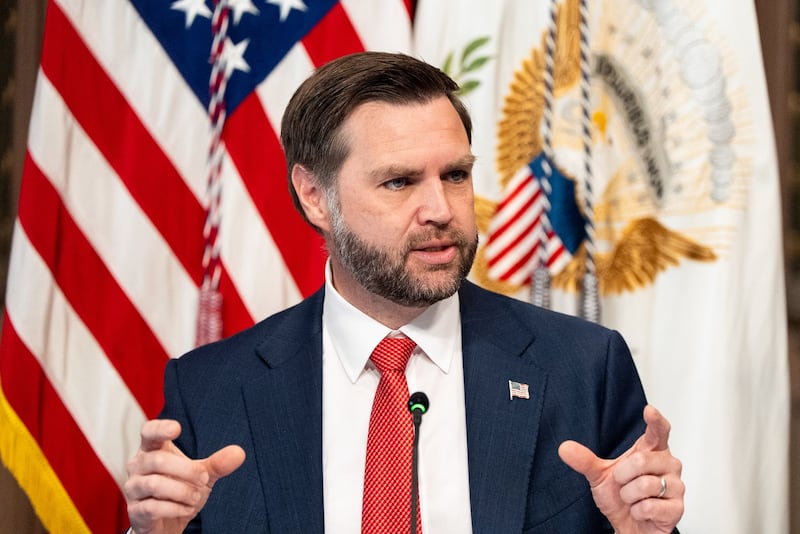
PM tried to ‘out-tough’ Trump: Vance
U.S. Vice-President JD Vance said Carney tried to “out-tough” Trump in trade negotiations and credited Conservative MP Jamil Jivani as an “effective advocate” in the deal talks.
In audio from a Wednesday fundraiser in Southampton, N.Y., which was provided to The Canadian Press by a source who attended the private function, Vance said Carney is a “very sweet guy” and he gets along with him quite well.
But Carney “comes in and puffs his chest out and says, ‘I’m going to, like, out-tough Donald Trump,’” he added.
“It’s hilarious because Carney presents this as some victory for Canada when fundamentally, like, they climb down on a lot of issues,” Vance told the room.
“But the quiet sort of behind-the-scenes story is that this, like, random MP who has a good relationship with us has been a pretty effective advocate,” he said about Jivani.
Vance added there’s “this guy Pierre Poilievre, who is the leader of the Conservatives in Canada,” adding he is a “non-entity” in negotiations.
The White House and the vice-president’s office have not yet responded to a request for comment.
The Canadian Press. Read the full story here.
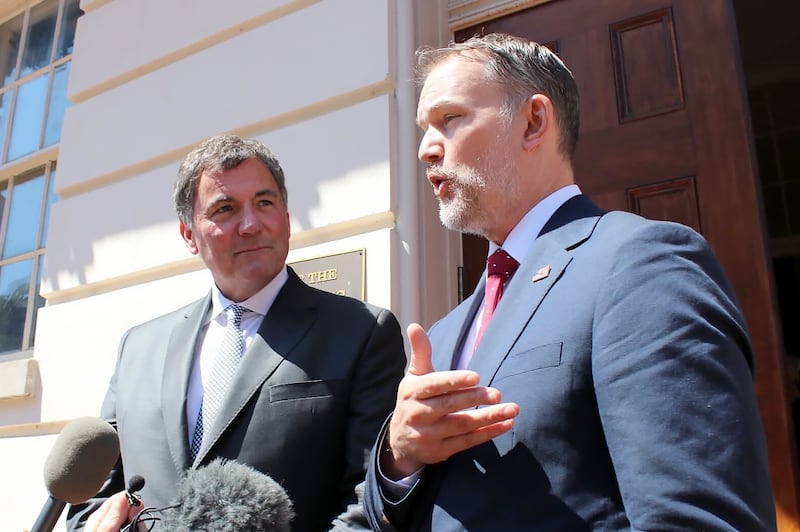
Vance’s comments are ‘childish,’ says ex-ambassador
Vance’s comments about Carney were “childish” and “flippant,” according to Gordon D. Giffen, who served as U.S. Ambassador to Canada from 1997 to 2001.
“The vice-president was out of line,” he told CTV News Channel from Brevard, N.C.
Asked what Canada should do next if a deal isn’t reached, Giffen said he doesn’t think the U.S. will follow through with imposing the 50 per cent tariffs as the president promised.
He called the new, 50 per cent tariffs “unsound, bad policy,” and predicted their imposition would beget further Canadian retaliation.
Luca Caruso-Moro, CTVNews.ca journalist
Winery owner unconcerned about U.S. booze return
An Ontario winery owner says he isn’t worried about a drop in sales should U.S. booze return to store shelves.
Donald Ziraldo, who is the founding chairman of the Vintners Quality Alliance (VQA), told CTV Your Morning on Friday that provincial bans have boosted sales at local wineries by 25 per cent to 100 per cent.
“People became more aware ... that the Niagara Canadian wines, in particular, are as good as the California, and probably a little bit less expensive,” he said.
Prime Minister Mark Carney asked premiers this week to lift their respective bans, which have been in place since February 2025. All have said they will comply.
The VQA is Canada’s Canada’s official regulatory and appellation of origin system for high-quality wines. A VQA label guarantees that a wine is made entirely from locally grown grapes in Ontario or B.C. and meets strict production and labeling standards.
Ziraldo added that he hopes Quebec and the Maritime provinces will join the alliance to let consumers know which wines are “100 per cent grown in Canada.”
Devika Desai, CTVNews.ca journalist
Sustainable profit margin a good deal for auto makers
Flavio Volpe, the president of the Automotive Parts Manufacturers Association, said a good deal for his members is one that allows auto makers to have a sustainable profit margin.
“I think a lot of people who aren’t as familiar with the industry say, ‘Hey, look, if you go down from 25 to 15 (per cent tariffs), that sounds great,’” he told CTV News Channel on Friday.
However Volpe elaborated that even if U.S. tariffs on Canadian autos fall from 25 per cent to 15 per cent, that may not be enough to protect Canadian carmakers especially after being targeted “by Donald Trump’s White House and also our other main competitors, China, at the same time.”
Kayla Thompson, CTVNews.ca journalist
LeBlanc on trade deal: ‘We’re very close’
Canada-U.S. Trade Minister Dominic LeBlanc shared an update following a more than three-hour meeting with U.S. Trade Representative Jamieson Greer in Washington on Thursday, saying they are “very close” to an agreement.
“We continue to make progress, and we’re going to stay here and do the work that’s necessary until we get to that point,” LeBlanc said to reporters, while also describing the meeting as “long” and “detailed.”
Chief Trade Negotiator Janice Charette, Canadian Ambassador to the U.S. Mark Wiseman and Prime Minister Mark Carney’s Chief of Staff Marc-André Blanchard were also involved in the meeting.
Stephanie Ha, bureau manager, Ottawa News Bureau
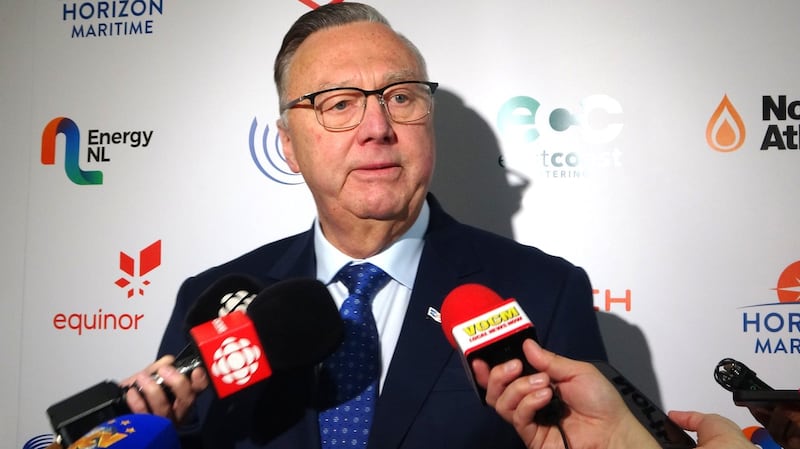
All provinces agreed to restock U.S. liquor: N.L. premier
Newfoundland and Labrador Premier Tony Wakeham says Canada’s premiers have agreed to return U.S. alcohol to store shelves as part of the tentative trade deal with the U.S.
He said the prime minister is confident an agreement will be reached and that “as part of this agreement, he asked all of the provinces, as a sign of good faith, ‘would we put U.S. liquor back on our shelves,’ and we all agreed.”
Several of the premiers have not commented publicly on the issue.
U.S. alcohol products remain off the shelves in every province except Alberta and Saskatchewan.
Tiffany Hendsbee, CTV News supervising multiplatform writer

