


U.S. President Donald Trump has contacted Apple about renaming Lake Ontario as “Lake America” a U.S. official revealed on Monday.
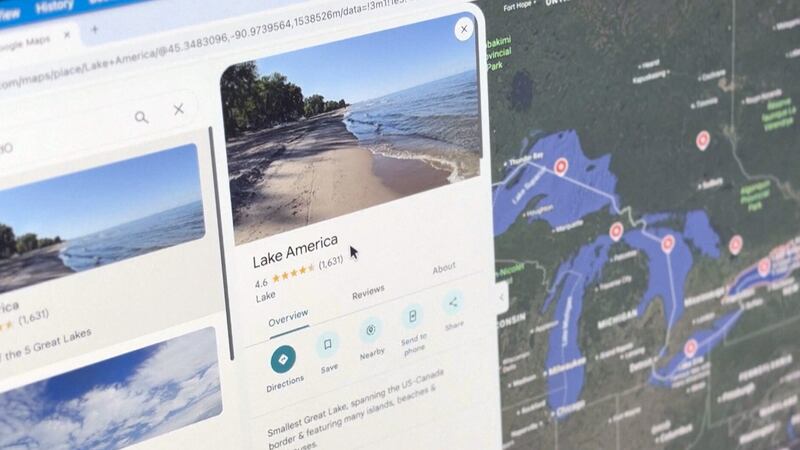
The development comes after a “Lake America” label appeared on several provincial government agency websites over the weekend, following a Google Maps update that changed how the lake’s name is displayed in the United States and internationally.
By Monday morning, the label was back to “Lake Ontario” after officials at agencies including Metrolinx, Hydro One and the LCBO scrambled to reverse the change.
Amid a trade war with Canada, U.S. President Donald Trump signed an executive order on Thursday to rename the lake, which has been known as Lake Ontario for more than 400 years. The move has been met with swift condemnation from Canadians as well as Trump’s opponents in the U.S.
Key details:
- U.S. official reveals Trump contacted Apple about lake name
- Ontario agency maps updated to display ‘Lake Ontario’ again
- Trump calls Canada a trade ‘abuser’ amid tariff standoff
Here’s what’s happening on Aug. 31, 2026:
Trump contacted Apple about name change: U.S. official
A top U.S. official says U.S. President Donald Trump contacted Apple directly to get it to change the name of Lake Ontario to “Lake America.”
U.S. Interior Secretary Doug Burgum told the Fox Business network today the body of water’s name might change on Apple maps very soon.
The Canadian Press, Read the full article here
Agency websites reverse ‘Lake America’ map change
Metrolinx, Hydro One and the LCBO are once again displaying “Lake Ontario” on their website maps after scrambling over the weekend to reverse a change to “Lake America” that appeared when third-party mapping services updated the lake’s name.
However, as of Monday morning, some websites were still displaying “Lake America,” including Loblaws store locator maps.
Kayla Thompson, CTVNews.ca, journalist
Trump calls Canada ‘abuser’
U.S. President Donald Trump continued to take aim at Canada on Sunday afternoon, claiming on Truth Social that he had “revived and saved” the U.S. auto industry with tariffs.“
One of the Worst Abusers is Canada. I don’t want Canadian cars, I don’t want Canadian parts, I don’t want Canadian anything. They’ve been ripping us off for decades, and it’s going to stop,” Trump wrote in the post.
“This should have happened long ago with other Presidents, just as stopping Iran should have happened long ago. They want to be treated like a State, but they aren’t one. I deal with the Leadership of many Countries, but I find Canada to be the worst. They are entitled no longer!”
Aarjavee Raaj and Devika Desai, CTVNews.ca
Agency websites show ‘Lake America’ on maps
Several government agency website maps are displaying the “Lake America” name, including Metrolinx, HydroOne and the LCBO. Officials are blaming third-party mapping services for the change.“
Some Ontario government agency websites pull map data directly from Google Maps,” Ontario Minister of Public and Business Service Delivery and Procurement Stephen Crawford said in a social media post on Sunday.
“Following recent changes by Google, we’re actively reviewing our websites to make sure they all identify Lake Ontario by its correct name: Lake Ontario.”
Daniel Otis, CTVNews.ca journalist
Google Maps announces name change
Google Maps says it’s changing the way the lake’s name is displayed. The name “Lake Ontario” will be shown to Canadian users while Americans will see the new “Lake America” name. For users in the rest of the world, both names will now be displayed.
“These updates follow our long-standing policy for bodies of water with names that vary from country to country, and are starting to roll out now,” Google said in an online statement.
Daniel Otis, CTVNews.ca journalist
‘It’ll get changed back’: former U.S. ambassador to Canada
A former U.S. ambassador to Canada calls the Lake Ontario name change a “huge distraction” that will likely be reversed by a future administration.
“I actually think this is a huge distraction and the current president of the United States is a master of distraction,” Gordon Giffin told CTV News Channel on Monday.
“When the facts aren’t going well we have foolishness, and this is foolishness, and I encourage Canadian leaders and Canadian citizens to just move on with their lives. Ignore this.”
Giffin, who served as ambassador to Canada between 1997 and 2001 under former U.S. president Bill Clinton, hopes negotiators “can ignore the noise” and hammer out a deal that benefits both countries.
“No serious thinker in the United States – Google aside – plans to change the way they refer to Lake Ontario,” Giffin added. “It’ll get changed back.”
Daniel Otis, CTVNews.ca journalist
Ford unveils new Lake Ontario sign
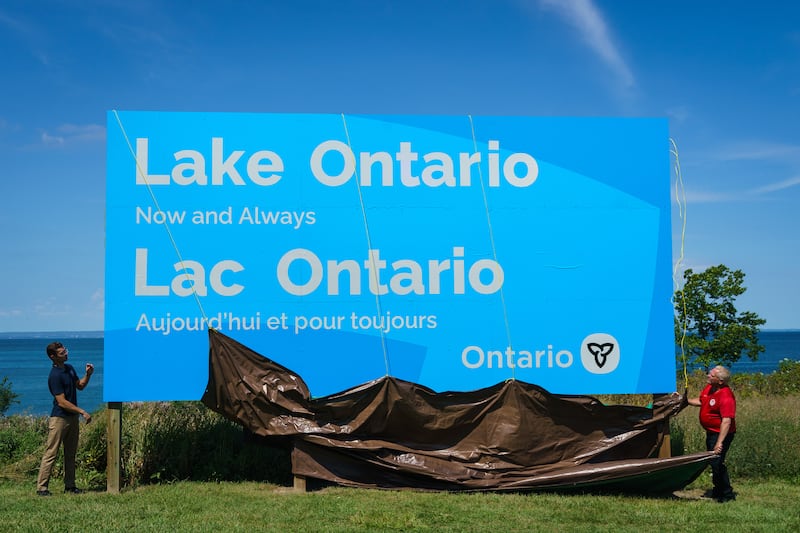
Ontario Premier Doug Ford unveiled a new Lake Ontario sign Saturday afternoon, just days after U.S. President Donald Trump renamed the Great Lake as “Lake America.”
Ford’s appearance in Winona, Ont., came as Canada-U.S. trade tensions continue to escalate, with the premier using the name change to reinforce his message that Ontario will “never back down” and always defend its interests.
“President Trump can call it whatever, but I can tell you the rest of the world will always call it Lake Ontario,” Ford said.
“I receive numerous calls from governors that are saying, ‘we’re always going to call it Lake Ontario,’ and obviously Canada is always going to call it Lake Ontario. So that’s our message to President Trump.”
Jermaine Wilson, CTVNews.ca, journalist Read the full story here
‘We’re not at war with Canada’: Bessent
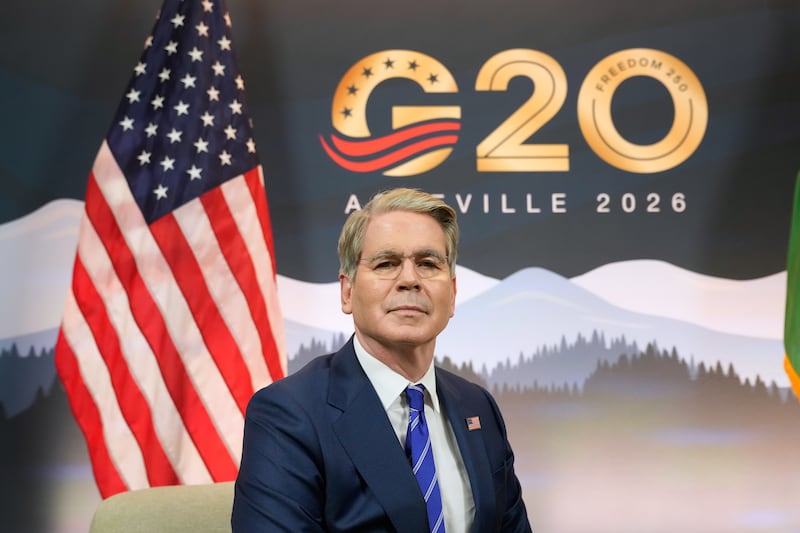
U.S. Treasury Secretary Scott Bessent said on Monday that he would meet with his Canadian counterpart on the sidelines of a meeting of G20 finance ministers and central bank governors, adding that the U.S. was not in a war with Canada.
“I think this is very unfortunate that Prime Minister Carney has turned this into a political shouting match. I mean, we’re not at war with Canada,” Bessent told CNBC in an interview.
Reuters
Toyota, Honda may foot the tariff bill: Reuters analysis
U.S. President Donald Trump is targeting Ottawa with a proposed 50 per cent tariff on Canadian car imports — but Japan’s Toyota and Honda may end up footing the bill, according to an analysis from Reuters.
The two Japanese automakers account for more than three-quarters of all cars made in Canada. They could be forced to shutter some production lines if the tariffs go into effect on Jan. 1 as proposed, analysts said.
While a deal could still be reached, the timing of the U.S. tariffs couldn’t be worse, as Japanese automakers are being stung by competition from low-cost Chinese EVs in markets such as Southeast Asia, Europe and Latin America.
Reuters. Read the full story here.
U.S. trade war looms over sovereignty debate in Quebec
The trade war with the United States is impacting the sovereignty debate in Quebec, which will hold a provincial election on Oct. 5.
“My opponent is named Donald Trump,” incumbent premier and Coalition Avenir Québec Leader Christine Fréchette said after dissolving the legislature on Thursday. “He’s the real adversary.”
Parti Québécois Leader Paul St-Pierre Plamondon, who has been leading in public opinion polls since 2023, has promised a sovereignty referendum in his first term if elected.
“Do not allow the Trump administration’s tactics to rob us of this important debate,” Plamondon said on Thursday. “At the end of the day, it is up to us, the people of Quebec, to decide our future and our destiny.”
The Canadian Press
Canadians intend to boycott U.S. products and travel
When CTV News asked readers if they would boycott American goods due to the escalating trade war, more than 200 people responded to the callout, the majority of whom said they are boycotting U.S. goods, services and travel.
A few say they continue to purchase U.S.-made products, so as to not impact American residents and businesses. Others say they’ve had enough of Trump’s behaviour towards Canada and, in some cases, say U.S. citizens bear some accountability for choosing him as their leader.
Devika Desai, CTVNews.ca national digital producer
Trump’s new tariffs on Canada raise legal questions
In firing up a trade war with Canada, U.S. President Donald Trump turned to a 96-year-old statute so obscure that many trade lawyers didn’t even know it was still on the books.
A week ago, Trump invoked Section 338 of the Tariff Act of 1930 to slap a 50 per cent tax on US$20 billion worth of Canadian imports. The move prompted dollar-for-dollar retaliation from Ottawa and strained already-tense relations between the neighbours and longtime allies.
The president’s Section 338 tariff authority has never been used, let alone tested in court. “This law is literally a blank canvas because it’s never been litigated,’’ said Ryan Majerus, a partner at King & Spalding and a former U.S. trade official.
The Associated Press

