As Canada’s retaliatory tariffs on the U.S. are set to take effect next week, many consumers are anxious about the impact of the surtaxes on affected items.
Experts like Ian Lee, an associate professor at Carleton University’s Sprott School of Business in Ottawa, said the federal government’s counter-tariffs will make American items pricier for Canadians.
“If they’re planning on buying them anyways, they should probably buy them before Sept. 8,” Lee said in a video interview with CTVNews.ca on Monday.
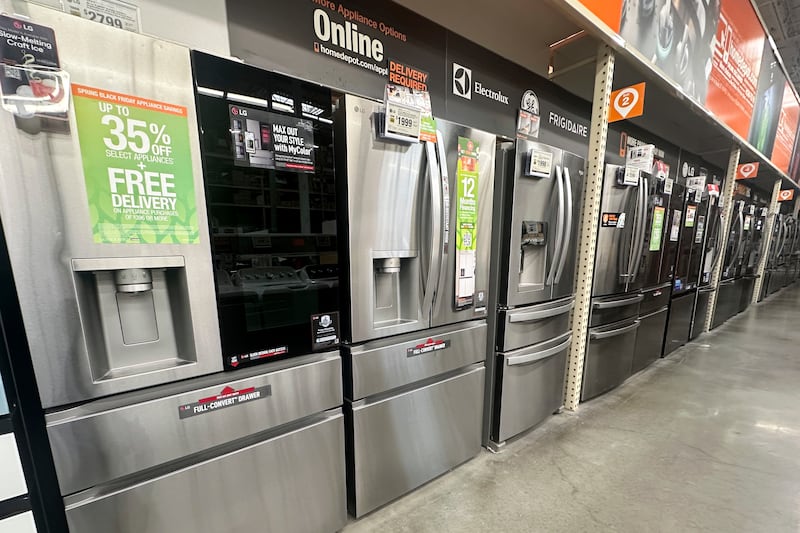
“(If) your fridge breaks down or your washing machine breaks down, and you have to replace it, it’s going to cost a lot more after Sept. 8, so it’s a choice that people have to make,” he added.
Trade talks broke down between Ottawa and Washington on Aug. 21, resulting in 50 per cent tariffs on billions of Canadian products. In turn, Ottawa announced last week dollar-for-dollar counter-tariffs on about 700 American imports worth $27.6 billion.

Canada’s counter-tariffs, which varies at 15, 25 and 50 per cent, will come into force Sept. 8. These targeted imports range from makeup and kitchen appliances to smartphones and certain dairy items, including products covered under the Canada-U.S.-Mexico Agreement (CUSMA).
Colin Mang, an economist at McMaster University in Hamilton, Ont., said Canada has targeted fewer American consumer goods in this round of counter-tariffs than last year.
The federal government chose certain U.S. products for counter-tariffs because in most cases, Canadian and international alternatives exist, he said.
“I would say that it would be a good idea if you have a particular favourite product that’s being targeted, try to get it before the tariffs come in,” Mang said in a video interview with CTVNews.ca on Monday.
Mang said he doesn’t anticipate a shortage of some common household items, but consumers with favourite brands, such as with cosmetics, clothing and handbags, may want to stock up.
“So, in those instances, then someone might want to consider stockpiling before the tariffs start,” Mang said. “But for general goods like toilet paper, where there are a lot of substitutes on the markets, there’s not really a reason to run out and stockpile those items, because there’s going to be other products available that are not subject to tariffs.”
Despite anxiety about the trade war, Mang said Canada’s retaliatory tariffs of 25 per cent, in response to the first wave of U.S. tariffs last year, didn’t have a huge impact on Canadians’ pocketbooks. He cited a Bank of Canada study published in May showing that the average price increase for tariffed items was only about six per cent, compared to non-tariffed goods, and only contributed 0.3 percentage points to consumer price inflation.
“Most of the cost was absorbed by retailers, so they didn’t really impact Canadian families that much …,” Mang said.
He explained that retailers found it tough to raise prices when competitors’ prices for products from non-American countries remained the same.
Lee said some Canadians may choose to avoid buying American products and find an alternative supplier from another country, or postpone their purchases to signal their displeasure with U.S. President Donald Trump. But he said the “buy Canadian movement” hasn’t been as successful as anticipated, since it hasn’t prevented the Trump administration from imposing tariffs again.
“There’s lots of people that disagree (with the boycott), so they continue to buy the products,” said Lee, who studies federal economic policies including taxation and trade. “And so, it may make somebody feel good, but it rarely changes the behaviour of the company or the government you’re boycotting.”
With files from CTV News’ Spencer Van Dyk, Stephanie Ha and Daniel Otis

