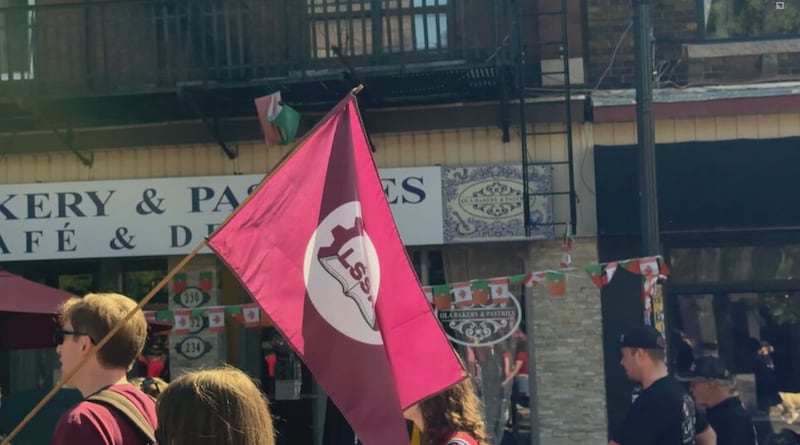
HAMILTON, Ont. – Among the seemingly endless stream of union workers that marched down Hamilton’s downtown core Monday, a chatter of uncertainty and anxiety could be heard spreading through the crowd, as the United States’ 50 per cent tariffs had already been implemented. And now Canada is set to impose its counter-tariffs on steel Tuesday.
This year, the parade feels more like a march to war against the U.S., instead of just the family-friendly event it is most years.
“[We] get hit twice by tariffs across the border twice,” Kevin Hutson with the International Alliance of Theatrical Stage Employees (IATSE) 129 told CTV News.
“[The goods] cross the border. We manufacture it, we send it over. So, we’re being hit [and] crushed with these tariffs. It’s a really quiet year for us.”
There’s a reason Hamilton is known as a ‘steel city.’ It produced roughly half of all of Canada’s steel at one point and continues to produce millions of tonnes of the material each year.
Since the trade war with the U.S. began, steel manufacturers in Hamilton have laid off dozens of workers.
In June 2025, ArcelorMittal Long Products Canada announced the closure of its Hamilton wire-drawing mill, affecting 153 employees. The company cited competitiveness and profitability concerns. Meanwhile, CEO of Stelco owner Cleveland-Cliffs, warned that without further trade protections, “the future competitiveness of our galvanizing lines in Hamilton is at risk.”
“For all the trade unions that that are here today, we are all affected,” said David Harrison with the Sheet Metal Workers Union.
“Hamilton and the steel workers have been a part of each other… You can’t have one without the other. I come from a long family that worked at the Dofasco,” he added. “I had three generations before myself. This is definitely terrible for the city.”
The federal government has stepped in to provide millions in repayable contributions to multiple Hamilton-based businesses.
But now uncertainty looms on what the counter-tariffs will bring, with Ottawa set to double it’s import tax for U.S.-made steel from 25 per cent to 50 per cent on Tuesday.
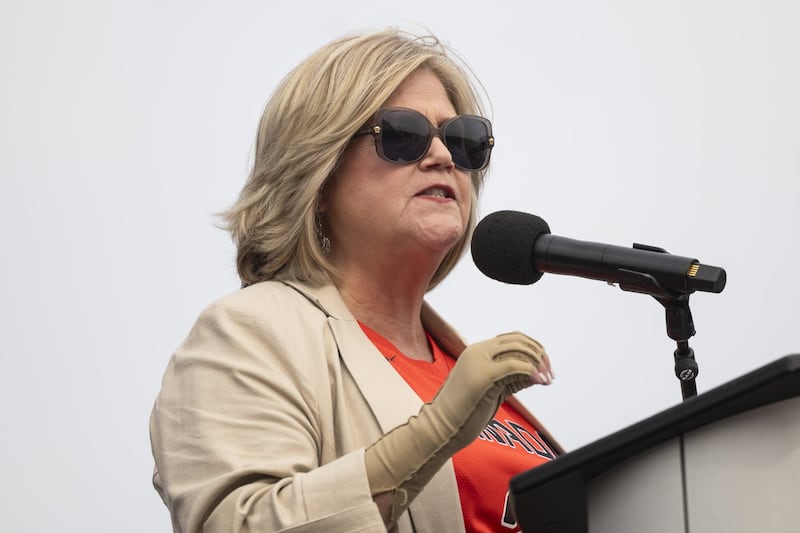
“I think there’s a sense of foreboding,” Hamilton mayor Andrea Horwath told CTV News Monday. “I think there’s a sense that people really are uncertain about the future.”
“They don’t know what’s coming,” she added. “They don’t know how bad it’s going to get. I think what they do know is that if it gets bad, the pain is going to be significant. And so, today’s the day to celebrate everything they’ve done to build this city.”
The steel industry is so intertwined within the community that more layoffs would have a ripple effect that could hit other industries in the city of over half-a-million people.
“We’re a manufacturing community, but we’re also a transportation community,” added Horwath. “We have a huge food and beverage manufacturing sector… which again, is also being hit by the tariffs.”
“And then there’s the knock-on effect. If people don’t have money in their pocket, they’re not going to go to the restaurant, they’re not going to take their kids to the show.”
But just like the material the city produces, the residents of ‘steel city’ say they’re durable enough to stand the test of time.
George Haywood said he was laid off during the trade war, and now has had to find a new career as a plumber.
“I hope so,” said Haywood
When asked if Hamilton can survive the trade war, Haywood replied: “I hope so.”
“That’s what we’re all made of: steel.”

