


U.S. President Donald Trump signed executive orders that will ban several Canadian imports, including certain alcohols, dairy and motorcycles, the White House announced Tuesday.
The move comes hours after Trump said he would direct American agencies to block Canada from access to U.S. contracts.
Early Tuesday, Prime Minister Mark Carney warned Canadians of tough times ahead after retaliatory tariffs on U.S. goods took effect just after midnight. Trump’s 50 per cent tariffs on nearly $28 billion worth of Canadian products came into force after trade talks between Ottawa and Washington broke down last month.
Drawing from the list of products being tariffed by the U.S., the Canadian counter-tariffs target roughly 700 American imports, including dairy, plywood and sunscreen.
Key details:
- Trump bans certain Canadian booze, dairy
- Canada’s counter-tariffs target dairy, plywood, sunscreen
- Carney warns Canadians of tough times ahead
- Trump threatens to block Bombardier sales in U.S.
Here’s what happened on Sept. 8, 2026:
Trump bans certain Canadian booze, dairy
Trump signed executive orders that will ban several Canadian imports, including certain alcohols, dairy and motorcycles, the White House announced Tuesday.
The ban will go into effect on Sept. 29.
The White House justified the moves by saying Canada’s discrimination against U.S. alcohol, autos and dairy put American exporters at a disadvantage.
Hunter Crowther, CTVNews.ca journalist
Canada assessing new U.S. tariffs: LeBlanc
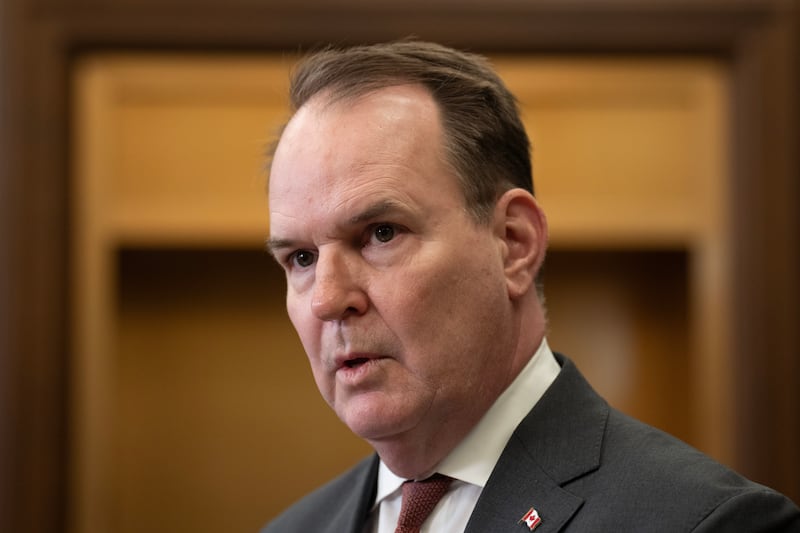
Canada-U.S. Trade Minister Dominic LeBlanc said he is in contact with U.S. Trade Representative Jamieson Greer and that Canada is assessing the latest measures issued by the Trump administration.
“When the U.S. is ready to engage, our government will work in good faith and constructively towards a more secure mutually beneficial trading relationship that fully respects Canadian sovereignty,” LeBlanc said in a social media post Tuesday night.
“Our core focus is on what we can control: building strength at home, diversifying our partnerships abroad, and building Canada strong for all Canadians.”
Hunter Crowther, CTVNews.ca journalist
Some goods Trump will ban
Here is a short list of some of the items Trump says will be excluded from import to the United States as of Sept. 29:
- Whey products including protein concentrates, fluid and modified whey
- Molasses products including invert, and cane molasses
- Non-alcoholic beer
- Malt beer
- Wine and cider
- Liquor including vermouth, brandy, rye, rum, gin, vodka, tequila, liqueurs and cordials
- Motorcycles, including mopeds
The Canadian Press
New products hit with 50% tariffs
Trump’s executive orders also included several products being added to the list of Canadian goods subject to 50 per cent U.S. tariffs.
Starting Sept. 15, newly tariffed items will include:
- Aluminum bars and rods, both alloy and non-alloy
- Bamboo furniture
- Certain paper products
- Desks and lamps
- Golf carts
- Iron and steel columns, tubing
- Mattresses
Hunter Crowther, CTVNews.ca journalist
Tariffs dropped on some Canadian products
As Trump announced sweeping bans and tariffs on scores of Canadian items, the U.S. dropped tariffs on some products.
Some items no longer tariffed include:
- Bed sheets
- Fishing rods
- Portland cement
- Salt and pure sodium chloride
- Sugar
- Toilet paper, towels and napkins
Hunter Crowther, CTVNews.ca journalist
New ban is Trump ‘controlling the headlines’: professor
Jeffrey Bloodworth, a history professor at the U.S.-based Gannon University, says the latest ban on Canadian goods is Trump’s way of “controlling the headlines.”
“We’re not talking about Iran,” he told CTV News Channel on Tuesday. “We’re talking about a trade war, and Trump sees this as helping his political numbers, because it has in the past.”
As for what products are going to be banned in the U.S., Bloodworth said it’s unclear.
“The GSA (U.S. General Services Administration) ban, that seemed like low hanging fruit, which is indicative of an administration that’s shooting from the hip, that doesn’t have a real specific strategy, other than to Saber rattle,” he said.
“This is Donald Trump’s kind of negotiating style: to always be on offence, to always be aggressive.”
Elianna Lev, CTVNews.ca multi-platform writer
Saskatchewan booze ban mentioned by Trump
Trump’s executive orders that banned several Canadian products from the U.S. made a direct reference to Saskatchewan’s levy on U.S. liquor imports.
Saskatchewan’s ban, which went into effect Tuesday, adds a 50 per cent surcharge on American-made alcohol in response to U.S. tariffs on Canadian booze.
Trump’s executive order called the ban an example of Canada’s continued “discriminatory treatment” of U.S. alcoholic beverages.
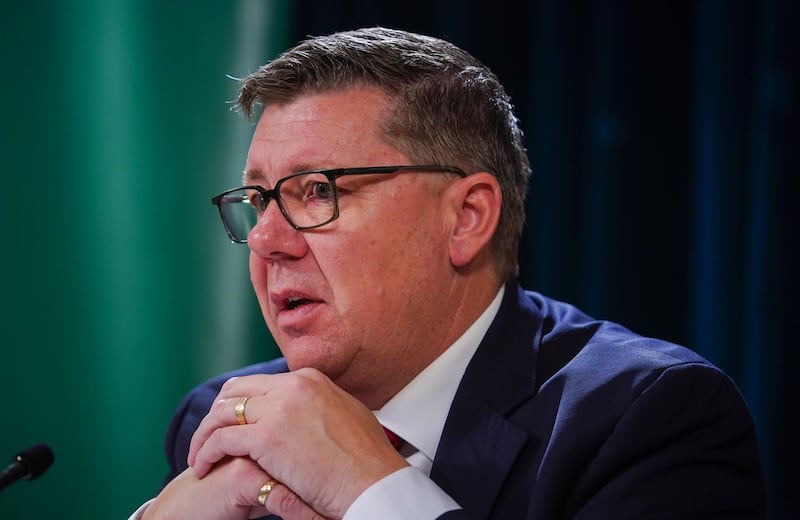
CTV News Regina has reached out to Saskatchewan Premier Scott Moe’s office for a response to the added measures from the United States.
Cole Davenport, CTV News Regina anchor
Read CTV News Regina’s full story here
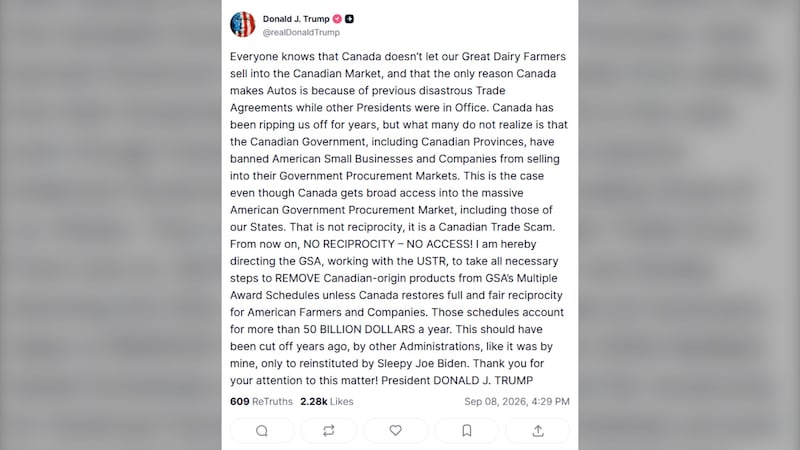
‘NO RECIPROCITY – NO ACCESS!’: Trump on Canadian products
Trump posted a new threat to Canada in a social media post on Tuesday, this one related to procurement rules.
In a post once again targeting the supply management system — about which Trump has complained frequently in the past — the U.S. president also says Canada and its provinces have “banned American Small Businesses and Companies from selling into their Government Procurement Markets.”
Writing “NO RECIPROCITY – NO ACCESS,” Trump says he’s blocking Canada’s access to U.S. contracts by directing the agency responsible for U.S. procurement not to purchase “Canadian-origin products.”
While most jurisdictions typically prioritize domestic procurement, some have gone a step further since the U.S. launched its trade war on Canada.
Last year, the federal government announced an “interim policy on reciprocal procurement.”
Several provinces, including Manitoba, B.C., and Ontario, have also implemented new restrictions on their procurement contracts since the trade conflict began.
Spencer Van Dyk, CTV News writer & producer
Carney warns Canadians of tough times ahead
Prime Minister Mark Carney is warning Canadians that the country’s pivot away from the United States will come at a cost, but that the alternative would be far worse.
In a national video address set to be released on Tuesday, Carney reiterated Canada’s plan to respond to the U.S. trade war, including retaliatory tariffs which kicked in just after midnight.
Carney says the aim is to come out stronger and more resilient so no country can hold Canada hostage.
The Canadian Press
What is Canada targeting?
Canada’s counter-tariffs include a 50 per cent tariff on a variety of American dairy products such as milk and cream, and a 25 per cent tariff on fresh cheese and curd. Canada is also targeting U.S. wood products with 25 per cent tariffs on softwood, including pine, fir and spruce.
Multiple steel and aluminum products are also being hit with a 50 per cent tariff, up from the current 25 per cent rate. They include steel rods, bars and sheets, along with prefabricated items such as bridges, towers, scaffolding, and door and window frames.
Some beauty products and makeup are now subject to 50 per cent tariffs, including perfumes, sunscreen and suntan products, lip and eye makeup, manicure and pedicure preparations, and hair products.
Phil Hahn, CTV News senior producer
Canada, EU to form new alliance: Bloomberg
Canada and the European Union are working to build a new all-encompassing alliance that will include trade, security, supply chains and critical raw materials, Bloomberg reports.
The new partnership will aim to offset the global power politics dominated by the U.S. and China.
Bloomberg reports that European Commission President Ursula von der Leyen is expected to announce the plans at her state of the union address in France, on Sept. 16.
Carney will attend the speech then address European lawmakers the following day.
Kayla Thompson, CTVNews.ca journalist
No U.S. communication with Canada over Bombardier: MacKinnon
Transport Minister Steven MacKinnon says the U.S. government has not communicated with Canada through any official channels about Trump’s threat to block the sale of Bombardier jets in the United States.
Trump made the threat in a social media post on Monday, while pointing to other previous grievances, including Canada waiting to certify certain American-made Gulfstream jets and claiming U.S. banks are not allowed to operate in Canada.
Shortly after Trump’s previous complaints about Canada’s Gulfstream certification, the federal government certified the aircraft, in a decision MacKinnon said Tuesday was “not a political process,” but rather one “designed with safety in mind.”
When asked about Bombardier during an exclusive interview on CTV Power Play with Vassy Kapelos on Tuesday, MacKinnon said the Canadian government hasn’t heard anything from the U.S. administration beyond what the president has posted to social media.
“Bombardier is certified around the world, and it does so with the help of certifying agencies, again, around the world,” MacKinnon also said. “And there is no known process to decertify an airplane.”
Spencer Van Dyk, CTV News writer & producer
B.C. store pivoting to non-American suppliers
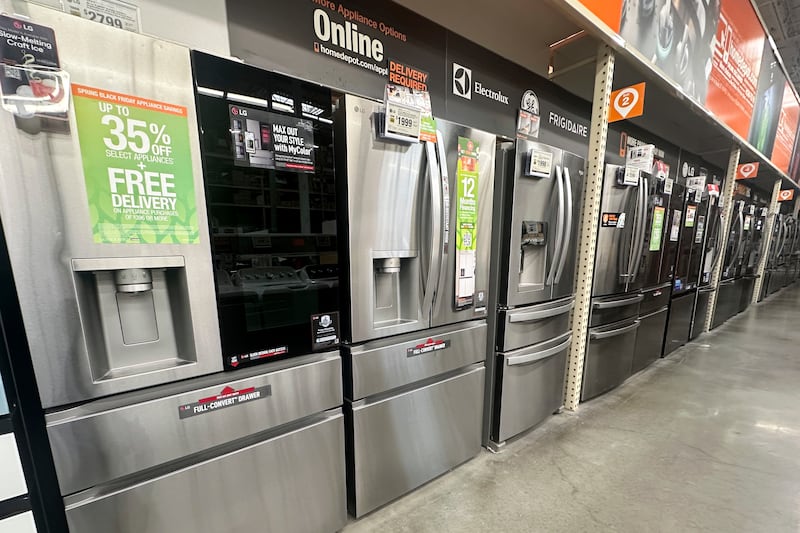
An appliance retailer in B.C. is stocking up on U.S.-made products and searching for alternatives made anywhere but America, as new retaliatory-tariffs that took effect at midnight on Tuesday, threaten to drive up the cost of some major household appliances.
Lazar Ilic, owner of Appliance Outlet, says suppliers have warned that prices on some U.S.-made products could rise by 30 to 50 per cent starting Oct. 1, and he says passing those costs onto his customers isn’t an option.
“We are competing with the big stores already as it is, and one of the things that we cannot do is raise our prices,” Ilic said.
About 20 per cent of his store’s inventory is made up of products that will be affected by the tariffs, he says. To prepare, Ilic has tripled his usual orders of U.S.-made appliances. That should give him about three months of inventory before the extra cost is added. After that, if customers want a tariff-impacted product made in the U.S. they will have to pay more, he said.
In the meantime, Ilic is sourcing fridges and stoves made in Mexico, China and South Korea that offer similar features but without the tariff hit.
Andrew Johnson, CTVNews.ca National Correspondent
Bombardier ‘supports a local workforce’: Kansas senator
In a social media post on Tuesday, U.S. Senator for Kansas Jerry Moran said he’s contacted members of the Trump administration “to make certain the president is aware of the significant contributions of Bombardier to Kansas and the importance of its presence in Wichita.”
“The presence of Bombardier in Wichita supports a local workforce of more than a thousand employees, who contribute their talent and expertise to our nation’s defence and aerospace capabilities,” Moran wrote.
The senator added he will “continue working to see that Bombardier’s manufacturing operations not only remain in Kansas but continue to grow and create American jobs.”
Spencer Van Dyk, CTV News writer & producer
Bombardier shares fall 6.4 per cent
Bombardier (BBDb.TO) shares fell 6.4 per cent in Tuesday morning trading after U.S. President Donald Trump threatened the Canadian private jet maker’s access to the lucrative U.S. market, which accounts for about half of the company’s sales. The stock rebounded in afternoon trading Tuesday.
Trump made the threat in a post on Monday as a trade dispute between Washington and Ottawa escalates, with Canada introducing counter tariffs on $20 billion worth of U.S. goods. The Toronto Stock Exchange, on which Bombardier trades, was closed on Monday.
Reuters
Quebec on Bombardier threats
Quebec Premier Christine Fréchette offered her support to Bombardier after U.S. President Donald Trump threatened Monday to stop the sale of products from the Montreal-based company in the U.S.
Trump said in a social media post that the aircraft aren’t “good enough,” adding if Canada wants to keep selling Bombardier aircraft in the U.S., they must be built there.
Fréchette said in a social media post that she would not respond to provocation with provocation.
Robin Della Corte, CTV News Montreal digital reporter
B.C. to install ‘never the 51st state’ signs at U.S. border
The British Columbia government will install new signs at U.S. border crossings declaring the province is “never the 51st state,” Premier David Eby announced Tuesday.
Eby unveiled the tongue-in-cheek measure while warning of the very real economic consequences of the escalating Canada-U.S. trade war.
“People will lose their jobs and businesses will close on both sides of the border,” the premier said during a news conference in Victoria. “We have to look out for one another. We have to buy Canadian whenever we can.”
Eby said the new signs near U.S. border crossings would declare: “Welcome to B.C., Canada. Strong, proud and never the 51st state. Sorry.”
Todd Coyne, CTV News Vancouver journalist. Read the full story here
Trump claims U.S. banks can’t operate in Canada. That’s not true
Asked about the trade war with Canada last week, U.S. President Donald Trump falsely claimed that U.S. banks are not allowed to do business with its neighbour to the north.
“They have their banks here, Bank of Canada, all of their big banks — big, beautiful banks,” Trump said. “I think they have six or seven major banks here. We don’t have our banks there. You know why? They don’t allow it.”
However, there are currently 15 U.S.-based banks operating out of Canada, either as branches or subsidiaries, according to a spokesperson for the Canadian Bankers Association. Certain restrictions can make it difficult for U.S. banks to compete north of the border, experts say, but they are free to enter the market.
The Associated Press
‘Saskatchewan didn’t ask for this trade fight’: Moe
Saskatchewan Premier Scott Moe says that while counter-tariffs are “necessary” to respond to the “unjustified” tariffs imposed by the United States, the focus should be on getting negotiators back to the table to get “the best deal for Canadians.”
“Saskatchewan didn’t ask for this trade fight, but we still stand up for our people and industries,” he wrote in a post on social media Tuesday. “We’ll keep opening new markets, strengthening trade relationships and getting more Saskatchewan products to the world.”
Spencer Van Dyk, CTV News writer & producer
No formal trade talks with U.S.: LeBlanc
With Canadian counter-tariffs now in effect, Canada-U.S. Trade Minister Dominic LeBlanc’s office has confirmed that discussions between the two countries are still ongoing, though they do not involve trade talks.
“Canadian and American officials have maintained ongoing discussions on a range of issues, although formal trade negotiations are not taking place at this stage,” LeBlanc’s office said on Tuesday.
Kayla Thompson, CTVNews.ca, journalist
Retaliatory tariffs target battleground U.S. states
As Canada’s retaliatory tariffs took effect Tuesday, one expert suggested the measures were intended not only to hit American exporters but also to increase political pressure on Republicans ahead of the U.S. midterm elections.
James Horncastle, a geopolitics professor at Simon Fraser University, said many of the targeted industries are concentrated in states such as Ohio, Pennsylvania and Michigan, where political races are expected to be closely contested on Nov. 3.
“Given that the United States is heading towards midterm elections, many of the states that are impacted by these counter-tariff announcements are ones where the Republicans are either vulnerable, or in ones where they have to make gains,” Horncastle said Tuesday, during an interview with CTV’s Your Morning Vancouver.
If Democrats do take the majority this fall and come into office next year, one U.S. Congressman says dropping the tariffs against Canada will be a priority.
“We have our own interests as members of Congress representing people, to reverse these tariffs,” said Rick Larsen, U.S. Representative for Washington’s Second Congressional District.
Becca Clarkson, CTV News Vancouver journalist
How Albertans can work around counter-tariffs
An Alberta business owner is stocked up and hoping to avoid raising prices while awaiting a resolution to the escalating trade war between Canada and the U.S.
Teresa Spinelli, president of the Italian Centre Shop, said her company imports mainly from Europe but won’t escape unscathed.
“Some of my favourite cheese is actually from the U.S. So that’s going to go up by 25 per cent for sure,” she said. “The only other thing that I think is going to really affect us is with the packaging.”
Spinelli explained that packaging like bottles, jars and cans often comes from the U.S. and has the potential to raise prices even for locally grown or made goods.
“Even though there are no tariffs on the beans because they’re a Canadian product, the can the beans are in is going to go up for sure,” she added. “That gets passed on to us and we unfortunately have to pass that on to our customers.”
Brittany Ekelund, CTVNewsEdmonton.ca journalist
Colorado governor says U.S. and Canada need a ‘reset’
Colorado Gov. Jared Polis said Canada and the U.S. need to “reset” their relationship because the ongoing trade war is hurting people in both countries.
Speaking to CTV News Channel on Tuesday, Polis said the rhetoric being used by Trump and his administration doesn’t represent most Americans.
“America does not view Canada as the 51st state, any more than Canada views United States as the 11th or the 14th province or territory,” he said. ”Unfortunately, in our country, that guy’s our president, and that’s kind of the problem. This is not the way Americans deal. I think Canadians know it.”
He added that he hopes the U.S. will have a new president in two years, and “hopefully new Congress in a few months.”
“It’s my fondest hope that the pendulum will swing the other way, and people will see the horrors of how ridiculous and painful it is, for no reason, to have these economic fights and disagreements, and we could work towards establishing a new framework, frequent closer collaboration than we’ve ever had before,” he said.
Elianna Lev, multi-platform writer, CTVNews.ca
‘It was a pretty good deal’: former U.S. trade rep
A former U.S. trade representative who worked on the file with Trump during his first term says she’d like to see negotiators return to the table.
“I think it’s hard at this moment to see an off-ramp very close by,” Kate Kalutkiewicz told CTV News Channel on Tuesday. “I hope inevitably we get there because, of course, inevitably, as two economies that are almost completely interdependent on one another, it’s hard to watch this unfolding. ”
Kalutkiewicz voiced her approval of Trump’s negotiating skills, explaining that Trump’s administration has threatened tariffs on “on almost every country in the world.” However, they’ve also negotiated agreements “with a number of other countries to bring those tariff rates down.”
The former representative says from her perspective, the trade deal turned down by Canada seemed to be “meaningful.”
“(As) someone who negotiated for the United States for two decades, what I could see is that there were people unhappy on both sides and there were people happy on both sides, and that tells me that it was a pretty good deal.”
Kayla Thompson, CTVNews.ca, journalist
Quebec announces $1.5B buy local push
The Quebec government has announced a series of measures to promote buying locally in response to the escalating trade war between Canada and the United States.
Premier Christine Fréchette says the measures will inject about $1.5 billion into the Quebec economy in the next four months.
Ministers adopted an order-in-council requiring the government to take steps to favour local businesses when it comes to awarding contracts, such as reserving public bids for companies with a place of business in Quebec and Canada.
The Canadian Press
‘Be prepared’: UNIFOR president on trade war length
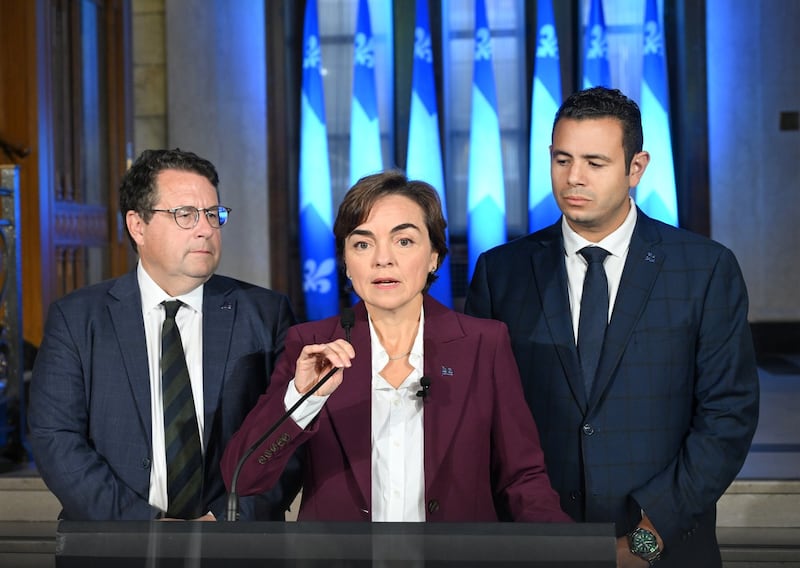
The president of Canada’s largest private sector union is throwing her support behind Ottawa’s retaliatory tariffs against the U.S.
“I believe we’ve done everything possible as a country to get this resolved,” UNIFOR president Lana Payne told CTV News Channel on Tuesday. “And now we have to take the action we’re taking in order to bring things to a head.”
Payne, who is a member of the federal government’s Advisory Committee on Canada-U.S. Economic Relations, says Ottawa needs to ensure tariffs have only a minimal impact on Canadian workers, who are “bearing the brunt of this trade war.”
“And if the U.S. hits back, then we have to be prepared to put even more on the table,” Payne added. “We have to fight back and push back and hold the line and also be prepared that we might be in this place until the end of Trump’s term.”
Daniel Otis, CTVNews.ca journalist
Counter-tariffs could lead to further retaliation: lawyer
Canada’s retaliatory tariffs against the U.S. may be more symbolic than impactful, according to an international trade lawyer.
“I’m not sure how much this is going to (impact) the U.S.” KPMG Law’s Robert Glasgow told CTV News Channel on Tuesday. “This is, in my mind, very much a symbol for the government to be holding up.”
While Canadian counter-tariffs are meant to target crucial swing states like Michigan and Maine ahead of the U.S. midterm elections in November, Glasgow says they could also lead to further escalation by the Trump administration.
“Part of my fear here is that we end up being caught in a cycle where Canada takes steps that are big enough to be irritating to the United States, but not big enough to have a huge major impact,” Glasgow said.
“Then we end up with a U.S. government that’s annoyed, but not hamstrung. And so to that extent, the Trump administration may come back, as they’ve already indicated they may, with measures against other Canadian goods.”
Daniel Otis, CTVNews.ca journalist
Semi-trailer tariffs could hurt Canadians: COO
A Canadian company wants Ottawa to rethink its 25 per cent retaliatory tariff on U.S.-made semi-trailers.
Mack Keay is the chief operating officer of Ocean Trailer, Western Canada’s largest semi-trailer dealer and rental company.
“The biggest reason that we feel that semi-trailers are the wrong thing to tariff is because everything that you see around you, and everything on the grocery store shelves, came in a trailer,” Keay told CTV News Channel on Tuesday. “That freight cost is built into every item, so increasing that freight cost increases inflation for every Canadian.”
Keay says they have roughly 600 trailers on order from U.S. companies right now, worth approximately $45 million. With those orders now in jeopardy and few domestic alternatives, Keay says trucking companies will likely end up keeping older equipment on Canadian roads.
“There are a few Canadian semi-trailer manufacturers, but they build about one-tenth of what we would import in a year,” Keay said. “The average age of trucking fleets in Canada is older than it has ever been. Old equipment wears out. The more older equipment we have on Canadian roads, the less safe they are.”
Daniel Otis, CTVNews.ca journalist
Poilievre calls for transparency on rejected trade deal
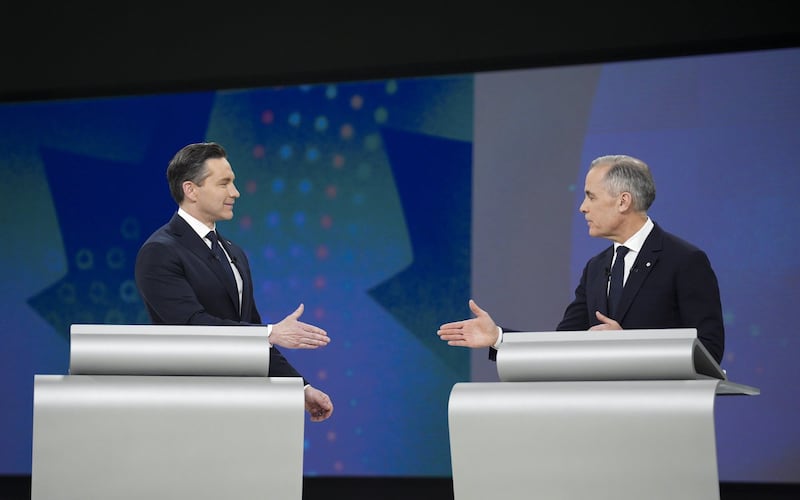
Federal Conservative Party Leader Pierre Poilievre is asking Prime Minister Mark Carney to disclose details about the rejected trade deal between Canada and the U.S.
Speaking to reporters in Regina on Monday, Poilievre argued that Canadians have a right to know exactly what was offered.
“The prime minister obviously has an analysis on how his counter-tariffs will increase inflation and costs for small business,” Poilievre said.
“He has admitted that tariffs will be a tax on consumers, we just want him to release that analysis so that single moms, small business owners, seniors, know what they’re going to have to pay.”
Daniel Reech, CTV News Regina, journalist
Saskatchewan tax on U.S. liquor kicks in
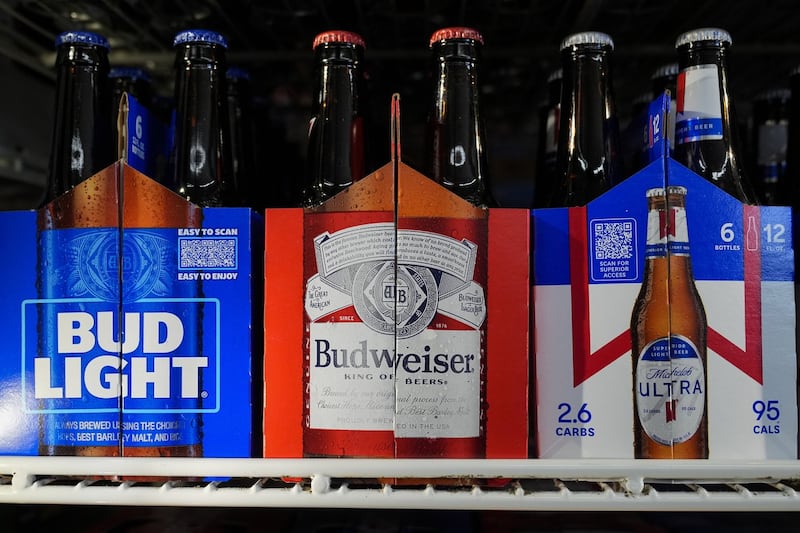
Saskatchewan’s government is set to slap its retaliatory tax on American booze today amid the ongoing Canada-U.S. trade war.
Saskatchewan Premier Scott Moe announced last month his province would implement the 50 per cent fee on American alcohol on the same day Canada’s reciprocal tariffs take effect.
Any U.S.-produced alcohol purchased through the Saskatchewan Liquor and Gaming Authority’s online ordering system, used by retailers across the province, is being hit by the levy.
Unlike other Canadian provinces, Saskatchewan and Alberta do not have a ban on American alcohol products.
The Canadian Press
Expect holiday season price increases
Depending on the product, Canadian consumers should expect to see prices increase due to tariffs and counter-tariffs within the next six to 18 weeks, according to Kyle Peacock, principal of Peacock Tariff Consulting.
“It really depends on the supply chain,” Peacock told CTV News Channel on Tuesday. “You’ll probably start to see this in the holiday season. So anyone that is looking to do holiday purchases, I would look at purchasing early to avoid these tariff increases.”
Peacock describes the list of tariffed items as a “living document” that is subject to change.
“Business owners out there, just be aware,” Peacock advised. “Just because you weren’t on the list today doesn’t mean you won’t be on the list in the future, or just because you’re on the list today doesn’t mean you won’t be off in the future.”
Daniel Otis, CTVNews.ca journalist
Trump map ‘wholly inappropriate’: Iceland
Iceland’s foreign ministry said Tuesday it had summoned the U.S. ambassador after U.S. President Donald Trump posted a map that seemingly showed the island as part of the United States.
“Minister for Foreign Affairs, Thorgerdur Katrin Gunnarsdottir, summoned the U.S. Ambassador yesterday to convey a clear message that the image was wholly inappropriate,” the ministry said in a statement to AFP.
Trump on Monday posted an image to social media with a map of North America in which Canada, Greenland, Mexico, much of central America and the Caribbean, as well as Iceland, were coloured in with the U.S. flag.
AFP
U.S. eyes trade deals with Latin America: Rubio
The United States was hoping to wrap up “good, solid” trade deals in the foreseeable future with Colombia, Peru and Ecuador, U.S. Secretary of State Marco Rubio said on Tuesday ahead of planned visits to the three countries this week.
Reuters
Canada’s ‘Steel City’ braces for tariff impacts
In the wake of 50 per cent U.S. tariffs and Canadian counter-tariffs, workers in Canada’s “Steel City” are bracing for layoffs and more uncertainty.
Hamilton, Ont. produced roughly half of all of Canada’s steel at one point and continues to produce millions of tonnes of the material each year.
“I think there’s a sense that people really are uncertain about the future,” Andrea Horwath, mayor of Hamilton, told CTV News on Monday. “They don’t know how bad it’s going to get. I think what they do know is that if it gets bad, the pain is going to be significant.”
To highlight the city’s industrial and steel-producing roots, the Art Gallery of Hamilton is currently hosting a “Made in Hamilton” exhibition, which features locally made automotives, appliances, hardware and pantry items.
“I think the exhibition tells a really unique story about what we’re going through now with the U.S.,” exhibition curator Tor Lukasik-Foss told CTV News. “A lot of what’s here represents the full potential of what a partnership between two countries looks and feels like.”
Kamil Karamali, CTV National News Weekend Correspondent
Former minister calls war ‘mutually detrimental’
In a new opinion piece, former Conservative cabinet minister James Moore laments the “mutually detrimental” trade war between the U.S. and Canada.
“The North American economic alliance has been the greatest trading partnership and wealth-building alignment in human history,” Moore writes.
“That U.S. President Donald Trump chose to pick a fight with Canada is a colossal step backwards for economic prosperity, a shattering of decades of accumulated trust and a threat to our security co-operation going forward.”
Moore, who served in prime minister Stephen Harper’s cabinet, argues that Trump’s trade war with Canada is likely a “distraction tactic” from the Iran conflict and the rising cost of living.
“One thing has become clear, however, and that is that these tariffs are both bad policy and bad politics and will ultimately fail economically and electorally for those who advocate and implement them with any vigour,” Moore says.
James Moore, CTV News Contributor
Sapporo shifting production to U.S.
With 50 per cent tariffs targeting Canadian beer exports to the U.S., Japan’s Sapporo Breweries Ltd. has announced that it will be shifting some production from Canada to the U.S.
In Canada, Sapporo beer is made at the Sleeman Breweries facility in Guelph, Ont., which Sapporo acquired in 2006.According to several media reports, Sapporo plans to move production of non-alcoholic beer destined for the U.S. market to an American facility in the first half of 2027 in order to avoid tariffs. The Japanese beer giant says it is also considering opening a U.S. brewery on the West Coast.
Daniel Otis, CTVNews.ca journalist
Trump’s approval ratings an advantage for Canada
The ongoing trade war between once-great friends is a classic David vs. Goliath matchup from the outset.
The U.S. economy is 13 times larger and Canada sends roughly 70 per cent of its exports south of the border. These numbers alone make it an uphill climb for Ottawa, depending on how long this battle wages.
However, the current economic and political climate gives Ottawa some momentum. Canada’s economy grew at a 3.2 per cent annualized rate in the second quarter, more than twice the 1.5 per cent pace in the United States.
Moreover, President Trump’s approval ratings continue to fall, giving Carney massive space to engage aggressively against the White House. Around 60 per cent of Americans disapprove of Trump overall.
Among independents, which will determine if the Republican Party maintains control of Congress, more than 70 per cent disapprove of the president’s agenda.
These numbers will overwhelmingly shape the U.S. midterm elections which are exactly eight weeks away. The White House has no room for error and lawmakers are in jeopardy of losing their jobs everyday that this battle continues.
Eric Ham, CTV News political analyst in Washington
Trump targets Canada on Truth Social
U.S. President Donald Trump made a flurry of social media posts over the Labour Day long weekend targeting Canada. They included a Truth Social post on Monday showing a map covered entirely by a U.S. flag and the words “United States of America.” In the image, the U.S. map blankets Canada, Mexico, the Caribbean, Central America, Iceland and Greenland.
Trump also turned to Truth Social on Monday to declare, “NO MORE SELLING BOMBARDIER IN THE UNITED STATES!”
Elianna Lev, CTVNews.ca journalist

