COLEMAN, P.E.I. – An Island trailer manufacturer is shifting its focus to Canadian customers as U.S. tariffs have disrupted its plans for growth.
Trout River Industries has struggled since the trade war began, says president Stephen Kennaugh. It has absorbed nearly $1 million in tariff costs, while sales have fallen on both sides of the border.
“We’re survivors. So, we’re going to survive anyway,” Kennaugh said. “We have 106 people here and they all have paycheques, they all have mortgages and they all have groceries. We’re responsible for that.”
Cost-saving measures
The U.S. once accounted for 40 per cent of Trout River’s sales, with the company pushing for more. Now, every trailer it sells south of the border faces a 25 per cent tariff. The company bears half that cost, while American dealerships and customers cover the rest. Uncertainty is also making it difficult to plan with partners.
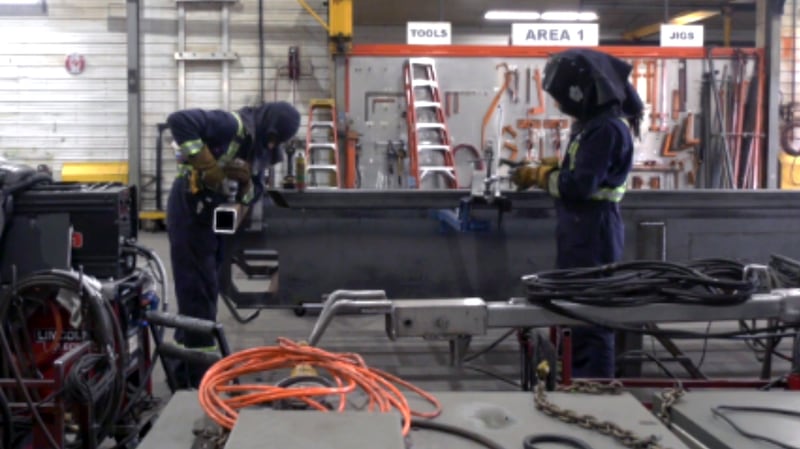
The manufacturer builds large commercial trailers that use a conveyor belt to unload cargo, rather than tipping up like a dump trailer. They’re particularly popular in the paving industry, though the trailers are also used in agriculture.
Trout River is one of 17 Island businesses and organizations awarded non-repayable funding from Ottawa this month through the Atlantic Canada Opportunities Agency. They’re sharing more than $6.9 million to help them respond to U.S. tariffs.
A grant of nearly $988,000 will help Trout River pay for a newly completed inventory building, which will allow workers to prepare kits containing all the parts needed for each trailer, so everything arrives together when production begins. Better inventory control will also allow the company to keep less stock on hand.
“The efficiency and the cost-saving is going to help us to compete,” Kennaugh said.
‘Can’t count on the United States’
Across the industry, the trade war has taught manufacturers some hard lessons, says Ron Marcolin, the divisional vice-president for New Brunswick and P.E.I. with Canadian Manufacturers and Exporters.
“We can’t count on the United States going forward, exclusively. And some companies did that for a number of years,” he said. “Diversification is key.”
That rings true on Trout River’s factory floor. Kennaugh still wants to sell as many trailers as possible in the U.S., but hopes growth at home will make those exports a smaller share of the business.
In Western Canada, the company is targeting the woodchip and fuel industries with a new trailer design. It’s also exploring tougher models for mines in northern Ontario.
But businesses in the region are also looking across the Atlantic Ocean for opportunity. Marcolin says manufacturers are “jumping at the chance” to export to Europe.
“We do have a strategic advantage on this coast,” he said.
Citing relatively few language barriers, straightforward currency exchanges and Canada’s reputation for quality and timely delivery, Marcolin is optimistic those efforts will be successful.