


The outcome of the upcoming U.S. midterm elections could heavily influence the trajectory of the tariff war and Donald Trump’s ongoing behaviour towards Canada, one expert says.
Should the U.S. Democratic party do well in the elections, it would mean more “pressure” on Trump regarding the tariff war, Matt Duss, executive vice-president for the U.S. Center for International Policy, told CTV’s Your Morning on Tuesday.
“I would say that this trade war that the president has declared on China and many other partners and allies around the world is very much a part of these midterms,” he said.
Voting day is set to take place on Nov. 3 and the outcome could shift the balance of power in the U.S. House of Representatives and Senate.
Duss, a former foreign policy adviser to U.S. Sen. Bernie Sanders, predicts the Democrats, who currently hold a minority in both, could come out with a majority in both chambers.
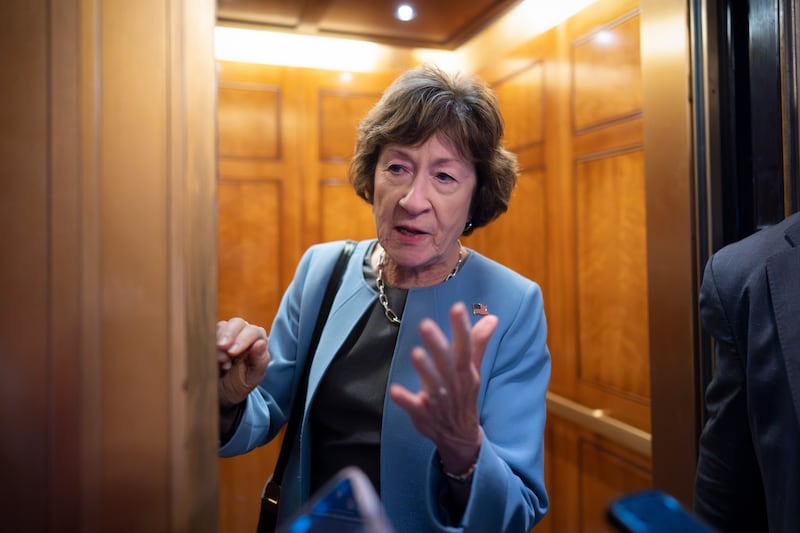
Trump’s recent concession to drop tariffs some Canadian goods, at the behest of Maine’s Republican Sen. Susan Collins, may change little for voters, he added.
“These views are pretty much baked at this point,” he said. “People have been paying very high costs for basic goods, for gas ... the question of cost of living, cost of housing, cost of transportation, all of these are very much on American voters’ minds.”
Larry Haas, who was a senior White House official under former U.S. president Bill Clinton’s administration, told CTV News Channel on Tuesday that the dominant factor shaping the midterms is Trump’s low approval rating.
“That is always the most important thing, the standing of the president going into a midterm election,” he said.
Other factors include affordability, trade and the Iran war, which he said could all result in a “catastrophe” for the Republicans at the midterms.
Frank McKenna, former Canadian ambassador to the U.S., said Canada is at an advantage now a week from the midterm elections.
“Canada has more of the cards and we need to compromise in order to make a deal,” McKenna said in an interview with CTV News Channel on Tuesday. “... I think it’s fair to say Trump needs a deal and he needs one fairly urgently in terms of the midterm elections.”
A Democrat win
The Democrats are “almost certainly” taking the House in the elections and “now very possibly” the Senate, Duss said.
Even if the Democrats were to take control of one of the chambers, it would give them “control of the legislative agenda (and) create opportunities for putting pressure on Trump and highlighting costs of this trade war,” he added.
They have the power to “call hearings, call in administration officials to ask them to explain themselves,” he added.
They can also pass or not pass budgets for different initiatives.
Gordon Giffin, former U.S. ambassador to Canada, said early vote turnout is “overwhelming” for an off-year election.
With Trump having only two years left in his term, he said the “governing dynamics” of the U.S. will change dramatically next week after the midterm elections.
“A substantial number of Americans, millions of Americans, will express dissatisfaction with the policies of this administration,” Giffin said in an interview with CTV News Channel on Tuesday. “That will affect things going forward. The change in the Senate, the change in the House will affect things going forward.”
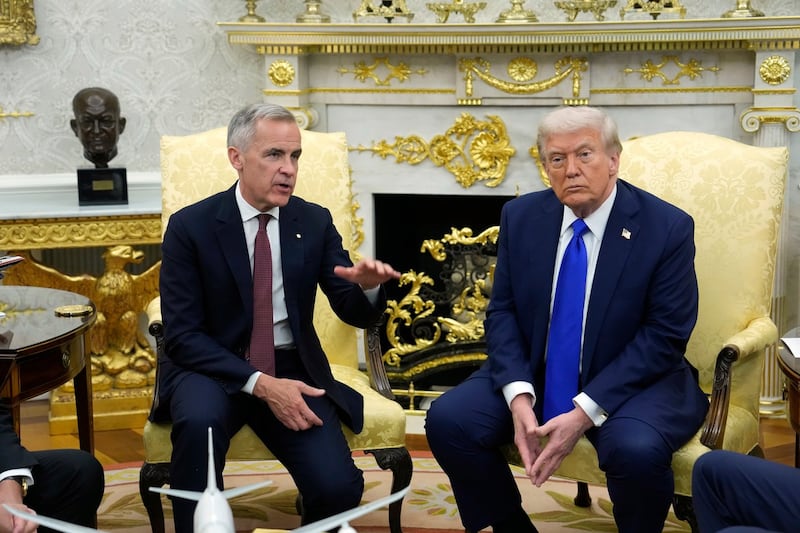
Trump is ‘not a normal president’
The question, Duss says, is how a potential Democrat win would change Trump’s behaviour.
“Trump is not a normal president,” he said, and has shown himself willing to “blow through even existing constraints.”
“He has shown in the past that when he is challenged, he overreacts. He sees all of politics as a kind of dominance display,” he added.
Duss opined that should the Republicans lose the midterms, Trump’s behaviour could worsen.
Earlier in October, U.S. Ambassador to Canada Pete Hoekstra accused Canadian politicians of potentially interfering in the midterm elections.
It’s nothing new, according to Duss. “This is a claim that Donald Trump is always making,” he said, adding that Americans “don’t buy it.”
“They see what we’re all seeing, which is that Republicans are in for a very, very bad day on election day and Donald Trump is trying to blame anyone but himself.”
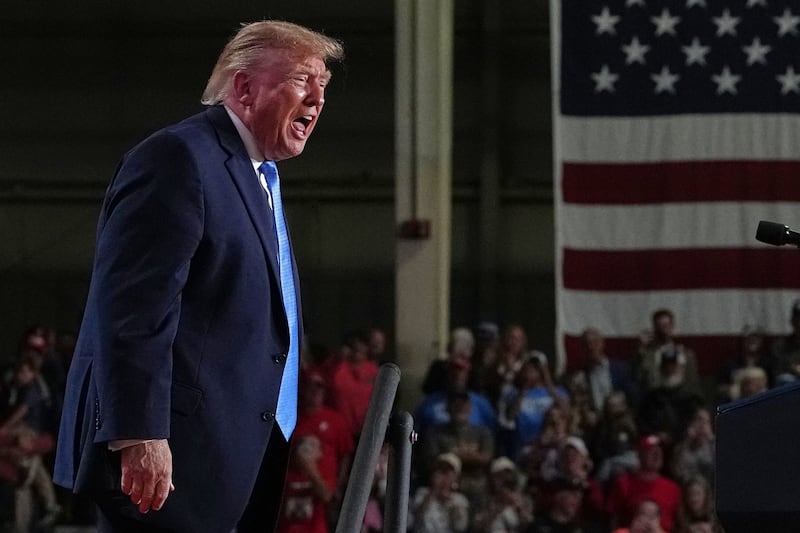
‘A bad episode of South Park’
Former Canada’s consul general in New York, Tom Clark told CTV Question Period host Vassy Kapelos in an interview Sunday the allegation seemed like “a bad episode of South Park,” adding that “they’re looking for somebody to blame when they lose.”
According to Clark, there is some danger in it for Canada.
“I think that they’re setting us up to be the bad guys if (they) lose, and its probably part of the pressure they’re putting on us on the negotiations,” he said. “First of all, for the side deal we’re all trying to achieve, and secondly for the much larger USMCA (United States-Mexico-Canada Agreement).”
Clark went on to say that people are sure that the House is “awfully close” to flipping from Republican to Democrat.
“It’s making Republicans very nervous,” he said.
The former consul general described talking to the Americans about tariffs as “pushing against an open door.”
“Look at it this way: tariffs for Americans are like the GST, except nobody tells you, nobody has it listed on the receipt that it’s a GST,” Clark said. “So, they know, and it’s not just the cost; it’s the supply chain side.”
He added that this was the first time the Trump administration had finally admitted that the tariffs were hurting Americans and their political chances.
U.S. government needs the revenue from tariffs: strategist
During the same interview, Kapelos asked trade strategist Scotty Greenwood about the behind-the-scenes discussions between Canadian and U.S. officials.
“What I would caution everybody about is, while tariffs are unpopular in the United States and affordability is the coin of the realm, the other reality is the revenue that the U.S. government is receiving from tariffs, another tax on Americans, if you will, is something that the government really needs,” Greenwood explained.
“Hopefully, you’ll see a rational agreement between Canada, United States, and Mexico in the coming months. But it’s not a foregone conclusion that it’ll happen all because of the election outcome next week.”
Clark agreed with Greenwood, saying the U.S. Congress was going to be “paralyzed” for the next two years, where the Democrats are going to have to figure out who they are after the midterms.
“America’s got to decide what it wants to be, where its place in the world is,” he said.
With files from CTV News’ Christl Dabu

