


OTTAWA — While Canada and the U.S. remain embroiled in an extended trade war, U.S. President Donald Trump suffered a huge domestic blow Tuesday, as the Democrats swept the midterm elections, taking control of both the Senate and the House of Representatives.
The vote saw several long-held Republican states flip to the Democrats in a major rebuke of the president and his policies.
Trump does, however, still hold veto power, and has threatened to use it.
Trump posted several times to social media late Tuesday and into Wednesday morning about the results. In one post, he pointed to that veto power, with what appears to be an AI-generated image of a MAGA-red hat and the text substituted to read “veto” in capital letters.
He also posted that had his name been the one on the ballot, it would have been a “landslide” victory for Republicans.
Trade deal still unreached
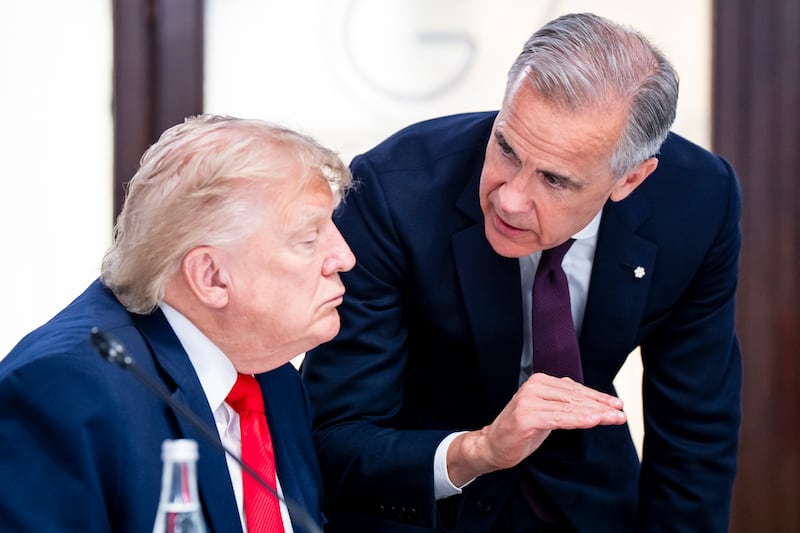
Despite sources telling CTV News last week that trade talks between Canada and the U.S. were gaining momentum, and that a deal before the midterms was not impossible, the two sides are still without an agreement.
Following recent conversations, however, both Prime Minister Mark Carney and Trump have publicly declared progress in talks.
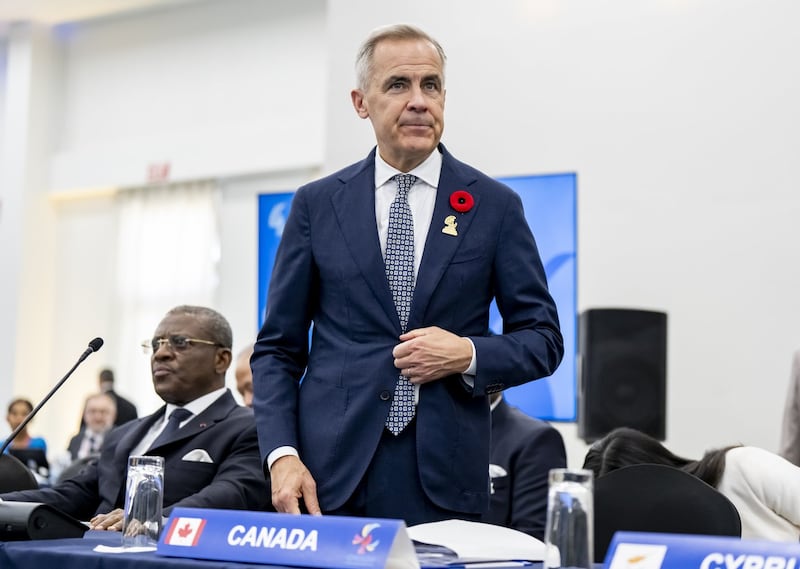
Speaking to reporters at the Commonwealth Heads of Government Meeting in Antigua and Barbuda on Tuesday, Carney said talks have intensified and some of Canada’s “red lines” have been taken off the table, including language, culture and Canada’s ability to negotiate trade deals with other markets.
“They’re asking less and they’re offering more, but we’re not quite there,” the prime minister added.
But, it’s unclear how the results from Tuesday’s midterms could affect ongoing negotiations.
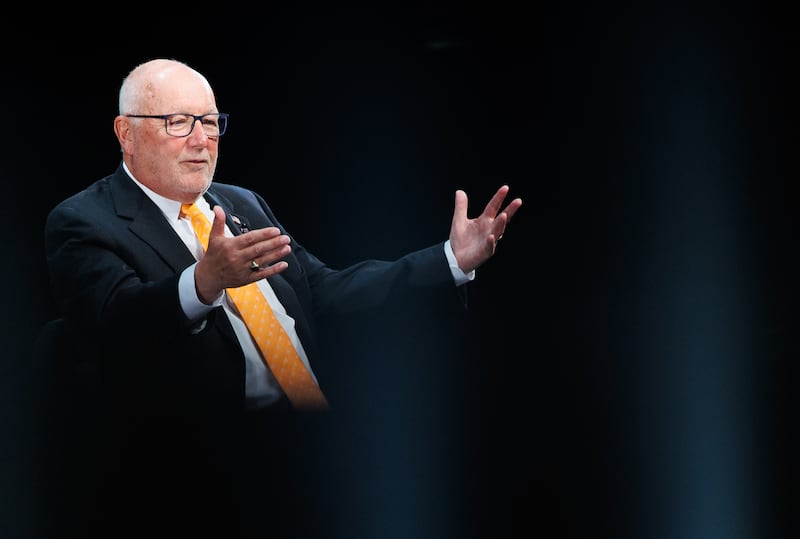
Three sources told CTV News last week that U.S. Ambassador to Canada Pete Hoekstra told a closed-door meeting Ottawa could be blamed if key races in the midterms go against Trump’s Republican Party.
A U.S. Embassy spokesperson said in a statement to CTV News at the time that the “reported comments are grossly taken out of context from a broader discussion,” but declined to share the details of that broader context.
The sources said Hoekstra expressly mentioned races in Michigan and Maine, where the Republicans needed to win if they hoped to hold on to the U.S. Senate.
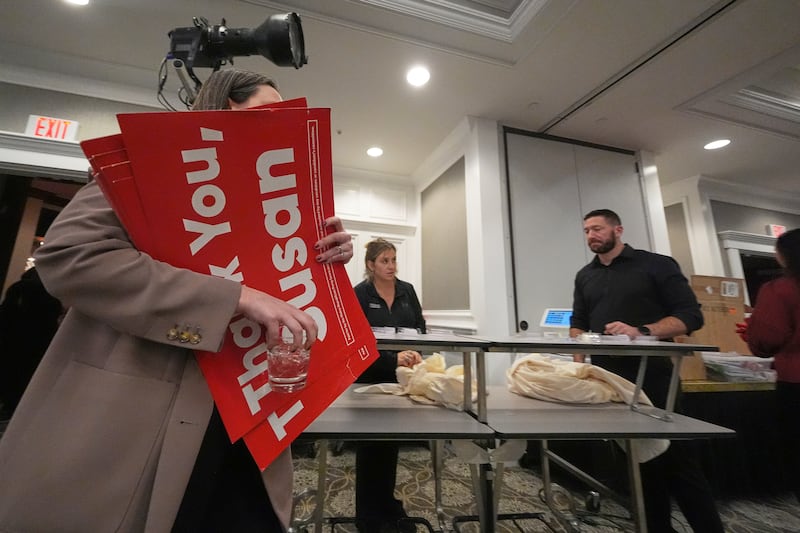
On Tuesday in Maine, where Republican Maine Sen. Susan Collins has been in office since 1997, the state flipped for the Democrats. In Michigan, voters also elected a Democrat to the Senate.
Former Michigan governor and U.S. ambassador to Canada James Blanchard, meanwhile, said a big victory for the Democrats would be “good for Canada-U.S. relations.”
“Earlier this year, (Congress) actually passed a resolution condemning the tariffs on Canada,” Blanchard said in an interview with CTV News Channel on Tuesday. “And it was a bipartisan vote, but only a small number of Republicans at that moment were willing to risk the wrath of Donald Trump.”
A majority-Democrat Congress does not necessarily mean scrapping tariffs entirely, however. As former U.S. diplomat to Canada and trade strategist Scotty Greenwood told CTV Question Period last week, removing the tariffs would cut back on the revenue the U.S. government is bringing in, while the country’s debt and deficit are historically high.
Could the results affect Trump’s tariff position?
The economic impact of Trump’s trade policies — specifically when it comes to Canada — became a top midterm issue with American voters in several states.
Less than two weeks out from the vote, Trump made a wide-ranging shuffle to his tariff regime, swapping out some levies in favour of others after now-outgoing Republican Maine Sen. Collins said she had secured exemptions on a variety of Canadian products.
Collins requested tariff relief during discussions with U.S. Trade Representative Jamieson Greer and U.S. Commerce Secretary Howard Lutnick — both of whom have been involved in negotiations with Canada — and senior Trump administration officials, she said.
Speaking to CTV News late Tuesday after the Democrats took control of the House of Representatives, The Atlantic’s David Frum told host Vassy Kapelos that Republicans need to rethink the trade war on Canada.
“I think the message to a lot of other Republicans is this trade war is madness,” Frum said. “This trade war cost you South Carolina. It may cost you Mississippi. It certainly has cost you Texas.”
“It’s time to call this war off,” he added. “You lost. Don’t do it. It was stupid to start with.”
Frum also said Trump “will want revenge,” and predicted the president could act impulsively in response to his party’s poor midterm results.
‘Our focus hasn’t changed’: LeBlanc
Speaking to reporters on Parliament Hill Wednesday morning, Canada-U.S. Trade Minister Dominic LeBlanc said Canada’s “focus hasn’t changed” following the results of the midterm elections.
He said the current Congress remains in place until the new one is sworn in, in January, and that in the meantime he’ll continue to work with U.S. negotiators toward a trade deal.
“It’s not particularly constructive for Canadians to interpret results in a foreign country’s election, (and) we’re not going to do that,” LeBlanc said, when asked whether the election results could push Trump to rethink his trade policies, specifically when it comes to tariffs.
“It’s not up for Canadians to try and read into why particular American voters went in a particular direction,” he added. “Our job is to focus on what we can control, and that’s to work with the people that Americans have elected.”
Feds to table budget Thursday
Some fallout from the midterm results in the immediate term will be the federal government’s budget, only the second under Carney.
While the prime minister was out of the country during the midterms — looking to boost trade and attract investment at the Commonwealth Heads of Government Meeting in Antigua and Barbuda — he’ll be back in Ottawa just in time for the budget.
Carney during last year’s federal election presented himself to voters as the best person to deal with Trump, and in the 18 months since has focused his economic and international policies around building Canada and diversifying trade away from the United States.
Thursday’s budget, titled “Masters of our Destiny,” will be aimed at just that, according to the federal government, which is pitching the document as being deliberate in timing after the midterms, and focused on building Canada up to stand on its own.
With files from CTV News’ Vassy Kapelos and Stephanie Ha

