OTTAWA – Canada’s top trade negotiators made the case behind closed doors Thursday for the government to seize the opportunity to strike a trade deal with The White House in the near term and not risk the economic pain of waiting out the final two years of the Trump administration.
That message was delivered to the federal government’s advisory committee on Canada-U.S. Economic Relations, according to four sources familiar with the discussion.
While officials dispelled the notion that the best strategy was to wait out Donald Trump’s tenure, the sources also said there was no desire to accept a deal at any cost. Instead, Prime Minister Mark Carney’s closest advisers and officials made the case that tariff-affected businesses and sectors do not have an endless runway and for some, time is running short.
The message was delivered by Canada-U.S. Trade Minister Dominic LeBlanc, Chief Trade Negotiator Janice Charette, Canadian Ambassador to the U.S. Mark Wiseman, and Privy Council Clerk Michael Sabia, the sources said.
It was the committee’s first meeting since the midterm elections that delivered a sharp rebuke of U.S. President Donald Trump.
The sources also said that while those election results have in some ways tilted the playing field in Canada’s favour, the vote was not significant enough to limit Trump’s tariff powers. The Canadian officials noted that even with a Democrat-controlled Congress, the U.S. president can still veto any bills sent to the White House and Canada does not believe there are enough votes in the Senate to overturn that veto with a supermajority.
Three of the sources also said that their takeaway from the discussion is that Canada is lukewarm on the prospect of striking an accord with Trump. Though the hope is to do so before Jan. 1 when the president has already threatened to further hike tariffs on vehicles, auto parts, and steel.
That message was echoed by committee member Erin O’Toole in an interview with Vassy Kapelos on CTV’s Power Play Thursday.
“We have to be realistic that the president will retain a veto,” O’Toole said. “So, even if a very positively inclined Congress starts removing presidential authority with respect to tariffs, the president could sort of dig in and fight this.”
“There’s still a ways to go,” he said. “The Americans know we’re not going to take any deal for the sake of the deal.”
The sources said work continues toward reaching an “interim deal” to address Section 232 tariffs on autos, steel, aluminum, and lumber as well as the Section 338 tariffs that are targeted at specific smaller industries and causing a lot of economic pain for small and medium sized businesses.
Trump and Carney have both publicly acknowledged progress in the talks, however, the officials told the meetings that sticking points remain in multiple areas, according to the sources. Two sources said the tariffs on autos are a key point of tension, but other sources said the negotiations are not yet resolved regarding many other sectors as well.
Three of the sources also said Charette warned the meeting attendees to be ready for more turbulence, and she explicitly noted the many powers that Trump still holds to ratchet up tariffs and broaden their application.
As CTV News previously reported, trade talks between Canada and the U.S. ramped up in October ahead of the U.S. midterms after falling apart in August.
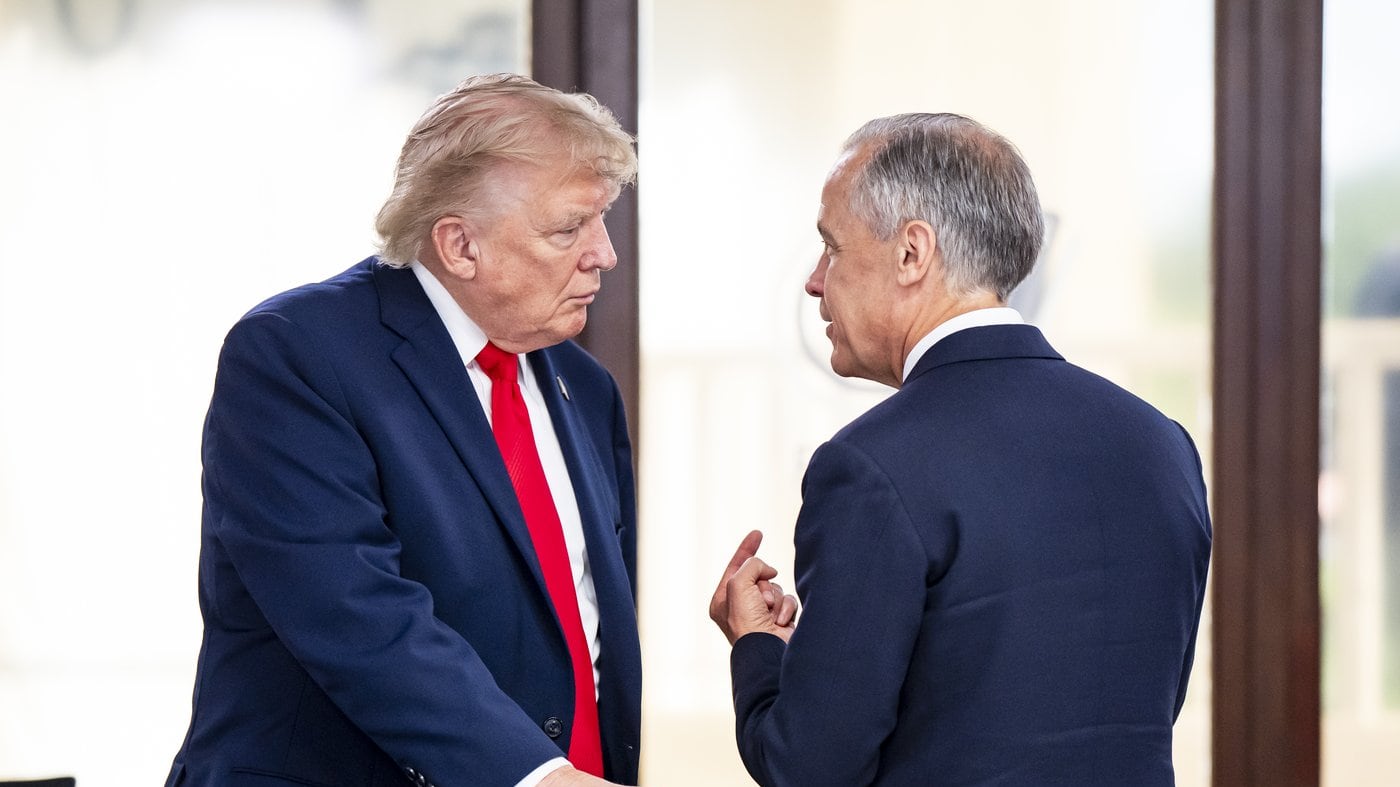
The prime minister and U.S. president met on Wednesday on the sidelines of the APEC Summit in Shenzen, China. Speaking virtually to the Dealbook summit from China later in the day, Carney reiterated Canada is willing to sign a deal that would benefit both countries but said “we’re not there yet.”
Auto tariffs were a key reason why talks to reach a deal in August failed. At the time, Carney said American negotiators were unwilling to lower the Section 232 tariffs on medium- and heavy-duty trucks. In sum, Carney told reporters in August that the proposals from the Americans on auto tariffs included “a series of terms that would have made the production more uneconomic over time.”
Two sources told CTV News on Thursday that neither the auto industry, nor the sectors affected by the Section 338 tariffs, can afford to wait two more years before meaningful tariff relief.

