


OTTAWA — OTTAWA - The Bank of Canada raised its policy interest rate by 25 basis points to 2.5 per cent. It’s the first hike since July 2023. The central bank wants to control inflation by reducing the risk that high fuel prices could spill over and seep into the overall economy.
In its October Monetary Policy Report, the BOC said the rise in energy prices and uncertainty surrounding Canada’s trade relationship with the United States are the two biggest risks to increasing costs of living.
In its report, the BOC said that high energy costs have not yet spread broadly to other prices, but “cost pressures are building and that businesses anticipate passing on more of their increased costs to customers.”
Inflation is currently at 3.1 per cent.
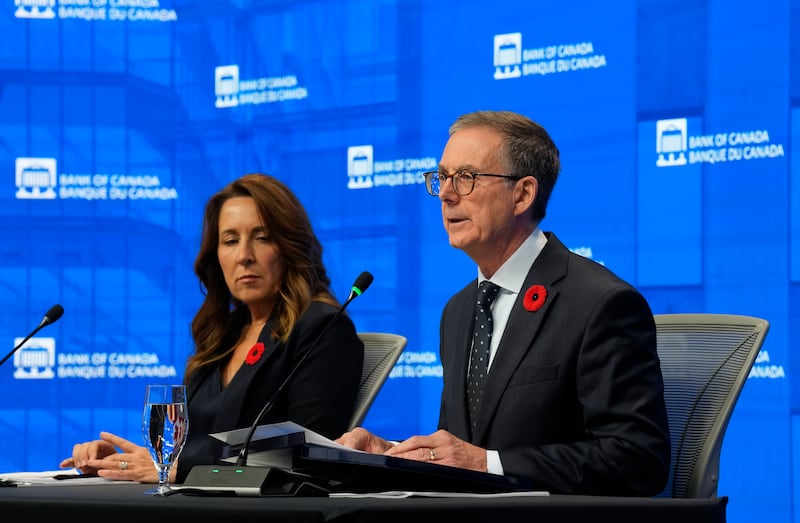
Tiff Macklem, the central bank’s governor, said that the outlook for inflation has “deteriorated” since the BOC’s July report.
“With the outlook for inflation substantially higher and the economy showing resilience, an increase in the policy rate is needed to reduce the risk that elevated energy prices could spill over and become generalized inflation,” Macklem said in prepared remarks during a Wednesday morning news conference.
The governor said that the persistent war in the Middle East means global oil prices will remain higher for longer and continue to hit Canadians at the gas pump while increasing costs for many businesses.
Eight months after the United States and Israel launched a war against Iran, the price of Brent crude is averaging $124.96 per barrel in October. The price of oil per barrel is about $35 more than in July.
Of the consumer-facing businesses surveyed by the central bank, 60 per cent expect to pass costs on to customers in the next 12 months.
The worrisome inflation outlook is buoyed by better-than-expected growth in the Canadian economy.
The BOC said that growth increased in Canada through the middle of the year, reaching 3.3 per cent in the second quarter, but is expected to slow to 2 per cent in the third quarter.
Macklem said that growth can be attributed to “solid consumer spending” despite slow population increases. The governor said business investment has also rebounded, primarily led by activity in the oil and gas sector and spending on machinery and equipment.
“Despite ongoing weakness in sectors affected by US tariffs, exports overall have strengthened, bolstered by robust US demand, higher energy production and increasing signs that businesses are adapting to the changing trade environment,” Macklem said.
Macklem warned that the fourth quarter will likely show slower growth as “new US tariffs weigh on activity.”
The bank’s monetary report also pointed out the unemployment rate has hovered around 6.5 per cent in recent months, which suggests that it is “more difficult than usual for the unemployed to find work.”
After a decline in the next few months, the BOC projects that the economy will bounce back in 2027.
But Macklem said that, looking ahead, there was less scope for monetary accommodation with increasing inflation risks.
“There could be a need to raise the policy rate further, but given the uncertainties we will proceed carefully.”

