
The agriculture sector has two strong tailwinds that could propel it higher.
First, the equipment cycle for the agriculture sector, which probably bottomed in mid-2026 and is now rising, has been helping to push sales higher for suppliers of agriculture equipment.
Second, the prices of many “soft” commodities, such as wheat, corn, soybeans, sugar cotton and coffee, have been increasing due to weather, war and inflation.
The agriculture sector can be divided into five major segments: equipment suppliers, processors, fertilizers, soft commodities and livestock. For investment purposes, most investors do not include the livestock subsector. Stocks and ETFs that trade in North America generally include agriculture equipment, processors and fertilizer companies.
The price action of Deere (DE) on the New York Stock Exchange, one of the largest agriculture companies in the U.S., is illustrative of what is happening in the agriculture equipment sector.
Deere has been a beneficiary of growers increasing their orders and is currently up 42.2 per cent YTD and has outperformed the S&P 500 by 14.0 per cent (as of October 7, 2026).
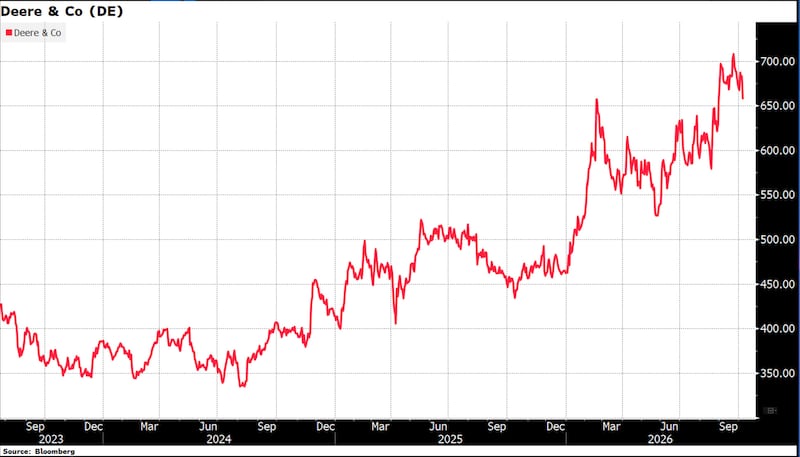
On August 20, 2026 in Deere’s third quarter earnings release, John May, the CEO, stated “we continue to believe 2026 will mark the bottom of the current ag equipment cycle.” May was referring to the bottom of the farm equipment cycle.
Crop prices rallied in 2021 and 2022 after the COVID-19 pandemic and the start of the Russia-Ukraine war. Net farm incomes increased, and growers ordered the farm equipment that they had previously deferred, driving purchases and the price of farm equipment higher into 2021-2022.
Over the last few years, growers have cut back on their spending on agriculture equipment and have now reached the bottom of the “ag equipment cycle” and are now starting to increase their purchases. This benefits companies such as Deere and other agriculture equipment suppliers.
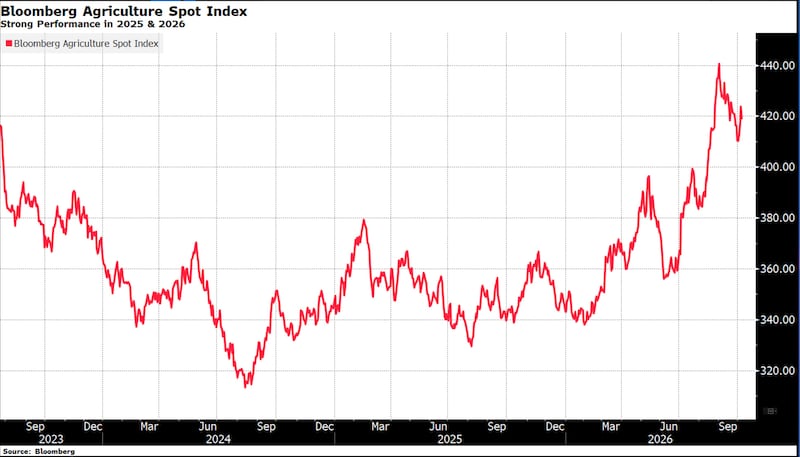
Soft commodity prices have rallied due to increasing demand for soybeans and corn, as they are both used in biofuels to drive trucks and cars. Higher oil prices have increased the demand for biofuels. Grain shipments have been restricted from Russia and Ukraine due to the war, which has had an impact on wheat prices. In addition, weather-related events in 2026 have generally pushed the price of agricultural products higher. In addition, higher energy costs and inflation have increased the costs of growing, harvesting and processing the agriculture commodities, which has translated into higher prices.
Investors that have been invested in soft commodities directly through futures or through an ETF have benefitted in 2026 as prices have risen. Companies that process grains and soybeans have also risen in 2026, as a lot of their contracts are cost plus a percentage.
The graph below shows the Bloomberg Agriculture Spot Index (BCOMMAGSP). Although it is not possible to invest in the index directly and it does not include the roll cost of the futures, it does show a general rising price for agriculture commodities in 2026.
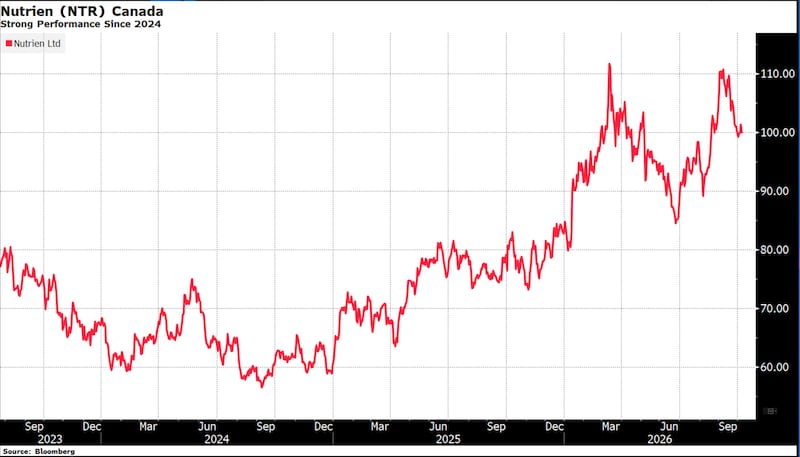
Fertilizer companies, such as Nutrien, tend to perform well in an environment of rising grain prices.
With higher prices, growers can afford to purchase more fertilizer and growers tend to purchase more fertilizer with higher grain prices because it maximizes their yield per acre. The graph below shows Nutrien’s positive performance in 2026.
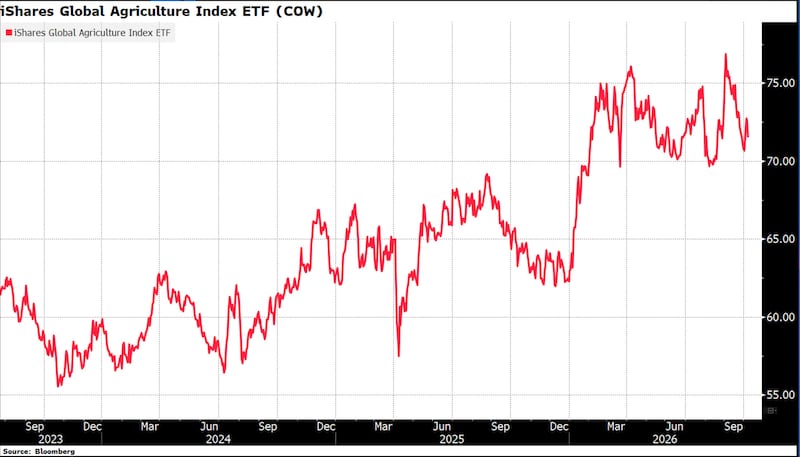
There are not a large number of agriculture ETF’s in North America.
In Canada, the Blackrock Canada ETF, iShares Global Agriculture Index ETF (COW), has performed relatively well in 2026 and has benefitted from the agriculture equipment providers, fertilizer companies and processors performing well.
The agriculture equipment cycle is a multi-year cycle and if John May is correct that we have recently bottomed in the cycle this could support the sector moving higher. If energy costs and inflation remain high this will help agriculture products to continue to perform well and the companies that benefit from rising prices. The tailwinds for the agriculture sector remain strong and bode well for future long term performance.
The views and opinions expressed herein are solely those of the author(s) and may not necessarily reflect the views of Global X Investments Canada Inc. All comments, opinions and views expressed are generally based on information available as of the date of publication and should not be considered advice to purchase or sell any securities mentioned. Before making any investment decision, please consult your investment advisor or advisors.

