
The uranium sector has a very strong fundamental profile to move higher over the long term, and demand is expected to continue to grow. Nuclear power is now considered a source of green energy and the world’s demand for energy is skyrocketing.
The buildout of AI and the shift to electrically powered transportation have created new sources of demand for electricity.
“Electricity is at the heart of modern economies and electricity demand grows much faster than overall energy use in all scenarios. It rises by around 40 per cent to 2035 in both the CPS and the STEPS, and by more than 50 per cent in the NZE Scenario,” according to IEA World Energy Outlook 2025.
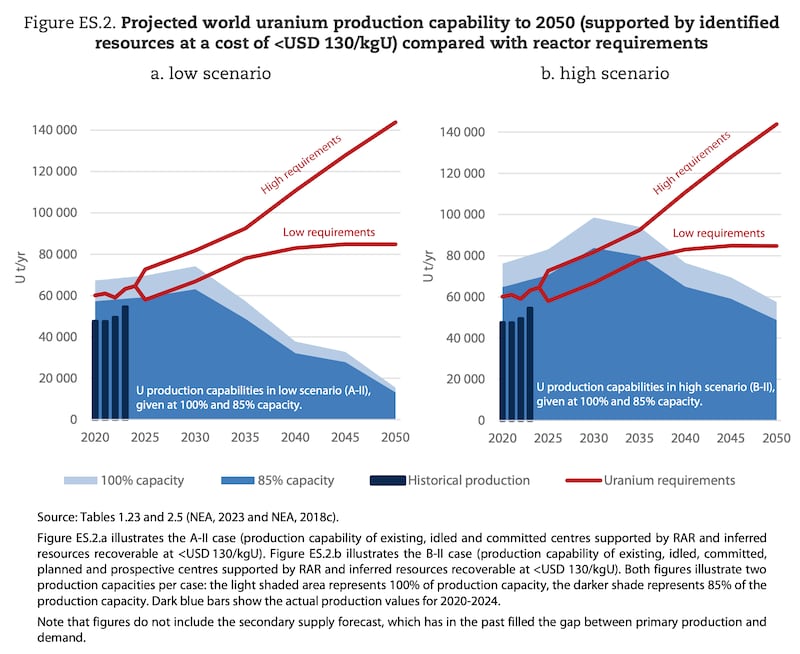
Supply is not expected to be able to keep up with demand and is expected to decline. It takes 10 to 15 years to greenfield (develop from scratch) a uranium mine. Even if more uranium mines were started today, the output would not come online for many years to come. Most analysts and experts in the field acknowledge that there is going to be a substantial shortfall in uranium production. It is just a matter of how much of a shortfall and when it occurs.
The graph below illustrates two different scenarios of world uranium production capability compared to nuclear reactor requirements. One is a low-production scenario (left) and the other a high-production scenario. In either case, there is a shortfall of uranium production.
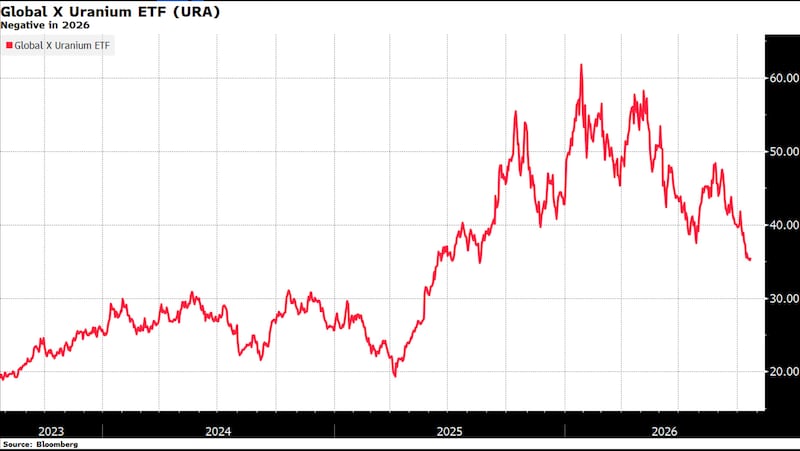
Investing in the uranium sector in the stock market has been a frustrating experience. Although the price of uranium stocks has risen over the last few years, the uranium sector has moved lower since January 2026. This has happened as a number of positive announcements for the nuclear industry have been released in 2026.
One of the reasons that the price of uranium has not risen rapidly, despite increasing demand and positive announcements, is that uranium mining companies have been reopening dormant mines. This option has been quickly dissipating as the nuclear mining industry has been increasingly using up its spare capacity.
The uranium sector in the stock market has been moving lower since January of this year. Below is a graph of the performance of the Global X Uranium ETF (URA) that trades on the NYSE. It is a proxy for the uranium sector. The sector is down 16.8 per cent YTD and is down 42.5 per cent since its January high (as of end of day October 21).
The sector has become dramatically oversold on a number of metrics. The uranium sector typically performs well on a seasonal basis in November through January. If the broad stock market manages to perform well in the near future, it would be reasonable to expect the uranium sector to also perform well and outperform the S&P 500.
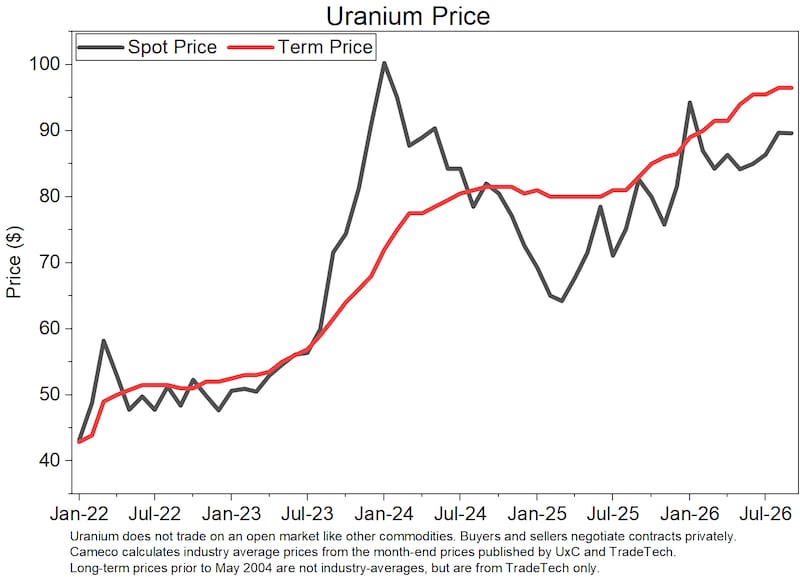
Although the uranium sector has been moving lower in the stock market, the long-term contract price (term) of uranium has been moving higher. The red line in the graph below represents the long-term contract price of uranium as posted by Cameco on its website.
It is clear that the term contract price has been moving higher over the last few years, including 2026. The black line represents the spot price of uranium, which the market tends to focus on. The spot price has been more volatile than the long-term price. As shown in the graph, when the spot price is below the term price and the term price is rising, the spot price tends to play catch-up and also rises.
If the term contract price continues its trend higher, it is reasonable to expect the spot price to also rise. A rising spot price will be supportive of the uranium sector in the stock market.
Investors find it hard to reconcile how the uranium sector could have such a positive profile with the falling price of the uranium sector in the stock market. Most investors have the uranium sector as a lower priority in their investment choices. The supply is known over the next few years as well as the demand, and as a result, investors have chosen to focus on other parts of the market, such as AI.
The problem with ignoring the compelling case for the uranium sector is that when things change, the sector can move rapidly higher. It is difficult to predict when a catalyst may force a rapid revaluation for the uranium sector. In 2024 and 2025, the sector moved higher because of the overwhelming number of positive announcements that were favourable for uranium. Governments were announcing the creation of stockpiles and special programs to support the uranium industry. Hyperscalers were announcing deals to use nuclear power to power their AI data centres.
Positive news releases for uranium are released almost daily. When the next slew of really big announcements will be released is not known. It can happen at any time. A constantly rising term contract price of uranium is supportive for the sector to move higher. The sector has become very oversold on a number of metrics and is poised to move higher. The case for investing in the uranium sector has become very compelling.
The views and opinions expressed herein are solely those of the author(s) and may not necessarily reflect the views of Global X Investments Canada Inc. All comments, opinions and views expressed are generally based on information available as of the date of publication and should not be considered advice to purchase or sell any securities mentioned. Before making any investment decision, please consult your investment advisor or advisors.

