HONG KONG — The price of Brent crude oil jumped more than 4 per cent on Thursday as rising tensions in the Middle East added to uncertainties over supplies.
Share prices fell in Europe and Asia and U.S. futures also declined after U.S. stocks retreated under pressure from rising yields in the bond market.
Oil prices have bounced back given the persisting uncertainties over global crude supplies. The U.S. and Iran have yet to reach a deal to end their war, and a report Wednesday by The Atlantic, citing two unnamed officials, said the White House had asked the Pentagon to develop strike options against Iran before the midterm elections in November.
Early Thursday, Brent crude, the international standard, was up 4.1 per cent at US$104.32 per barrel. Benchmark U.S. crude rose 4.2 per cent to $91.94 a barrel.
In early European share trading, Germany’s DAX fell 0.8 per cent to 24,892.67 and the CAC 40 in Paris lost 1 per cent to 7,688.52. Britain’s FTSE 100 was 0.6 per cent lower at 10,392.22.
The future for the S&P 500 slipped 0.4 per cent while that for the Dow Jones Industrial Average lost 0.7 per cent.
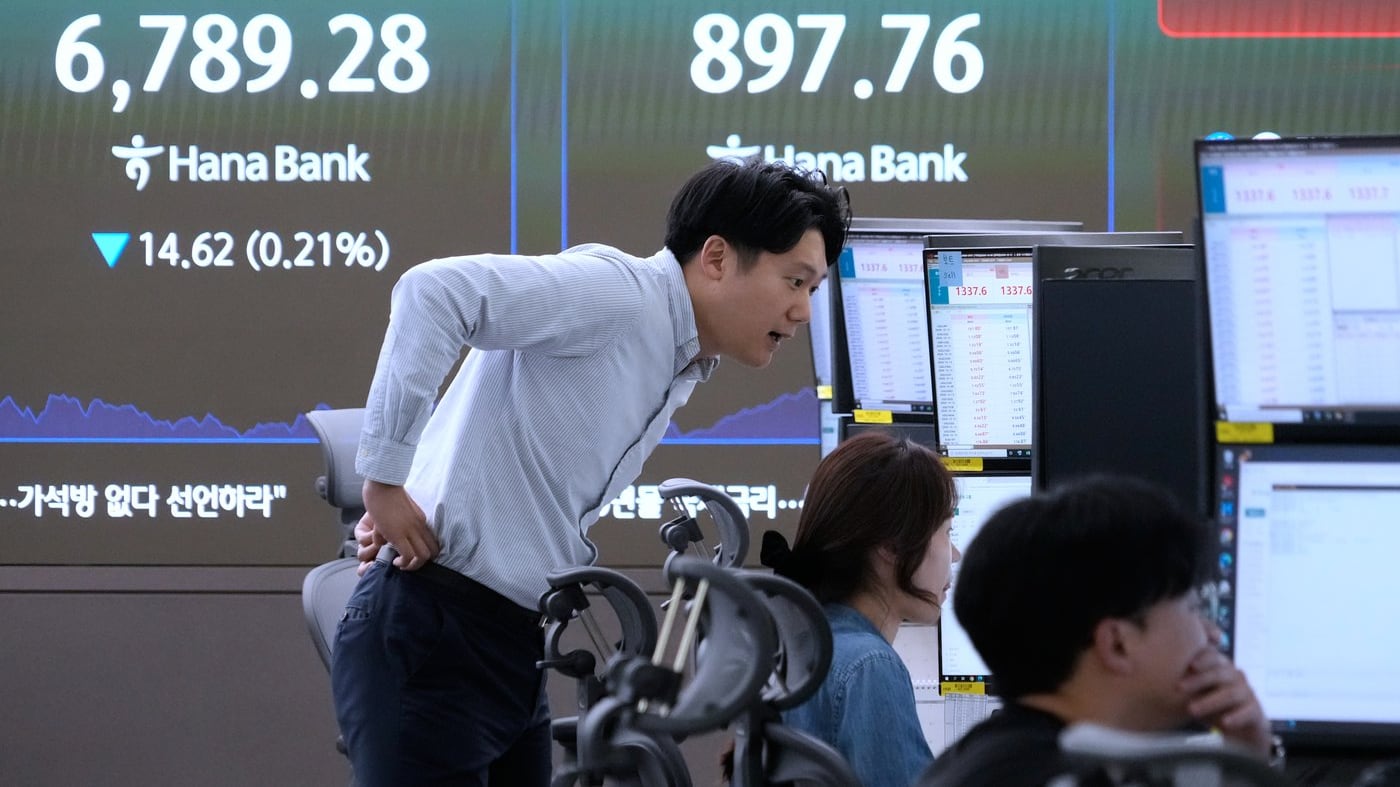
In Asian trading, Japan’s Nikkei 225 fell 1.4 per cent to 69,042.11 and South Korea’s Kospi lost 2.6 per cent to 6,625.93.
Hong Kong’s Hang Seng declined 1.4 per cent to 23,785.79, while the Shanghai Composite index slipped 0.8 per cent to 3,811.90.
Australia’s S&P/ASX 200 slid 0.8 per cent to 8,660.90.
Taiwan’s Taiex dropped 1 per cent, and India’s Sensex was down 1.7 per cent.
Stocks once again have retreated under pressure from rising yields in the bond market. The yield on the 10-year U.S. Treasury stayed near a multi-decade high after minutes released Wednesday from the U.S. Federal Reserve’s most recent meeting showed that most Fed officials expect another interest rate hike this year.
On Wednesday, Wall Street’s benchmark S&P 500 dropped 0.2 per cent a day after reaching an all-time high. The Dow slipped 0.7 per cent, while the technology-heavy Nasdaq composite declined 0.2 per cent from its record.
Inflation in the U.S. remains above the Fed’s 2 per cent target. In September, the Fed raised rates for the first time in three years by a quarter percentage point to a range of 3.75 per cent to 4.00 per cent.
Rising bond yields hurt stock prices, in part because companies and consumers face higher borrowing costs. Yields on U.S. Treasurys have surged as the global energy shock driven by the Iran war pushed prices higher, while the U.S. national debt has continued to grow.
The yield on the U.S. 10-year Treasury was at around 5.33 per cent after rising as high as 5.36 per cent on Wednesday, its highest level since 2002.
In other dealings early Thursday, the U.S. dollar rose to 158.22 Japanese yen from 158.08 yen. The euro was trading at $1.1186, down from $1.1197, as elevated yields for bonds in France and growing worries about its government debt pressured the euro.
Chan Ho-him, The Associated Press

