Large caps and in particular technology stocks have had a lot of attention from investors recently. Other sectors of the market, such as small companies or small caps have been put on the back burner.
But the small cap sector has been showing signs of improving performance that is getting missed by some investors.
There are many factors that drive the performance of the small cap sector in the U.S., including interest rates, strength of the U.S. dollar, and economic growth.
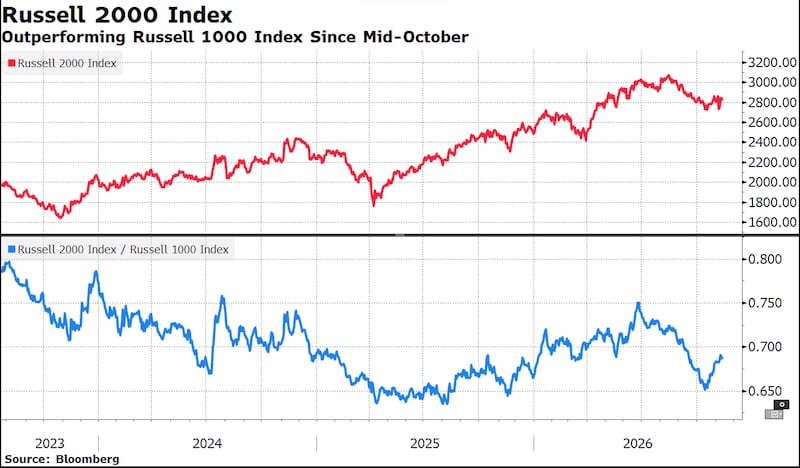
The small cap sector, represented by the Russell 1000 Index, outperformed large caps, represented by the Russell 1000 Index, from April 2025 until June 2026. This is shown in the graph below, in the second panel (blue line).
This outperformance started after the self-proclaimed Liberation Day in the U.S.
At the time, the tariffs were largely considered resolved, at least in the short-term, and the stock markets started a rally.
Although tariffs are generally considered punitive for countries exporting goods into the U.S. and for consumers, on a relative basis the small cap sector benefits from its U.S.-centric focus for both production and end consumers.
Recently, starting in October, the small cap sector has been showing outperformance once again, compared to the large cap sector. Strong tailwinds could help the small cap sector to continue to outperform.
A stronger economy tends to help small caps as they are more geared to growth.
The U.S. economy has been strong over the last few years and remains one of the strongest growth economies in the western world. This has been one of the big drivers for the small cap sector.
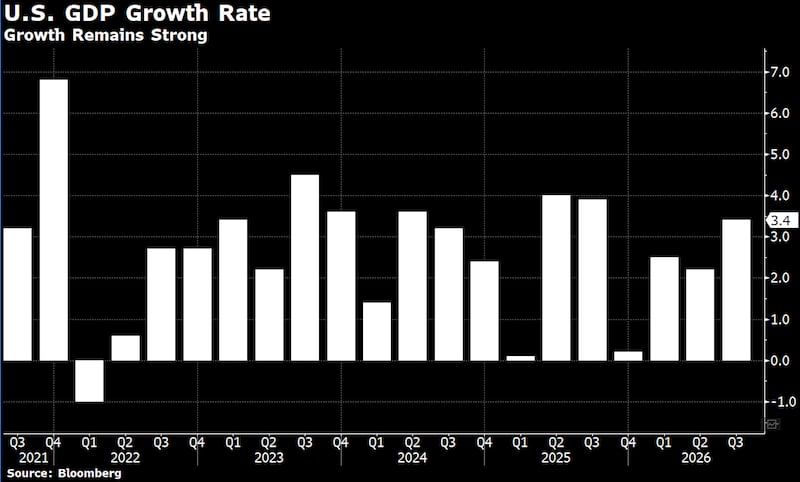
It is much easier for small caps to grow at a fast rate compared with large, mature companies. The graph below shows the relatively strong GDP growth of the U.S., with the most current reading at 3.4 per cent (annualized) in Q3 2026.
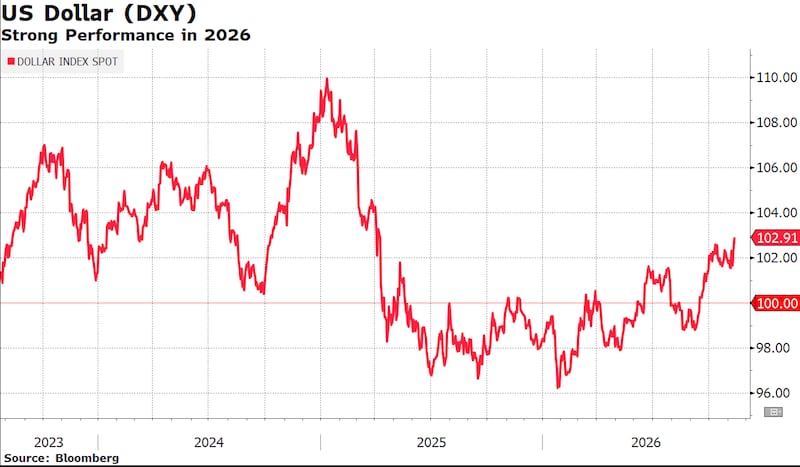
A stronger U.S. dollar tends to be favourable for small caps as their sales are typically domestically focused. The U.S. dollar has been outperforming world currencies since early 2026.
The U.S. dollar, as represented by the DXY, currently sits well above the 100 level, which has been a hard level to crack and stay above.
The 100 level is well followed by currency traders. The U.S. dollar has managed to breach this level three times in 2026 and has most recently registered 102.91.
Falling interest rates are supportive of the small cap sector to a larger degree compared to the large cap sector as small companies generally have more debt and tend to finance their operations with more short to mid-duration loans.
The yield on the U.S. Treasury 10-year has increased in 2026 as shown in the graph below (blue line).
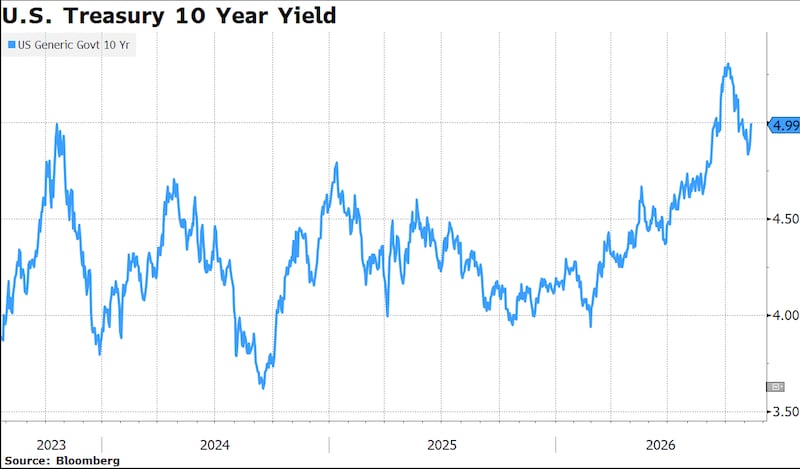
It should be noted that the yield has decreased sharply starting in October and currently sits at 4.99 per cent.
The fact that the yield on the U.S. Treasury 10-year has increased in 2026 and the small cap sector has performed well is a testament to the underlying strength of the small cap sector. The small cap sector has performed particularly well since October, as the yield has decreased.
Although the U.S. Federal Reserve is expected to raise its federal funds rate in December and likely in the following one or two meetings, the yield on the 10-year could potentially decrease as investors see the Fed getting tough with inflation. A move lower on the 10-year would be beneficial for the small cap sector.
The small cap sector currently has strong tailwinds, helping it outperform the large cap sector. Its recent rally has largely gone unnoticed by some investors. It is worth paying attention to this sector as its stealth rally may continue.
The views and opinions expressed herein are solely those of the author(s) and may not necessarily reflect the views of Global X Investments Canada Inc. All comments, opinions and views expressed are generally based on information available as of the date of publication and should not be considered advice to purchase or sell any securities mentioned. Before making any investment decision, please consult your investment advisor or advisors.

